

A seller-paid home warranty answers only one question: who pays the contract price. It does not mean every air conditioner, water heater or appliance repair will be free. Coverage depends on the residential service contract itself—covered items, exclusions, service-call fees and dollar limits.
In Houston, air-conditioning equipment works hard and one repair can disrupt a buyer’s first-year budget. A home warranty can be one risk-management tool, but I would not use it instead of an inspection or choose a plan based only on the seller credit.
What does the Texas resale contract actually say?
A home warranty is generally called a Residential Service Contract in the Texas transaction documents. Paragraph 7H of the current TREC 20-19 resale contract lets the buyer purchase a contract from a provider or administrator regulated by the Texas Department of Licensing and Regulation (TDLR). If the buyer purchases one, the seller reimburses the cost at closing up to the amount written in the contract. The purchase is optional.
That paragraph is often heard as “the seller is giving the buyer a one-year warranty.” A more accurate reading is: the buyer selects and purchases the contract, and the seller reimburses the price up to an agreed cap. Whether a later repair is approved still depends on the separate service contract.
It is not an inspection, homeowners insurance or a builder warranty
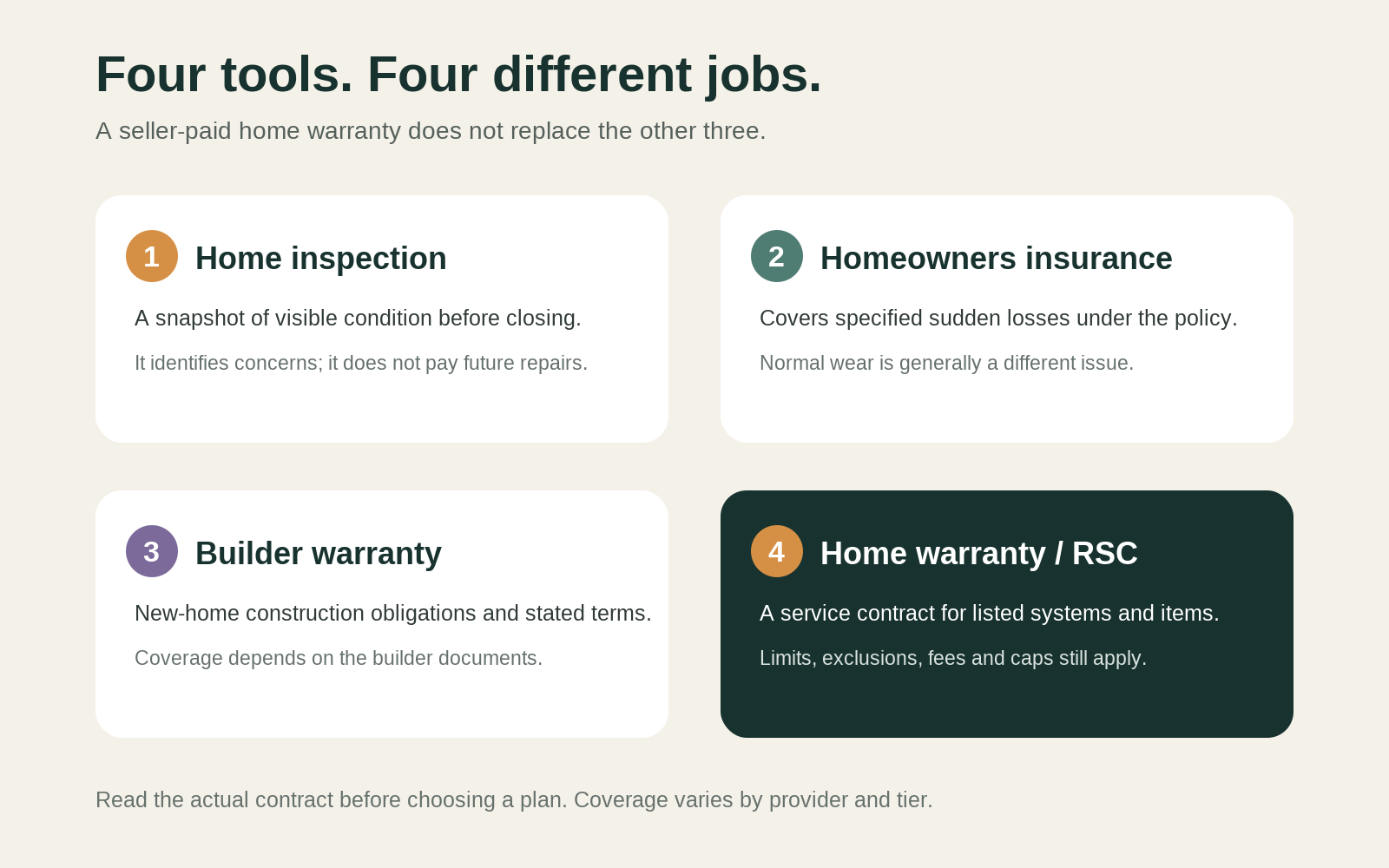
An inspection evaluates visible condition before closing. Homeowners insurance responds to specified losses under the policy. A builder warranty addresses new-home construction obligations and written terms. A residential service contract is separately purchased coverage for listed systems and items. A buyer may have all four, but they do different jobs.
If an inspection already identifies weak cooling, a leak or equipment near the end of its useful life, do not stop evaluating the issue because “there will be a home warranty.” Pre-existing conditions, improper installation, lack of maintenance, abnormal use or other contract exclusions may affect service.
I compare these 6 items before choosing a plan
1. The actual covered items—not the package name
Plan tiers from the same company can differ substantially. Confirm whether the written contract includes the condenser, furnace, ductwork, water heater, electrical system, plumbing, refrigerator, laundry equipment, pool equipment or any needed add-on. A “comprehensive” label on the sales page is not enough.
2. Pre-existing conditions, maintenance records and exclusions
Ask how the contract defines a pre-existing condition, whether symptoms before the effective date can cause a denial, and whether maintenance or repair records are required. An inspection report does not automatically make an item eligible for future service.
3. The service-call fee
The annual price is only the first cost. Many plans charge each time a contractor is dispatched. Ask whether a return visit or two systems reported at the same time can trigger another fee. A lower plan price does not always mean a lower total cost.
4. Per-item caps and who decides repair versus replacement
Look for separate limits on air conditioning, refrigerant, plumbing stoppages, leak access, water heaters and appliances. If an item cannot be repaired, confirm whether the provider replaces comparable equipment, offers a cash amount, applies depreciation or uses another contract formula.
5. Who selects the contractor and how service is handled
Some plans require the holder to contact the provider first and use the assigned contractor. Hiring someone independently and asking for reimbursement later may not follow the claim process. For a Houston summer AC failure, ask about response procedures, weekends and emergencies before buying.
6. Effective date, renewal, cancellation and transfer
Confirm when coverage begins, the term, renewal pricing, transfer rules and how a cancellation refund is calculated. TDLR explains that a consumer may cancel a service contract, but the refund depends on timing, paid claims and the applicable terms.
Does a TDLR registration mean the contract is a good one?
No. TDLR requires providers and independent administrators to register and offers a public search, but it also states that the department does not review or approve individual service contracts. Registration is a basic compliance check, not an endorsement of coverage, claim service or value.
Before buying, use the TDLR Active License Search and confirm the provider and administrator named in the actual contract. The consumer-facing brand may not be the only company responsible for the agreement.
A safer workflow when the seller is paying
- After the seller reimbursement cap is agreed, obtain sample contracts from two or three regulated providers instead of comparing price alone.
- Place the inspection findings and equipment ages next to the plan, then compare coverage, exclusions and caps item by item.
- Confirm whether needed add-ons push the price above the seller reimbursement and who pays the difference.
- Save the final contract, receipt, service number and claim process before closing; contact the provider before arranging covered repairs.
- When the inspection identifies a specific defect, negotiate the repair, price or credit directly instead of treating a future home-warranty decision as guaranteed payment.
How should a seller describe the credit?
A seller-paid plan can reduce a buyer’s concern about first-year repair uncertainty, especially when equipment is no longer new. But it should not be advertised as “everything is covered,” and it should never be used to hide a known defect.
A more accurate explanation is that the seller will reimburse the buyer, up to the contract amount, for a residential service contract selected by the buyer. Coverage and claim conditions are controlled by the buyer’s agreement with the provider.
Frequently asked questions
Does the buyer have to spend the full seller allowance?
Not necessarily. The TREC paragraph reimburses the buyer for the contract actually purchased, up to the written cap. The parties should follow the completed contract and closing documents, and the buyer should first select the plan that fits the property.
Can a home warranty replace the home inspection?
No. An inspection helps evaluate condition and transaction risk before closing; a service contract addresses listed items after closing under separate terms. For inspection priorities, read Houston Home Inspection: Big-Ticket Items Buyers Should Check.
If the AC is old, does a home warranty remove the risk?
No. Consider present condition, maintenance, exclusions, refrigerant and parts terms, and the per-item cap. Continue with What Houston Buyers Should Check in an HVAC Inspection.
Does a new-construction buyer need a home warranty?
First review the builder warranty and existing manufacturer warranties to avoid buying overlapping coverage. The construction contract also deserves separate review; see Houston New-Construction Builder Contract Guide.
Sources and image note
Contract sources: TREC One to Four Family Residential Contract (Resale) 20-19 and current contract PDF, Paragraph 7H. Regulatory and consumer sources: TDLR Home Warranties notice and TDLR Service Contract Provider FAQ. Information verified October 24, 2026.
The cover is a real HVAC service photograph by José Andrés Pacheco Cortes from Pexels, used under the Pexels License. It was cropped to 16:9, resized and compressed without generative editing. The technician is not Joyce or a JoyHome client. The comparison graphic is an original JoyHome editorial diagram.
Joyce's Featured Listings

Compare equipment age, inspection findings and service-contract terms to estimate the first year's real ownership risk. Browse Joyce's Featured Listings, then build a property-specific inspection and coverage checklist for the homes that interest you.
View Joyce's Featured Listings →
Buying a home and want to evaluate the warranty credit with the inspection findings?
Send me the property address, major equipment notes from the inspection and the seller reimbursement amount. I can help organize the questions to take to the provider, inspector and title company before you decide how to use the credit.
About Joyce Tang

Joyce Tang is a Greater Houston real estate agent and investor, co-founder of the North American Real Estate Association, founder of JoyHome and JoyNest, and co-leader of the Dr. Wang Real Estate Team.
She has helped more than 200 families buy or sell homes and has participated in more than 40 renovation projects. Her approach examines not only price, but also location, carrying cost, cash flow, risk and future exit options.
Disclaimer
This article provides general educational information about Texas residential service contracts. It is not legal advice, insurance advice, a repair opinion or a guarantee of any provider or claim outcome. Joyce Tang is not an attorney, insurance agent or residential service contract provider. Coverage, exclusions, fees, cancellation rights and dispute procedures depend on the actual contract, TDLR records and advice from the appropriate licensed professionals.