
The direct answer: an air conditioner blowing cold air on inspection day proves only that it operated under those conditions. It does not establish the condition, efficiency, remaining life, room-to-room airflow or full replacement risk of the HVAC system. During a Houston option period, I separate cooling performance, equipment identity, condensate, ducts, the outdoor unit, attic service conditions and written pricing.
A general Texas inspection measures the supply-to-return temperature difference. Current TREC standards use 15°F to 22°F as one cooling-performance range, while also recognizing that humidity, outdoor temperature and other day-of conditions can affect the result. That number is useful, but it is not a complete HVAC diagnosis.
The one-minute answer
- Cold air is one data point, not a health certificate for the whole system.
- A general inspection is not required to test refrigerant pressure, type or leaks, system sizing or efficiency, component matching, or balanced airflow.
- Condensate drainage and attic ductwork are easy to miss if you focus only on the thermostat.
- Equipment older than 10 years is a reason for professional evaluation, not an automatic replacement verdict.
- Negotiate from a written scope, model, warranty and quote—not a verbal guess.
What does a general home inspection cover?
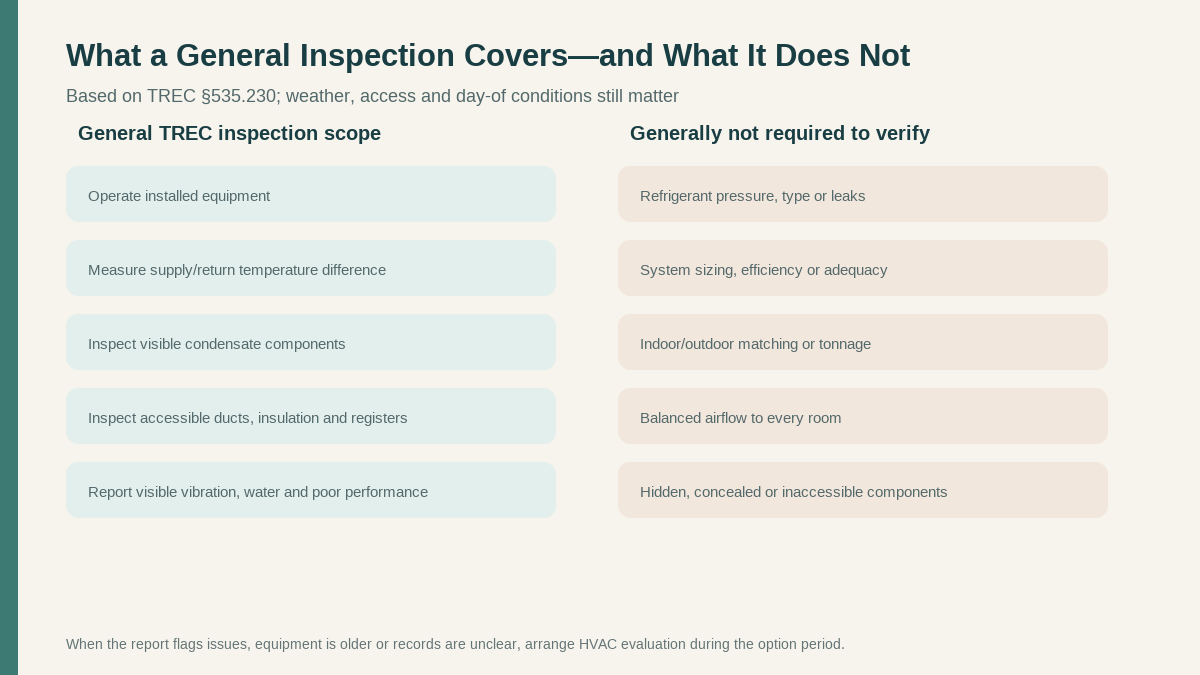
Under TREC §535.230, an inspector operates accessible installed equipment, measures or uses an accepted method to evaluate cooling performance, and reviews visible ducts, insulation, condensate components, service access and equipment condition. Noticeable vibration, water in an auxiliary pan, drain deficiencies, missing airflow and damaged ducts can be reported as deficient.
The inspector is generally not required to test refrigerant pressure, refrigerant type or leaks; verify indoor/outdoor equipment matching or tonnage; determine system sizing, efficiency or adequacy; or balance airflow throughout the house. Cooling equipment may also be left off when the outdoor temperature is below 60°F and operation could cause damage.
Seven HVAC checks to separate
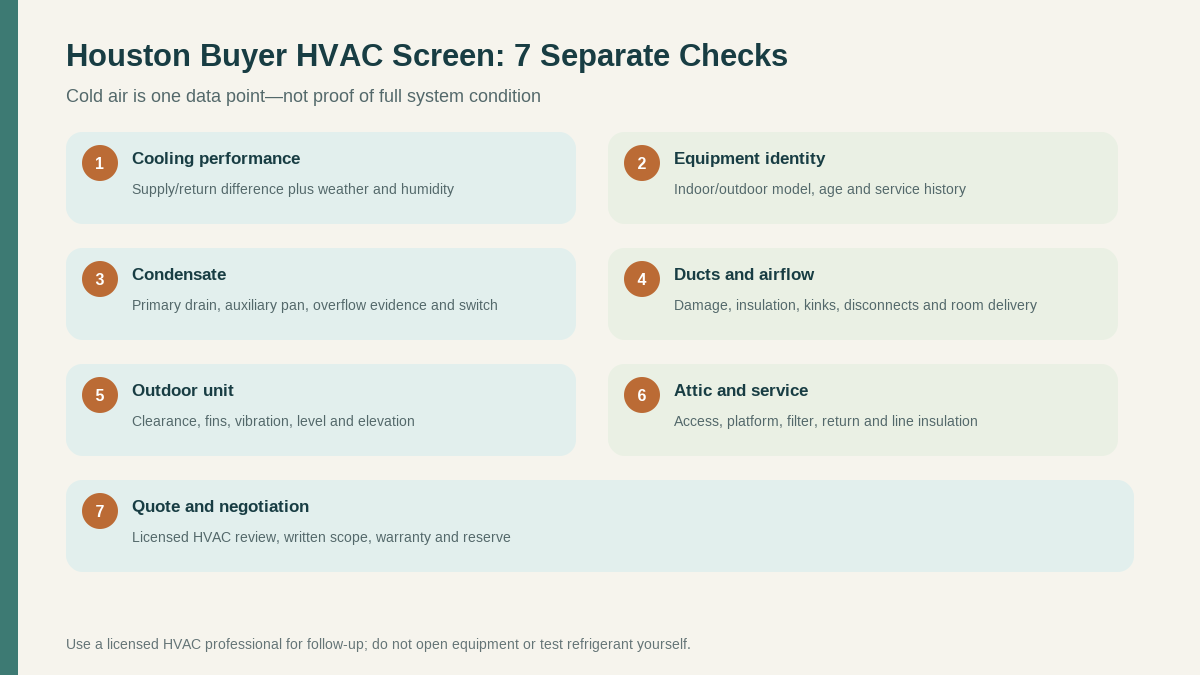
1. Temperature difference and day-of performance
Do not rely on the feeling of cool air at one register. Read the supply/return temperature difference, outdoor conditions, run time and whether one or more rooms stayed noticeably warmer. A passing day-of differential cannot predict remaining life or prove reasonable energy use.
2. Indoor unit, outdoor unit and equipment age
Record the make, model and serial number of both indoor and outdoor equipment, then request verifiable service or replacement records. ENERGY STAR suggests professional evaluation when equipment is more than 10 years old or no longer keeps the home comfortable; it does not say every ten-year-old system must be replaced. If component ages differ, ask an HVAC professional about compatibility and future service risk.
3. Condensate drainage and overflow risk
Houston humidity makes condensate management important. Review the primary drain, auxiliary pan, attic floor or ceiling stains, and ask a professional to confirm overflow protection. An empty pan at one moment does not prove that a line is clear, connected and draining correctly.
4. Ducts, insulation and room airflow
ENERGY STAR says a typical forced-air home can lose 20% to 30% of the air moving through ducts because of leaks, holes and poor connections. Look for flex ducts that are kinked, crushed or disconnected, damaged insulation and uneven room delivery. Sometimes the comfort problem is in the duct system, not the main equipment.
5. Outdoor condenser location and condition
Check for reasonable airflow clearance, widespread fin damage, noticeable vibration, an out-of-level base, and the relationship to grade, drainage and flood exposure. Vegetation, fencing and stored items can also restrict airflow and service access.
6. Attic access, filters, return air and line insulation
A working unit can still be difficult or costly to service. Review the attic opening, passage and service platform, filter access, unusual return-air conditions and missing refrigerant-line insulation. These details affect maintenance, energy loss and condensation risk.
7. Licensed HVAC follow-up and a written quote
When the inspection flags performance, vibration, water, duct, age or record issues, arrange follow-up during the option period through a Texas-licensed ACR contractor. The quote should say whether the scope is a repair, one component, both indoor and outdoor equipment, or ducts and drainage too—and list the model, efficiency, warranty, permit responsibility and payment terms.
My option-period sequence
- Pull the temperature difference, model information, vibration, water, duct and not-inspected items from the inspection report.
- Ask the seller for verifiable invoices, service history and transferable warranty; treat undocumented claims as unverified.
- When needed, arrange a licensed HVAC evaluation and verify the license through TDLR.
- Obtain at least one scope-specific written quote; compare alternatives for a major project.
- Then decide whether to request seller repair, closing-cost credit, price adjustment, or accept the condition with a replacement reserve.
Do not negotiate only around “replace the unit”
Seller repair may restore operation before closing, but the buyer has less control over contractor, model and scope. A credit or price adjustment can offer more control, but loan limits on seller contributions and post-closing cash still matter. Tie the request to the documented condition and quote—not equipment age alone.
For the next layer, read repair or replace an older AC, how to inspect attic insulation and ventilation and how to screen roof, AC and other big-ticket items.
FAQ
Does an AC over ten years old automatically need replacement?
No. Age is a planning factor, not proof of failure. Combine day-of performance, service history, component configuration, ducts, condensate and written pricing.
Does a general inspection test for refrigerant leaks?
Not under the minimum TREC scope. The inspector is not required to test refrigerant pressure, type or leaks. Performance concerns or suspicious evidence call for HVAC follow-up.
What if the weather is too cool to run the AC?
TREC permits inspectors not to run cooling equipment when outdoor temperature is below 60°F and operation may cause damage. Treat “not inspected” as an unknown to address through records, professional evaluation or contract terms—not as a pass.
Must the seller repair an HVAC item in the inspection report?
An inspection note does not automatically create a repair duty. Repair, credit, price adjustment or acceptance depends on the contract, negotiation and the parties’ written agreement.
Sources and image note
Inspection scope: TREC Real Estate Inspector Standards of Practice; equipment and ducts: ENERGY STAR Heating & Cooling and Duct Sealing; Texas HVAC licensing: TDLR ACR Contractors and TDLR License Search. Sources checked October 22, 2026.
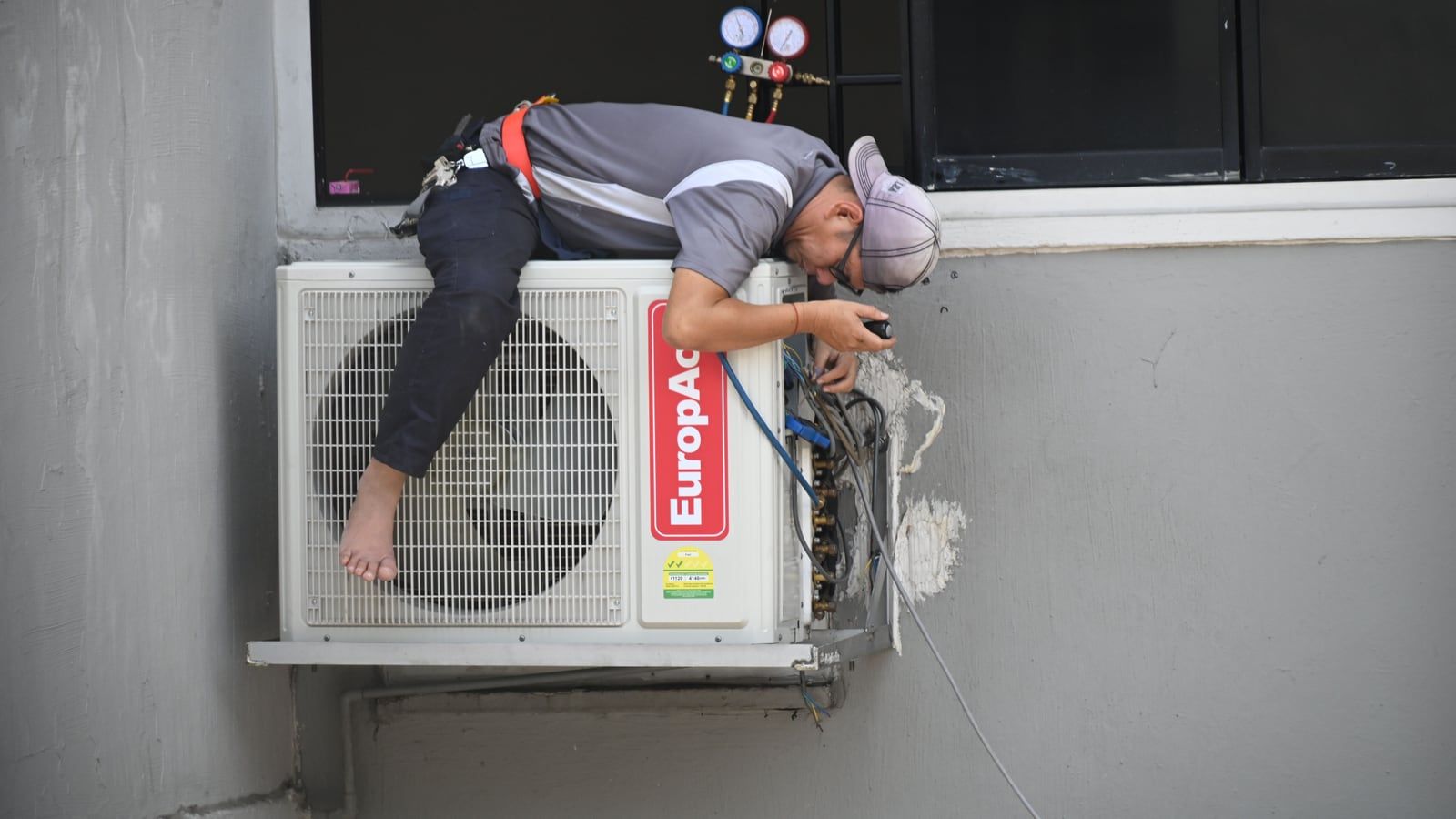
The cover is a real air-conditioning service photograph by Richard Low Hong, from the Pexels photo page under the Pexels License. It was center-cropped, resized to 16:9 and compressed without generative alteration. The pictured equipment is not a Houston listing or endorsed brand.
Joyce's Featured Listings

Once you know how HVAC condition and replacement reserves fit the decision, current inventory is easier to compare. Browse Joyce's Featured Listings to see Greater Houston options. This article does not link to a single listing whose status can change.
View Joyce's Featured Listings
Reviewing an HVAC report during the option period?
Send me the inspection pages, equipment-label photos, home age, expected hold period and option deadline. I can help separate known defects from unknowns and organize the quotes for negotiation.
About Joyce Tang

Joyce Tang is a Greater Houston real estate agent and investor, co-founder of the North American Real Estate Association, founder of JoyHome and JoyNest, and co-leader of the Dr. Wang Real Estate Team.
She has helped more than 200 families buy or sell homes and has participated in more than 40 renovation projects. Her approach examines not only price, but also location, carrying cost, cash flow, risk and future exit options.
Important notice
This article explains the boundary between a general home inspection and follow-up HVAC evaluation. It is not engineering, HVAC diagnostic, building-code, environmental, insurance, lending or legal advice. Joyce Tang is not an HVAC contractor or home inspector. Equipment condition, pricing, permits and repair decisions must be based on current property-specific inspection, records and licensed professional advice.