
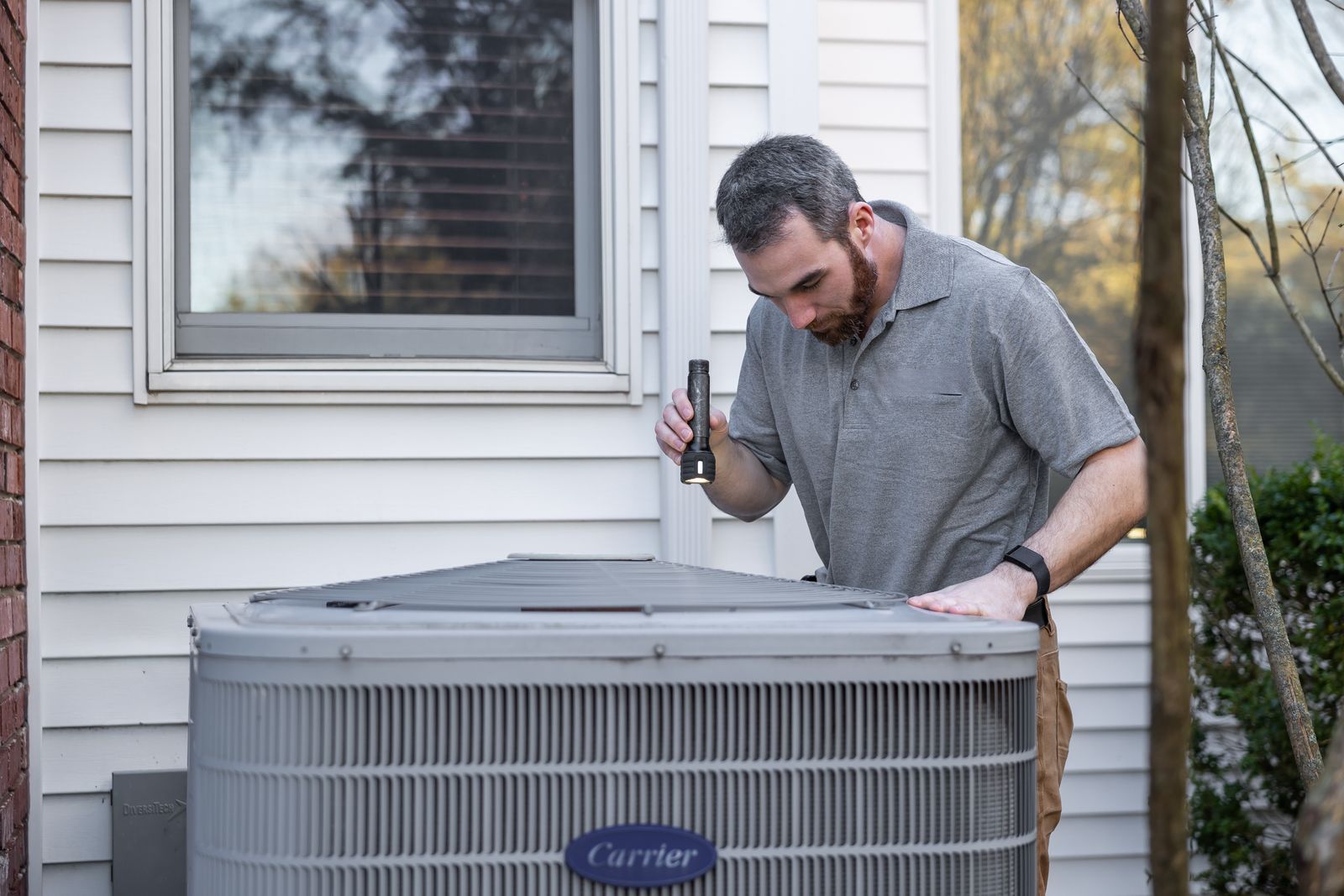
When you inspect a home that is more than 20 years old, the number of items in the report is not the main issue. Focus first on anything that could affect safety, insurance, normal use or a major expense in the next few years—especially the roof, HVAC system, foundation and signs of long-term water intrusion.
Today I joined a buyer at the inspection of a home that had just gone under contract. The house was built in 2004. The roof and HVAC system were original. The foundation had been repaired in the past, but the current inspection findings were favorable. Most of the remaining items were minor.
That creates a very common question: if the report does not show a dramatic active failure, is the house automatically a safe buy? Not necessarily. A buyer still needs to separate “working today” from “likely to require a large check soon.”
The small items were not the biggest decision
An inspection report can run dozens of pages. Loose hardware, failed caulk, window screens and minor repairs may all appear in the same document as a roof or foundation concern. The item count does not tell you the size of the risk. I reorganize the report into four groups:
Safety issues involving electrical, gas, fire, structural stability or injury risk.
Water and structural issues involving roof leaks, wall openings, drainage, moisture or foundation movement.
High-cost systems such as the roof, HVAC equipment, water heater, major plumbing and electrical components.
Routine maintenance and cosmetic items that can usually be prioritized after move-in.
Ten small maintenance notes may matter less than one major system near the end of its useful service period. The practical questions are: What needs immediate action? What needs a specialist? What should be added to the buyer’s first one-to-three-year budget?
Original roof: no active leak does not settle the insurance question
An original roof on a 2004 home is about 22 years old. Age alone does not prove that a roof has failed, but it is a strong reason to investigate further. The buyer should consider the roof covering, flashing, penetrations, ridge, eaves, attic staining and ventilation—not just whether shingles are still present.
Insurance belongs in this conversation early. The Texas Department of Insurance explains that a carrier may inspect a roof when a homeowner applies for coverage. An older or poorly maintained roof can affect pricing, eligibility and whether a future covered loss is paid at replacement cost or depreciated actual cash value. Insurance also does not replace a roof simply because it is old or worn.

A roof review should also follow the water. Gutters and downspouts that move water away from the walls and foundation can matter as much as the visible roof surface over time.
What I would verify next on the roof
The actual installation date and any invoice, permit, warranty or insurance claim record.
Whether the home inspector recommends a licensed roofing contractor and a written estimate.
Whether the buyer can obtain insurance, how the roof would be valued in a claim, and the wind or hail deductible.
Whether the attic shows old staining, current moisture, damaged decking or inadequate ventilation.
Whether the buyer can carry the replacement cost if the roof needs work soon after closing.
Original HVAC: cooling today is not a remaining-life estimate
If the system starts and produces cool air during the inspection, that is useful information. It still does not tell the buyer how long the compressor will last, how the system will perform under peak summer load or what a full HVAC diagnostic would find.
ENERGY STAR recommends considering replacement once an air conditioner or heat pump is more than 10 years old. That does not mean a 22-year-old unit is guaranteed to fail tomorrow. It means the buyer should budget conservatively and consider an HVAC specialist during the option period instead of waiting for the first breakdown after closing.
Five follow-up questions for an older HVAC system
Do the indoor and outdoor units have matching ages, and can the model and serial numbers be confirmed?
Did the inspection note concerns with temperature differential, condensate drainage, the drain pan or filtration?
Can the seller provide service history, including any pattern of repeated repairs?
Should an HVAC professional perform a deeper evaluation and provide a replacement estimate during the option period?
Can the buyer include a possible replacement in the first one-to-three-year ownership budget?
The foundation was repaired and currently tests well—what does that mean?
Two extremes are unhelpful: “Never buy a house with foundation repairs” and “The current reading is good, so the history no longer matters.” A repaired foundation that is performing well today is a positive sign. The buyer still needs to understand why it was repaired, what area was addressed, who performed the work and whether the warranty transfers.
Texas inspection standards describe a home inspection as a limited visual survey and basic performance evaluation of accessible systems at the time of inspection. It is not a destructive investigation into concealed conditions and it is not a promise of future performance. If the repair history is complicated or current signs remain, the buyer may need an appropriately qualified structural engineer or foundation specialist.
Foundation repair records worth requesting
The original evaluation, repair scope and pier or support layout.
The repair contract, paid invoice and completion date.
Any engineer letter or post-repair confirmation that was prepared at the time.
The warranty terms, whether the company is still operating, and any transfer deadline or fee.
Seller disclosures, later service records and current signs such as sticking doors, cracking, floor variation or drainage concerns.
The goal is not an impossible promise that nothing will ever move again. The goal is to connect the repair history, current performance and future responsibility. Complete records and a clear transferable warranty are very different from a one-line statement that the foundation was repaired.
Why buyers should attend the inspection when possible
A written report gives you findings. Being present helps you understand location, severity, context and the next step. When the inspector points something out, ask more than “Does this need repair?” Ask:
Is this a safety issue, a functional problem or routine maintenance?
Does it need immediate action, or should it be monitored?
Which type of specialist should evaluate it further?
What could happen if it is not addressed?
Which three findings most affect your overall view of the property?
My role at the inspection is not to replace the inspector’s technical judgment. It is to put the findings back into the transaction: how much option-period time remains, which specialists need to be scheduled, which documents should be requested, and whether the buyer wants to ask for repairs, a credit or another contract adjustment.
After the report arrives, make decisions in this order
Circle safety, water intrusion, structural and high-cost system issues before discussing cosmetic repairs.
Schedule any recommended specialist evaluation promptly instead of waiting until the option period is almost over.
For an older roof, obtain insurance terms early. For an older HVAC system, obtain a diagnostic opinion and replacement budget early.
Combine immediate repairs and likely one-to-three-year replacements with the buyer’s total cash plan.
Then decide whether to request repairs, negotiate a credit or price change, accept the condition, or use another right available under the signed contract.
The termination option in a Texas contract is negotiable. Buyers commonly use the option period for inspections and repair discussions, but a seller is not automatically required to accept every request. Timing, notices and rights depend on the executed contract and appropriate professional advice.
Frequently asked questions
Should I walk away just because the roof and AC are original?
Not automatically. The decision depends on current condition, specialist findings, insurance terms, likely replacement cost and whether the transaction terms reflect the risk. Old does not mean failed today, but it should not be treated as a free future expense.
Will a repaired foundation hurt resale?
It may affect how some future buyers evaluate the home, which is why documentation and a transferable warranty matter. A complete repair history and stable current performance are easier to explain than missing records and verbal assurances. Future pricing will also depend on market conditions and the home’s condition at that time.
Should the seller fix every item in the inspection report?
Usually that is not the best way to prioritize. An inspection report helps the buyer evaluate the property; it is not an automatic repair list for the seller. Negotiations are generally more effective when they focus on safety, water intrusion, structural concerns, high-cost systems and the feasibility of the transaction.
Related reading
Touring a Houston home? Look beyond the cosmetic updates
Buying a Houston home: costs beyond the mortgage payment
Sources
Texas Real Estate Commission: inspection standards define a limited visual survey and basic performance evaluation.
Texas Real Estate Commission: buyers may use the option period for inspection and repair negotiations.
Texas Department of Insurance: roof age and condition can affect coverage, pricing and claim valuation.
ENERGY STAR: air conditioners or heat pumps more than 10 years old warrant replacement consideration.
Texas Real Estate Commission inspection standards
Texas Real Estate Commission explanation of the option period
Texas Department of Insurance roof guidance
ENERGY STAR guidance on replacing heating and cooling equipment
Joyce's Featured Listings

AI-generated illustration: a Greater Houston housing scene, not a real or currently available listing.
Once you know how to evaluate inspection risk, browse Joyce's Featured Listings to see what different ages, budgets and areas currently offer. Availability and status can change, so use the listing page for the latest information.
View Joyce's Featured Listings →
Buying a home? Send me these details before or after the inspection
If you are considering a resale home in Greater Houston, send me the target area, budget, approximate age, known ages of the major systems and the issue that concerns you most. I can help organize the sequence from showing to inspection to the option-period decision, so the expensive questions are handled first.
About Joyce Tang

Joyce Tang is a Greater Houston real estate agent and investor, co-founder of the North American Real Estate Association, founder of JoyHome and JoyNest, and co-leader of the Dr. Wang Real Estate Team.
She has helped more than 200 families buy or sell homes and has participated in more than 40 renovation projects. Her approach examines not only price, but also location, carrying cost, cash flow, risk and future exit options.
Disclaimer
This article is based on an anonymized inspection scenario and is provided for general information only. It is not a property-condition warranty, legal advice, insurance advice or an engineering opinion. A specific home should be evaluated by a Texas-licensed inspector and, when appropriate, qualified structural, roofing, HVAC, insurance or legal professionals. Contract timing and rights depend on the executed agreement.