
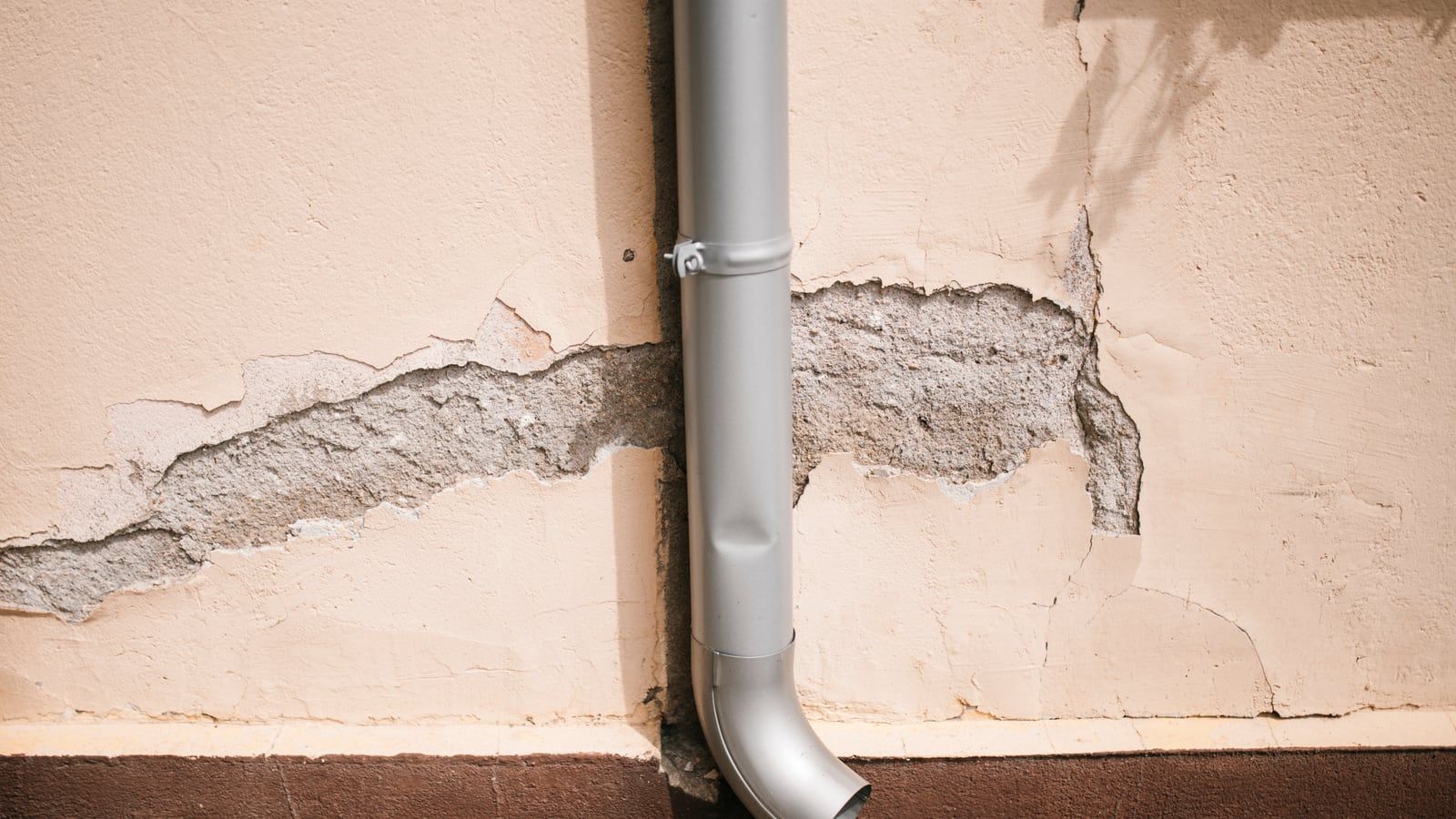
A stucco exterior can look intact while moisture is entering at windows, roof-to-wall intersections, penetrations, balconies, or lower terminations. The buying decision should not turn on whether the broad wall surface looks clean; it should turn on where water can enter, whether the assembly can drain, and whether evidence justifies a focused moisture investigation.
Do not start with “Is there a crack?” Start with “Where can water enter, and where would it go?”
What a standard inspection covers—and what it does not
Texas standards require inspectors to examine exterior cladding, water-resistant materials and coatings, flashing details, terminations, windows, doors, and visible evidence of water penetration. But the inspection is a limited visual survey, not an exploratory or destructive investigation. Moisture meters and thermal imaging are not required, and concealed wall areas remain concealed.
“No visible water penetration” means no reportable evidence was observed in accessible areas at that time. It is not proof that every wall cavity is dry. At the same time, one hairline crack does not prove that an entire elevation has failed. Location, pattern, detailing, and follow-up evidence matter.
Six areas that matter more than an otherwise clean wall
1. Window and door perimeters
Look below sills, above openings, at corners, sealant joints, trim, and transitions. Staining, bulging, cracking, loose material, or repeated caulk patches deserve questions. Fog between glass panes is a glazing-seal issue; damp wall material around the frame is a different investigation.
2. Roof-to-wall intersections
Water concentrates where a sloped roof meets a wall and near eave endings. Flashing and the drainage path matter more than fresh paint. Roof and wall symptoms often overlap, so review them together.
3. The bottom edge near soil, beds, and paving
Cladding that stays close to wet soil, mulch, or frequent irrigation may dry poorly and can conceal important terminations. Review grade, bed height, sprinkler direction, gutters, and downspout discharge as one water-management picture.
4. Faucets, pipes, lights, outlets, and other penetrations
Every penetration interrupts the exterior drainage and weather-resistive layers. Failed sealant, oversized holes, loose trim, or radiating cracks deserve more than another bead of caulk. First determine whether water has entered and whether concealed materials are affected.
5. Balconies, decks, and floor transitions
Horizontal surfaces meeting vertical walls can concentrate water and conceal damage below finishes. Rail attachments, thresholds, drains, and wall transitions with staining, soft material, or repeated repairs support a focused enclosure review.
6. Fresh paint or patches without a clear repair record
Fresh paint may be ordinary maintenance. But a local change in color, texture, or detailing without invoices, photos, scope, or warranty should trigger questions about what was repaired and why. A surface patch does not prove that the entry path and damaged substrate were corrected.
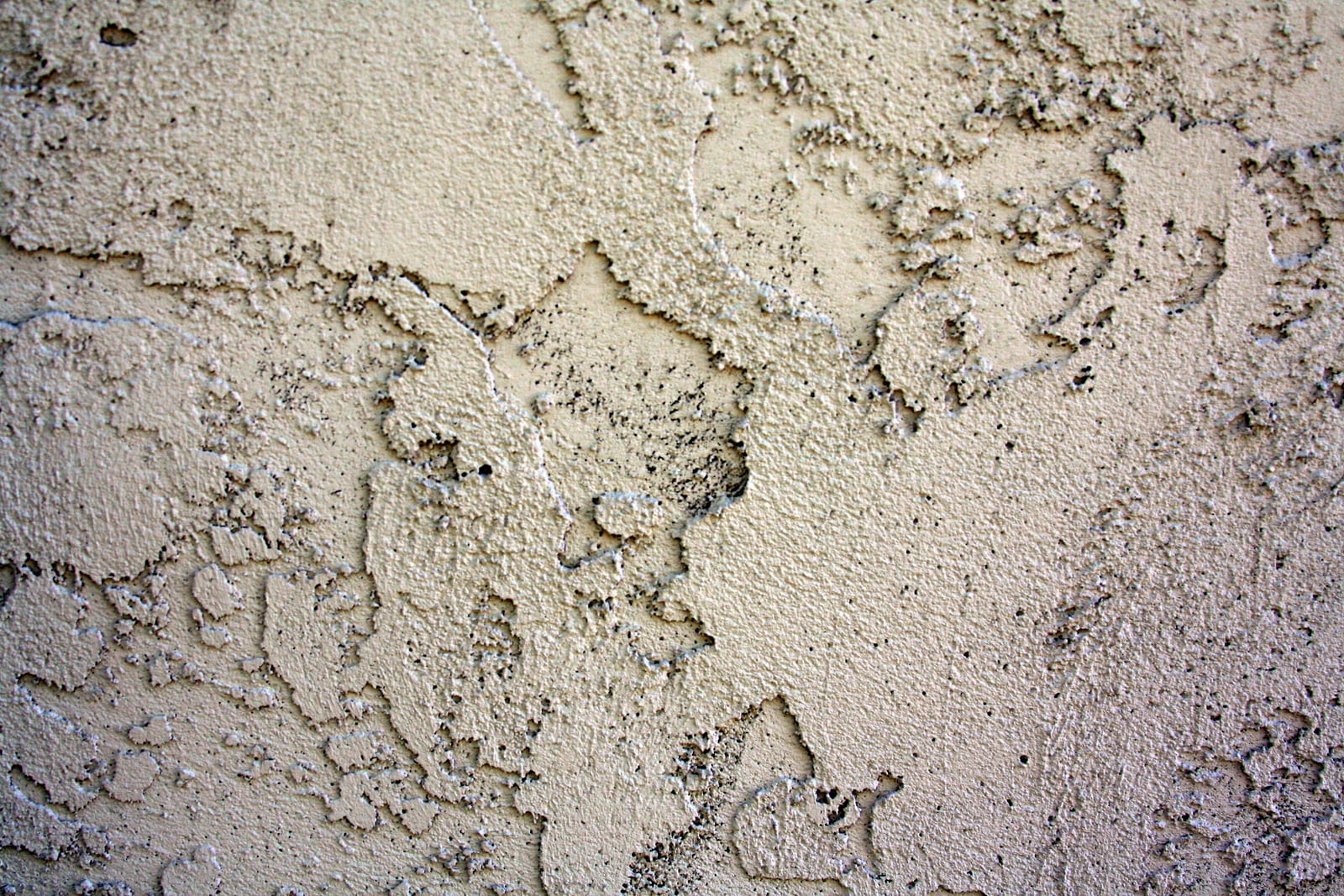
Real close view of a stucco exterior coating. It helps show the surface layer and texture, but a photograph cannot establish whether a concealed wall is dry. Photo: Dante Alighieri / Wikimedia Commons, CC BY-SA 3.0; cropped, resized, and compressed.
When is a focused moisture investigation worth considering?
Not every stucco home needs immediate invasive testing. Start with visible evidence, age, extent of cladding, repair history, inspection limitations, and water paths. A focused review becomes more useful when several of these conditions appear together:
- Similar stains, cracks, or patches occur at several openings or penetrations.
- Interior finishes along exterior walls show discoloration, softness, odor, or repeat repair.
- The general inspector recommends further evaluation or could not view important areas.
- Seller disclosures identify prior water entry, wood damage, or substantial wall repair.
- Stucco covers a large share of the home and the possible repair scope would materially affect the purchase decision.
Moisture meters, thermal images, and probes all have limits. Results depend on materials, weather, calibration, and test locations. Invasive testing also requires seller permission. Before testing, define the method, locations, repair responsibility, and written deliverable.
A repair estimate should separate these seven items
- Suspected or confirmed water-entry source.
- Surface repair versus opening the wall to inspect substrate and framing.
- Area of cladding removal and replacement.
- Flashing and termination work at windows, roofs, balconies, and penetrations.
- Replacement of wet sheathing, insulation, or framing if verified.
- Scaffolding, painting, texture, and color matching.
- Permits, schedule, warranty, and post-repair verification.
A “crack repair” price can understate a larger enclosure problem. But one abnormal reading does not justify treating the worst-case whole-house scope as established fact. Align cause, scope, and evidence before choosing repair, credit, price adjustment, further investigation, or termination.
Use this seven-step option-period checklist
- Confirm the exterior material and extent instead of assuming every light-colored finish is the same system.
- Recheck openings, lower edges, and penetrations after rain or irrigation when possible.
- Photograph stains, cracks, patches, and terminations in context and close-up.
- Review disclosures, invoices, completion photos, warranties, and permit records.
- Evaluate roof drainage, gutters, downspouts, grading, beds, and irrigation together.
- When several warning signs align, schedule an enclosure professional promptly and obtain permission for any invasive testing.
- Use written findings and itemized scopes—not “it looks fine”—to make the negotiation decision.
For roof intersections, continue with The Roof Is Not Leaking—So Is It Fine? 7 Things Houston Buyers Should Check. For grading and downspouts, read Standing Water After Rain? What Houston Buyers Should Check. To prioritize the whole inspection, use The 5 Big-Ticket Items to Check at a Houston Home Inspection.
Frequently asked questions
Does a hairline stucco crack mean water has entered?
Not automatically. Crack size, location, depth, detailing, and wall construction all matter. Treat it as evidence to investigate, not a diagnosis from one photo.
Can thermal imaging prove there is water behind the wall?
Not by itself. Temperature differences can reflect moisture, insulation, sun exposure, air conditioning, or other conditions. Thermal imaging can guide a closer review when combined with moisture readings, visual evidence, and appropriate follow-up.
The seller says the stucco was repaired and has a warranty. Is that enough?
Review who issued the warranty, what it covers, whether it transfers, and whether the repair addressed both the entry path and damaged substrate. A warranty does not replace current condition and scope verification.
Can I request a specialized test even if the general inspector did not?
You can discuss the property-specific concern with your inspector and the appropriate specialist. Any invasive testing should have the required permission and a clear plan for patching test locations.
Joyce's Featured Listings

AI-generated illustration: a Greater Houston housing scene, not a real or currently available listing.
When comparing stucco homes, budget for the wall area, water paths, repair history, and any focused investigation—not only the curb appeal. Browse Joyce’s Featured Listings, then tailor the inspection plan to the address.
View Joyce's Featured Listings →
Considering a stucco home and unsure whether to add moisture testing?
Send me the address, year built, exterior photos, relevant inspection pages, and seller repair records. I can help organize the missing information, estimate scopes, and option-period negotiation priorities. Material identification, moisture conditions, construction, and structural questions remain with the appropriate qualified professionals.
About Joyce Tang

Joyce Tang is a Greater Houston real estate agent and investor, co-founder of the North American Real Estate Association, founder of JoyHome and JoyNest, and co-leader of the Dr. Wang Real Estate Team.
She has helped more than 200 families buy or sell homes and has participated in more than 40 renovation projects. Her approach examines not only price, but also location, carrying cost, cash flow, risk and future exit options.
Sources and disclaimer
Sources checked October 21, 2026: Texas Real Estate Commission inspection Standards of Practice and Building Science Corporation guidance on residential water management and drainable exterior-wall systems.
This article provides a general real-estate and inspection framework, not exterior-envelope, construction, structural, engineering, environmental, mold, legal, insurance, or contract advice. Confirm wall material, moisture conditions, testing, repairs, and permits with the appropriate qualified or licensed professionals. Obtain necessary written permission before invasive testing.
Cover photo from Wikimedia Commons by Shixart1985, used under CC BY 2.0. Inline photo from Wikimedia Commons by Dante Alighieri, used under CC BY-SA 3.0. Both were cropped, resized, and compressed; neither depicts a Houston listing, and the creators do not endorse Joyce.