
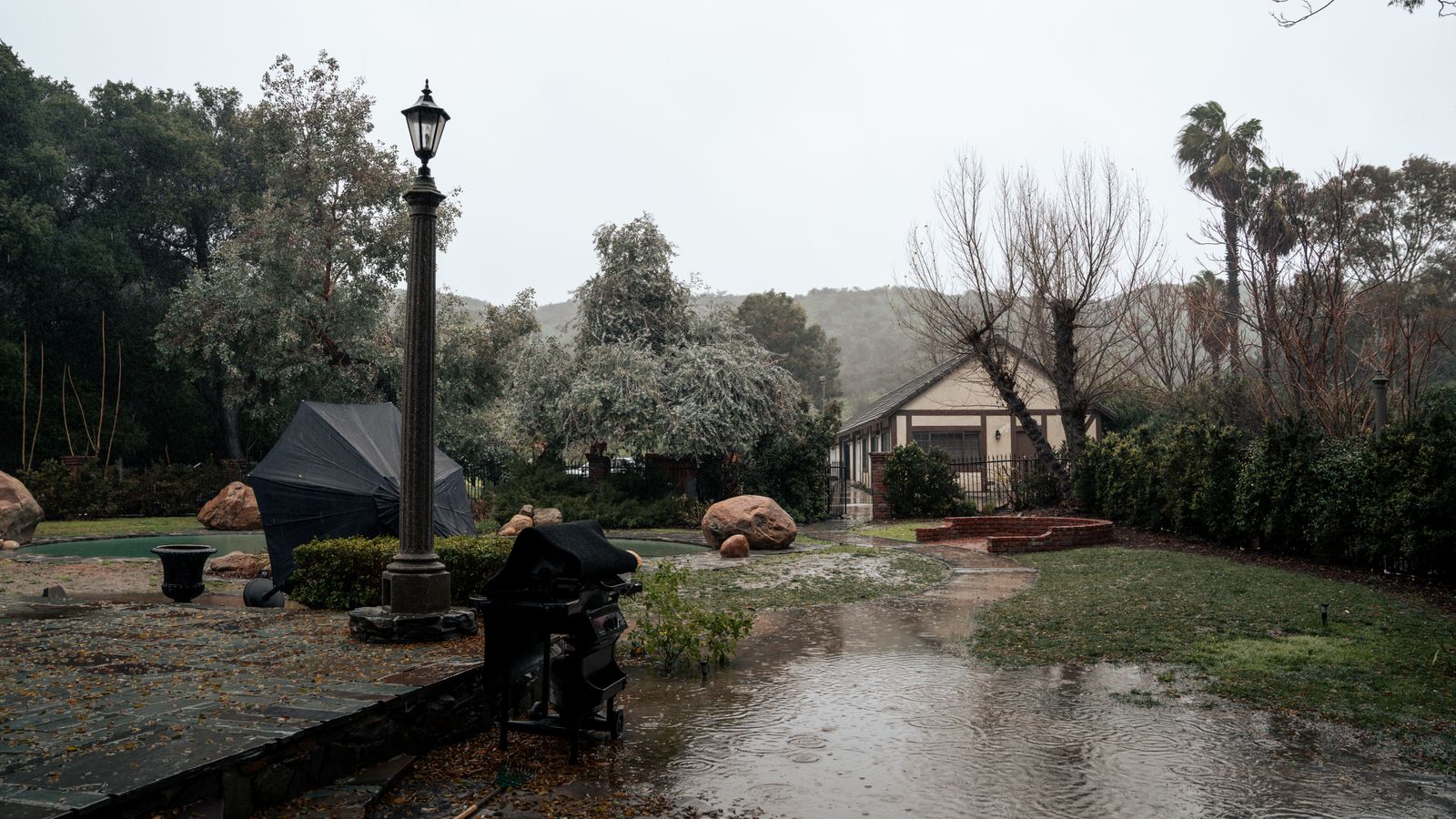
A puddle during or immediately after a Houston downpour does not automatically mean the home has a major drainage defect. The stronger warning signs are water moving toward the structure, sitting against the slab, repeatedly entering a garage or interior, or remaining long after nearby areas have drained.
Do not begin with a French drain or a load of fill dirt. A repair aimed in the wrong direction can block an existing drainage path or simply push the problem onto the neighboring property.
First decide: temporary puddling, a lot-drainage problem, or area-wide ponding?
All three look like “standing water,” but they lead to different next steps.
Temporary low-spot storage: water appears during intense rain, stays away from the home and steadily recedes afterward.
Lot drainage: runoff from the roof, adjacent land or a higher part of the lot moves toward the slab, side yard, garage opening or equipment pad.
Street or neighborhood drainage: road low points, inlets, ditches and several nearby properties cannot drain at the same time.
The Harris County Flood Control District notes that localized ponding can affect homes when rainfall reaches the local drainage system faster than it can be carried away. What happens in one yard must be read together with the street, inlets, ditches and nearby waterways.
1. Watch for gutters that overflow instead of collect
From a safe location during rain, watch the roof edge. Water should enter the gutter and move through the downspout. A sheet of water spilling over the edge can point to debris, poor slope, leaking joints or too much concentrated roof flow for that section.

Real gutter drainage during rain. The important question is not only whether the home has gutters, but where the collected water is discharged.
A gutter that looks clean on a dry day may still overflow at a corner, roof valley or downspout opening during a hard storm.
2. Check where each downspout actually ends
Many yards have downspouts, but the outlet drops an entire roof section beside the foundation. Look for blocked outlets, erosion, displaced splash blocks and extensions that are detached, crushed or sloped back toward the house.
Cleaning or reconnecting an extension may be a reasonable low-risk first step. The outlet still cannot be redirected carelessly toward a neighbor, public sidewalk or an unapproved location. A permanent solution must account for grade, erosion, HOA requirements and local permits.
3. Read the grade from the water marks—not by eye alone
After the storm, walk the perimeter. Follow silt, erosion and wet lines rather than deciding whether the yard “looks flat.” Raised beds, mulch and later landscaping can interrupt the original path or hold water against the structure.
Does a continuous wet band follow the wall or slab edge?
Has an HVAC pad, fence, paver walk or added bed blocked the side-yard path?
Do the driveway, patio or pool deck send water toward the garage or rear door?
Is runoff from higher neighboring land concentrating in this lot?
Texas A&M AgriLife recommends observing the real drainage pattern during rain before deciding how to redirect or hold runoff. A trench designed from dry-day impressions can become an expensive line with no workable outlet.
4. Inspect swales, catch basins and unknown underground pipes
Many communities use shallow swales between houses, surface inlets or buried pipes leading toward the street or rear of the development. Grass, roots, sediment, toys, landscape rock and construction debris can interrupt them.
Remove only what can be safely identified at the surface. Do not probe an unseen line or excavate without knowing the outlet and utility locations. Repeated backup, settlement or no visible discharge usually needs further evaluation by a drainage professional.
5. Compare the yard with the street and storm inlets
If adjacent front yards, a road low point and storm inlets all hold water, the condition may extend beyond one lot. Record the time, rain intensity, extent and recession. Then confirm whether the address is managed by the City of Houston, another city, the county, a MUD, drainage district or HOA. A Houston mailing address does not establish the responsible agency.
Within Houston city limits, public drainage blockage or maintenance concerns can be reported through 311. Do not enter or alter public easements, channels, bayous or detention facilities; contact the actual managing authority.
6. Look for evidence at the garage and inside
The condition becomes more urgent when water approaches the building. Inspect the garage-door bottom, exterior thresholds, wall corners, baseboards, closets, floor edges and nearby return-air areas for staining, bubbling, musty odor, mineral deposits or new cracking.
If water entered the structure, address electrical safety, stop additional entry where safely possible and ask the insurer what documentation is needed. Coverage depends on the policy and the source of water; it must be evaluated by the insurance professional handling that property.
7. Confirm that rain is actually the source
A small area that stays wet through dry weather may involve irrigation, an outdoor line, pool equipment, condensate discharge, a supply line or wastewater system. Temporarily stopping irrigation and recording meter use and changes can provide clues, but surface symptoms do not prove a foundation or buried-pipe leak.
Unexplained water use, bubbling ground, sewage odor, saturated soil beside the foundation or unusual indoor pressure calls for the appropriate licensed or qualified professional.
How I separate “watch,” “maintain,” and “call someone”
Document and watch
Water appears only during intense rainfall, remains away from the house, causes no erosion or backup and continues to recede afterward. Record at least two storms with different intensity; one photo rarely shows the pattern.
Start with low-risk maintenance
The gutter has visible leaves, a downspout extension is disconnected, an inlet grate is covered, or a swale is blocked only by surface grass and sediment. Recheck during the next rain instead of declaring success because the dry yard looks better.
Bring in a professional promptly
Water touches the slab, enters a garage or interior, repeatedly erodes soil, involves runoff disputes, backs through an unknown line, requires substantial regrading, or returns during ordinary rain. The right help may be a drainage contractor, civil or drainage engineer, inspector, foundation specialist or plumber depending on the source.
Record these 6 things before asking for an estimate
When rain began, when it was heaviest and when it stopped.
The deepest and widest extent, using a fixed joint or ruler for reference.
Gutter overflow, every downspout outlet and the direction of flow.
Continuous video of side, front and rear yards plus adjacent grade.
Comparisons one hour, several hours and the next day after rain.
Any garage or interior stain, odor or material change.
Do not document in lightning, moving water or water of unknown depth. Never drive or walk through a flooded roadway.
Frequently asked questions
Does yard ponding mean the house is in a flood zone?
No. Yard ponding can result from roof discharge, grade, blockage or limited local drainage and is not the same as a FEMA flood-zone designation. Conversely, a property outside a higher-risk mapped zone can still experience localized ponding. Review official maps, history and on-site drainage together.
Will a French drain always solve standing water?
No. It needs the correct collection point, slope, materials and lawful outlet. If the source is gutter overflow, street backup or the absence of a viable low outlet, burying a pipe may not solve the condition.
How can a buyer evaluate drainage when it is not raining?
Inspect grade, water marks, erosion, gutters, downspouts, inlets and adjacent elevation. Review seller disclosure and history. During the option period, revisit after rain when possible and ask the inspector or appropriate specialist to evaluate suspicious locations.
Related reading
Got the keys? 10 things new Texas homeowners should do in the first week
Eight home-inspection items most likely to become major expenses
How to use the Texas option period after a home inspection
Sources
Harris County Flood Control District: drainage network
Harris County Flood Education Mapping Tool
Houston Permitting Center: floodplain management and public drainage guidance
Texas A&M AgriLife: rainwater harvesting and landscape drainage planning
Joyce's Featured Listings

AI-generated illustration: a Greater Houston housing scene, not a real or currently available listing.
Browse Joyce's Featured Listings to compare current options. When reviewing photos, look beyond kitchens and finishes to lot elevation, side-yard width, roof drainage and nearby stormwater features.
View Joyce's Featured Listings →
Not sure which professional should evaluate the water?
Send me the city or county, the location of the water, video during rain and photos after it stops. I can help separate roof drainage, lot drainage, public drainage and interior entry so the next call goes to the appropriate inspector, drainage contractor, engineer, plumber, insurance professional or public agency.
About Joyce Tang

Joyce Tang is a Greater Houston real estate agent and investor, co-founder of the North American Real Estate Association, founder of JoyHome and JoyNest, and co-leader of the Dr. Wang Real Estate Team.
She has helped more than 200 families buy or sell homes and has participated in more than 40 renovation projects. Her approach examines not only price, but also location, carrying cost, cash flow, risk and future exit options.
Disclaimer
This article provides general observation and educational information only. It is not engineering, drainage, foundation, plumbing, insurance, legal or flood-risk advice. Jurisdiction may belong to a city, county, drainage district, MUD or HOA. Verify construction, fill, outlets, easements, insurance coverage and permit requirements with the responsible authority and qualified professionals.