
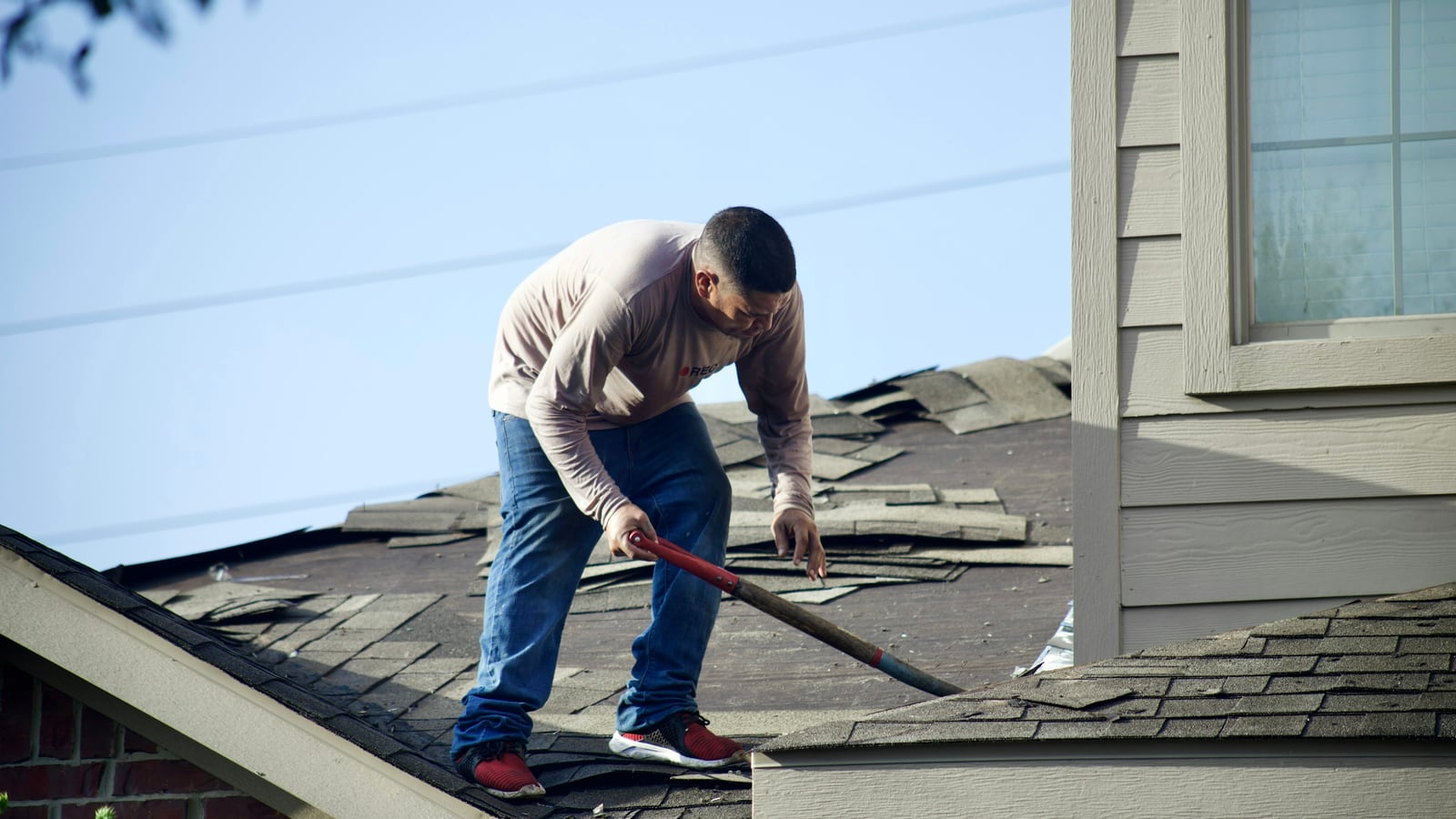
A roof that is not leaking today can still have defects, near-term costs, or insurance limitations. Houston buyers should not base the decision on a single estimate of “years left.” The roof surface, attic evidence, repair history, written scope, and an actual insurance quote need to tell the same story.
Roof age is a clue. Condition and documentation determine the next step.
Why can’t a standard inspection promise how many years remain?
A Texas home inspection is a limited visual survey. The inspector reports the roof-covering type, inspection vantage point, visible water penetration, prior repair evidence, and observable deficiencies in coverings, flashing, skylights, and penetrations.
TREC minimum standards do not require an inspector to estimate remaining roof life, determine insurability, identify hidden hail damage, or walk a roof when access is unsafe or likely to damage the covering. A report based on the ground or a drone has a different viewing range from a roof-level inspection.
Seven things Houston buyers should actually check
1. Document the installation—not just the age someone remembers
Look for invoices, contracts, material records, warranties, prior photos, and permits when applicable. The approximate age on a seller disclosure is a starting point, not proof of scope. Confirm whether the work replaced the entire covering, one slope, or a small repair area.
2. Read the inspection vantage point and limitations
Check whether the inspector walked the roof, which slopes were not visible, whether weather affected access, and whether solar panels or other equipment concealed areas. “No significant issue observed” is only as complete as the area that was actually visible.
3. Inspect flashing and penetrations—not only shingles
Chimneys, vents, skylights, valleys, wall intersections, and eaves are common points of concern. Missing, lifted, cracked, loose, or patched materials and deficient flashing matter more than whether the roof looks new from the driveway.
4. Work backward from evidence in the attic
A dry inspection day does not erase prior water entry. Attic staining, discolored decking, rusted fasteners, patched areas, and changed insulation deserve follow-up. Old staining does not automatically prove an active leak, so compare it with moisture conditions, weather, repair records, and qualified evaluation.
5. Make repair history explain the problem
A prior repair is neither automatically reassuring nor alarming. Ask where the leak was, what was repaired, who performed the work, whether it returned, and whether any warranty remains. Repeated patches in different areas tell a different story from one documented local repair.
6. Require a written scope that shows possible add-ons
A useful estimate separates tear-off layers, decking allowance, flashing, ventilation, disposal, materials, and warranty. It should also explain how deteriorated decking discovered after removal will be priced. A low total can be misleading when major items are excluded.
7. Obtain insurance terms during the option period
In September 2026, the Texas Department of Insurance clarified that insurers cannot decline or nonrenew a policy solely because of the age of a home or roof. Insurers may still base underwriting decisions on the roof’s physical condition. Age alone is not the answer; condition still matters.
Ask whether the roof is settled at replacement cost or actual cash value after depreciation, whether wind and hail carry a separate deductible, and whether the policy has a roof limitation or exclusion. TDI also notes that a company may decline to cover the roof itself when the condition is poor.

Real roof-deck worksite photo. Some decking and underlayment conditions are fully visible only after removal. Pre-closing inspection and estimates can reduce uncertainty, but they cannot replace findings after tear-off.
Repair, replacement, or credit?
A localized repair may fit when
- the defect is confined to a clear area and the remaining roof is in serviceable condition;
- a qualified professional can define the work and provide a reasonable written estimate;
- the buyer’s insurance plan remains workable after the repair;
- the repair does not leave an obvious system-wide issue for after closing.
A full replacement deserves evaluation when
- multiple slopes show widespread deterioration, missing materials, lifting, or repeated patches;
- the attic shows water entry in more than one area;
- decking, flashing, ventilation, or installation details may need coordinated work;
- the buyer cannot obtain a suitable insurance option in the roof’s current condition.
A credit does not eliminate the project risk
A price adjustment or closing credit can give the buyer control when the seller will not perform the work. First confirm that the lender and insurer will allow that approach, and budget for unknown decking or flashing costs. A credit that matches the first estimate may still be short after tear-off.
Use this option-period sequence
- Collect the seller disclosure, installation records, invoices, warranties, repair records, and available claim documentation.
- Read the general inspection’s roof vantage point, limitations, photos, and attic findings.
- When concerns remain or access was limited, obtain a focused evaluation from a qualified roofing professional.
- Request an itemized written estimate that addresses decking and flashing allowances after tear-off.
- Give the address, roof age, and inspection information to an insurance professional during the option period and obtain actionable terms.
- Separate immediate repairs, near-term budget, and unresolved information.
- Use the contract and professional findings to decide whether to negotiate repair, replacement, credit, price, or more investigation.
For the larger inspection picture, start with Five Big-Ticket Problems Houston Buyers Should Watch During a Home Inspection. Read Houston Home Insurance Before Closing to connect condition with coverage. Then use What Should a Buyer Ask the Seller to Fix? to organize negotiation priorities.
Frequently asked questions
Is there an age when a roof automatically becomes uninsurable?
That is too broad. Texas rules do not allow a company to decline or nonrenew solely because of roof age, but the physical condition and policy terms still matter. Quote the specific property.
Can I rely on “five years of life left” in an inspection report?
No. TREC minimum standards do not require a remaining-life estimate. Even when someone offers an opinion, read the scope and basis; it is not a warranty against future leakage.
The seller says the roof was recently replaced. Do I still verify it?
Yes. Confirm whether it was a full replacement, the material and scope, decking work, warranty transfer, and any leaks or repairs after completion.
Why does insurance care if the roof is not leaking?
Underwriting considers physical condition and policy terms, not only an active leak on inspection day. A general inspection does not determine coverage, settlement method, or deductible.
Joyce's Featured Listings

AI-generated illustration: a Greater Houston housing scene, not a real or currently available listing.
Matching roof records, condition, and insurance terms helps reveal the real near-term budget behind a home. Browse Joyce’s Featured Listings, then tailor the inspection plan to the specific address.
View Joyce's Featured Listings →
Considering a home with unclear roof age or condition?
Send me the address, seller disclosure, roof and attic sections of the inspection, repair records, and insurance quote. I can help organize missing documents, the option-period sequence, and negotiation priorities. Roof condition, repair scope, worksite safety, and insurance coverage should be confirmed by the appropriate licensed or qualified professionals.
About Joyce Tang

Joyce Tang is a Greater Houston real estate agent and investor, co-founder of the North American Real Estate Association, founder of JoyHome and JoyNest, and co-leader of the Dr. Wang Real Estate Team.
She has helped more than 200 families buy or sell homes and has participated in more than 40 renovation projects. Her approach examines not only price, but also location, carrying cost, cash flow, risk and future exit options.
Sources and disclaimer
Sources checked October 20, 2026: TREC home-inspection standards, the TREC seller-disclosure resource, Texas Department of Insurance roof guidance, the 2026 roof-age underwriting clarification, and TDI replacement-cost and actual-cash-value guidance.
This article provides a general real-estate and inspection checklist. It is not roofing, structural, engineering, insurance, lending, legal, or contract advice. Inspection scope, repair approach, underwriting, claim settlement, deductibles, and transaction rights depend on the property, policy, contract, and site conditions. Confirm them with the appropriate licensed or qualified professionals.
Cover Sugar Land roof-work photo from Unsplash by Zohair Mirza, used under the Unsplash License. Roof-deck worksite photo from Pexels by Bulat843 🌙, used under the Pexels License. The images do not depict Joyce clients, an available listing, an inspection result, or a contractor endorsement.