

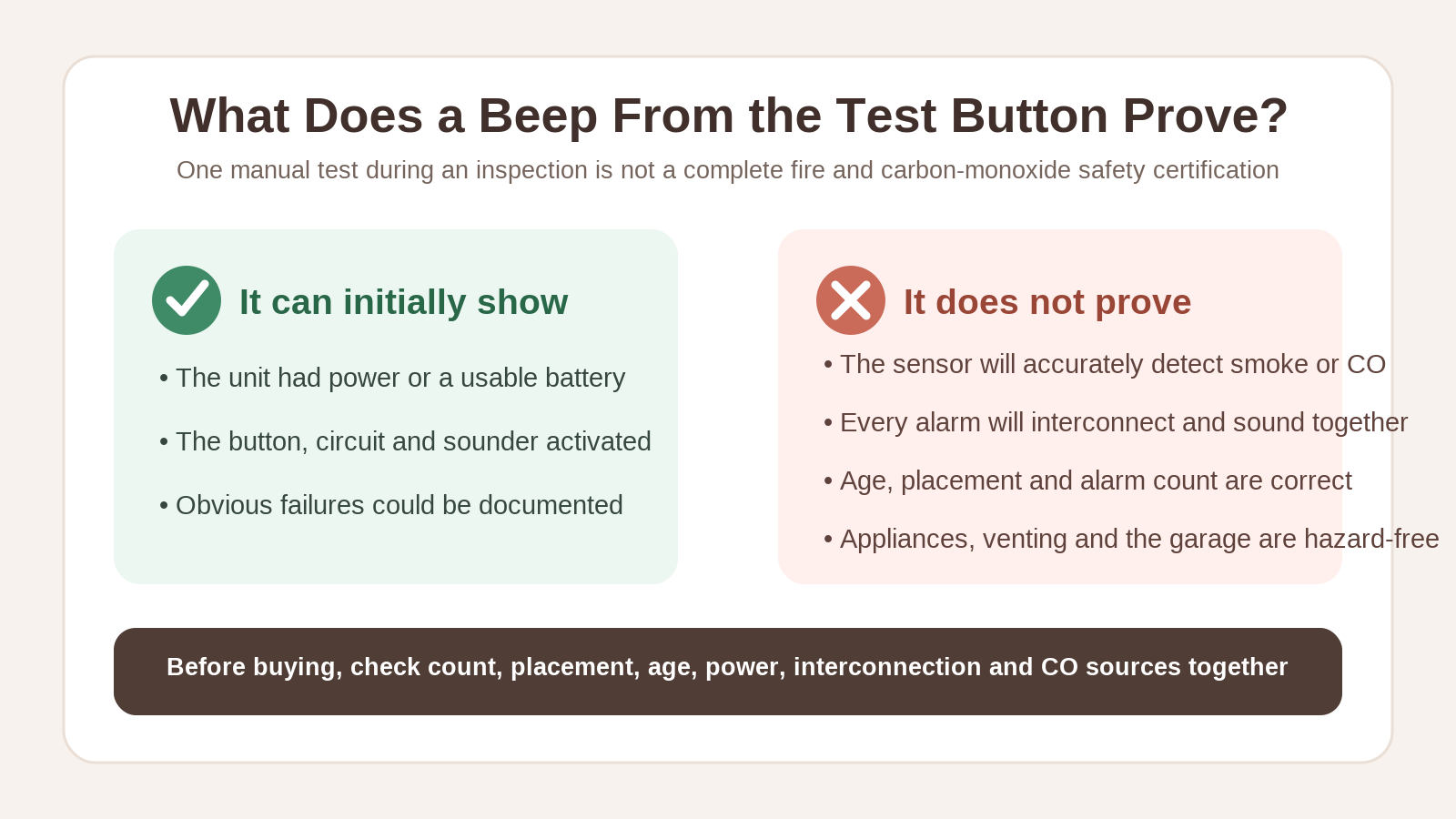
A beep from the test button is necessary, but it does not prove the entire home is protected. Before buying, review alarm type, count, placement, manufacture date, power and interconnection—plus the fuel-burning equipment and attached garage that may create carbon-monoxide risk.
This item often gets pushed to the end of a report because individual alarms are inexpensive. The real issue is warning time: you do not want to learn after move-in that a bedroom has no alarm, every unit is expired or an alarm in a distant part of the home cannot be heard elsewhere.
What does a standard Texas inspection cover?
Current Texas Real Estate Commission minimum standards require inspectors to manually test installed, accessible smoke and carbon-monoxide alarms and report visible deficiencies and required locations where alarms are absent. Smoke-alarm coverage includes each sleeping room, the immediate vicinity outside each separate sleeping area and the living space of every story.
When fuel-fired appliances are installed or an attached garage opens into the dwelling, the standards also address missing carbon-monoxide alarms outside separate sleeping areas. A standard inspection does not verify the actual effectiveness of the sensors or smoke-alarm interconnection. Monitored alarms and devices requiring codes may not be activated.
Seven checks that go beyond “Did it beep?”
1. Identify what each device actually is
Similar-looking devices may be smoke alarms, carbon-monoxide alarms, combination units or security sensors. Read the label, model and instructions instead of identifying a device only by its round housing. CO protection deserves particular attention when the home has a gas furnace, gas water heater, fireplace, gas range or an attached garage.
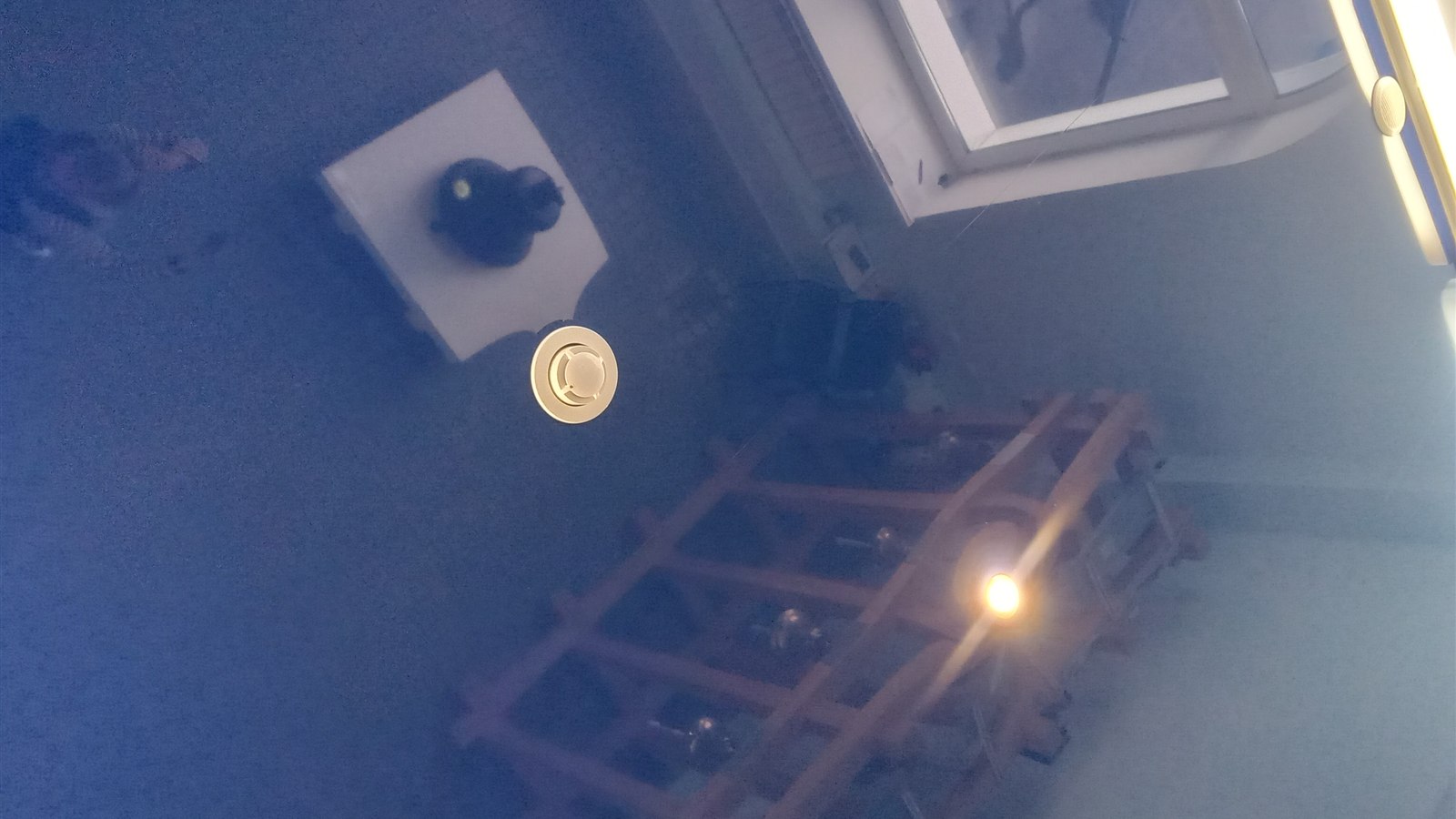
This is a real installed smoke-detector photograph, not a Houston listing. During the inspection, photograph the face and side label so the model, purpose and date can be verified later.
2. Confirm the count and placement by sleeping area and story
One alarm in a hallway is not the whole review. Check each bedroom, the area outside every separate sleeping zone and the living space of every story for smoke alarms. Review CO-alarm placement against fuel sources, the attached garage, local requirements and manufacturer instructions. CPSC household guidance goes further than the Texas inspection trigger and recommends CO alarms on every level and outside sleeping areas.
3. Understand what the test button tested
The U.S. Consumer Product Safety Commission explains that a CO alarm test button checks whether the circuitry operates; it does not test sensor accuracy. The Texas inspection boundary is similar: the inspector manually activates accessible devices but does not certify their effectiveness.
Treat the inspection-day beep as one data point. When a report says a device was not tested because it is monitored, requires a code or was inaccessible, decide who will complete the follow-up and when.
4. Check the manufacture date and replacement age
The U.S. Fire Administration recommends replacing smoke alarms after ten years. A CO alarm has a model-specific sensor life and replacement signal, so follow the product literature or manufacturer. A clean shell does not make an old sensor new. When the date is missing or unreadable, price a clear replacement plan instead of guessing.
5. Determine whether it is battery-powered, hardwired or both
Hardwired alarms commonly still have backup batteries. Look for missing batteries, low-battery chirps, loose mounting, paint over the housing or units removed from their bases. Do not dismantle an unfamiliar wired or monitored system. Power, wiring and compatibility questions belong with a qualified electrician or alarm professional.
6. Ask whether one alarm makes the others sound
Interconnection helps warn someone upstairs or behind a closed door when danger begins near the garage, kitchen or a remote bedroom. USFA recommends interconnected smoke alarms, but Texas minimum inspection standards do not require the inspector to verify interconnectivity. In a large, multistory home or a system with mixed ages and brands, separate “each unit beeps” from “the system alerts the home.”
7. Inspect the hazard sources, not only the alarm
An alarm does not correct furnace or water-heater venting, fireplace problems, vehicle exhaust or unsafe generator use. When the inspection identifies combustion, venting, garage-separation or repeated-alarm concerns, prioritize occupant safety and have the appropriate qualified professional evaluate the source.
If a CO alarm sounds, do not stay inside searching for the cause. CPSC advises moving immediately to fresh air, calling 911 or the fire department and not reentering until emergency responders permit it.
Use this option-period checklist
Sketch each story and sleeping area, marking smoke, CO and combination alarms.
Photograph model numbers, manufacture dates, end-of-life indicators and power type.
Ask the report to identify which devices were tested, which were not and why.
Review the seller disclosure regarding working smoke detectors without substituting disclosure for inspection.
When the home has fuel-fired equipment, a fireplace or an attached garage, review the related equipment, venting and separation.
Separate missing-device replacement, expired-unit replacement, wiring repair and system-interconnection upgrades into different scopes.
Agree on who will complete safety work and verify it again during the final walk-through.
Do not negotiate every issue as “replace the alarm”
A missing battery alarm and a failed hardwired system are not the same repair. One may be a small installation; the other may involve wiring, compatible devices, monitoring and professional work. Identify the scope before choosing seller repair, a credit or a buyer-managed post-closing upgrade.
I would keep this on the life-safety and pre-occupancy list rather than use it to inflate a long cosmetic request. When the same report also notes fuel venting, electrical or garage-separation problems, address the warning system and the source together.
Frequently asked questions
The report says “alarms tested.” Is that enough?
Not by itself. Review count, placement, age, untested devices and report limitations. A button test is not a sensor-accuracy certification and does not prove whole-home interconnection.
Does an all-electric home never need a CO alarm?
Do not decide from the range alone. An attached garage, fireplace, portable generator or another combustion source may change the risk, and local rules or manufacturer instructions may also apply. Verify the actual property.
Can I remove the battery when an alarm keeps giving false alerts?
Do not use battery removal as the long-term fix. First rule out real smoke or CO danger, then follow the manufacturer guidance for placement, contamination, end of life or malfunction. Persistent abnormal operation deserves qualified follow-up.
How often should alarms be tested after closing?
USFA and CPSC recommend monthly testing. Battery and whole-unit replacement depend on the alarm type, manufacturer instructions and applicable local requirements.
Related inspection guides
When alarms are hardwired or the report also notes wiring concerns, continue with the Houston electrical panel and wiring inspection guide. For a home with a gas water heater, review water-heater venting and safety checks. To prioritize the entire report, use the big-ticket home inspection checklist.
Sources and image note
Primary sources: Texas Real Estate Commission Standards of Practice, Texas Health and Safety Code Chapter 766, U.S. Fire Administration smoke-alarm guidance and U.S. Consumer Product Safety Commission CO questions and answers. Sources checked October 27, 2026.
The cover is a real smart-home-device photograph by Jakub Zerdzicki from the original Pexels page, used under the Pexels License. The installed ceiling detector photograph is by Georg Pik from Wikimedia Commons under CC0 1.0. Images were cropped, resized and compressed only; no generative edits were used.
Joyce's Featured Listings

Reviewing alarms together with fuel equipment, electrical systems and garage safety gives a more realistic move-in plan. Browse Joyce's Featured Listings, then build a property-specific inspection list for the homes that fit your goals.
View Joyce's Featured Listings
Did the inspection report show missing or abnormal alarms?
Send me the home’s age, floor and bedroom layout, fuel-burning equipment and the relevant report pages. I can help separate a simple device replacement from an electrical, venting or garage issue that needs more evidence.
About Joyce Tang

Joyce Tang is a Greater Houston real estate agent and investor, co-founder of the North American Real Estate Association, founder of JoyHome and JoyNest, and co-leader of the Dr. Wang Real Estate Team.
She has helped more than 200 families buy or sell homes and has participated in more than 40 renovation projects. Her approach examines not only price, but also location, carrying cost, cash flow, risk and future exit options.
Important notice
This article provides general home-purchase and safety information. It is not fire, medical, legal or electrical advice and does not replace a property-specific opinion from a licensed inspector, electrician, HVAC or gas professional, fire department or local code authority. If an alarm sounds or CO exposure is suspected, leave the danger area and contact 911 or the fire department.