
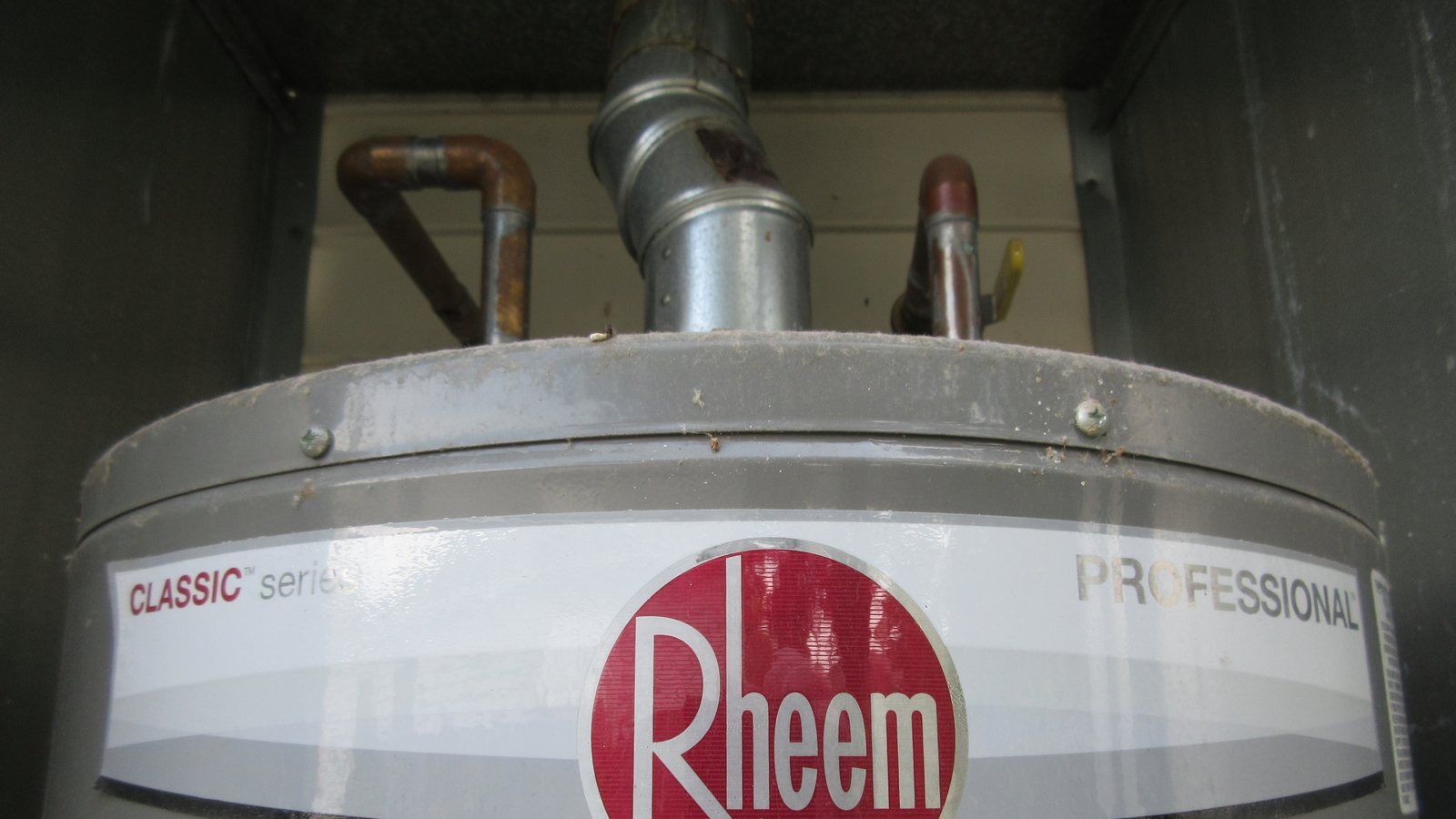
A water heater producing hot water today can still have a safety issue or a near-term replacement cost. Houston buyers should look beyond age and check the tank, relief discharge, drain pan, gas venting, installation access, and whether the capacity fits the household.
Age is a reason to investigate—not a stand-alone pass or fail.
What does a standard Texas inspection cover?
TREC standards require inspectors to report the energy source and capacity and examine operation, visible leakage or corrosion, the cold-water shutoff, applicable pan and drain, location, service access, and the temperature-and-pressure relief valve and discharge piping. Gas and electric units have additional items.
A general inspection does not determine efficiency or adequacy and does not guarantee that the relief valve or drains are effective. The inspector may decline to operate a relief valve when doing so could cause damage. “Operating at the time of inspection” is not a remaining-life warranty.
Six signs that deserve more than an age question
1. The nameplate, manufacturing date, and installation history do not match
Photograph the model and serial number, then look for invoices, warranty, installation date, repairs, and flushing records. An older unit is not automatically failing, but an undocumented history should not be budgeted as if years of service are guaranteed.
2. The tank, fittings, or drain pan show corrosion or water
Identify the source. A fitting seep, condensation, relief-valve discharge, and a leaking tank are different problems. A tank leak is rarely solved by tightening one connection. An attic unit deserves extra attention because water can damage ceilings, insulation, and interior finishes before anyone notices.
3. The relief valve or discharge pipe is missing, blocked, or altered
The temperature-and-pressure relief valve is a safety device. Its discharge piping must suit the actual installation and should not be capped, reduced, or routed to an unknown concealed point. Buyers should not test a long-untouched valve themselves; let the inspector or qualified plumber decide how to proceed.
4. Gas venting, combustion air, or burner conditions raise questions
A loose or poorly sloped vent, unstable connections, soot, or an unsuitable enclosure calls for follow-up. Do not leave a gas odor, abnormal flame, or carbon-monoxide concern for after closing. A qualified plumber or gas professional should evaluate concerns identified in the general inspection.
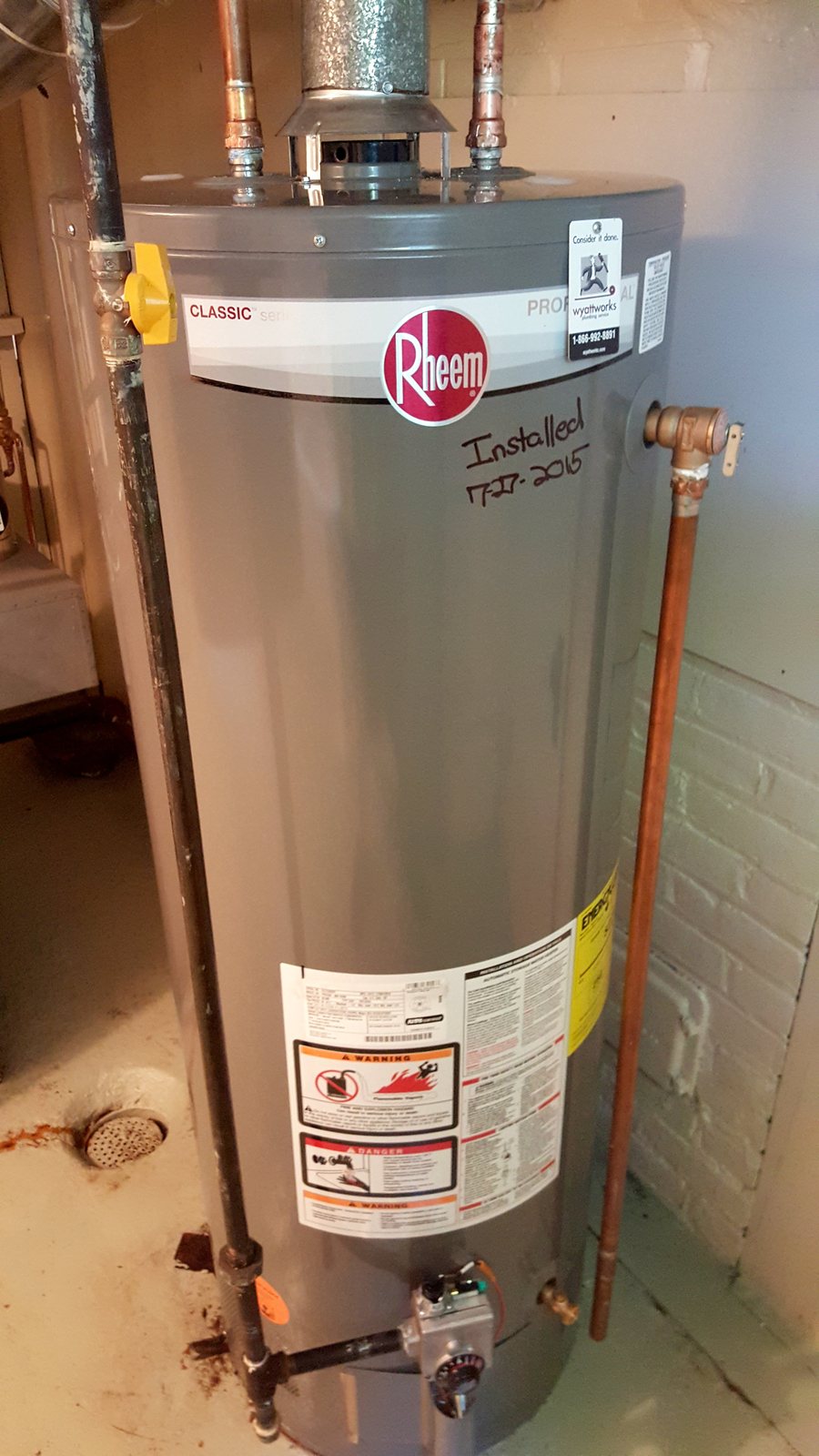
Real residential gas storage water heater. The gas line, vent, relief discharge, and surrounding floor are visible, but compliance depends on the equipment labeling, location, and local requirements. Photo: Tim Evanson / Wikimedia Commons, CC BY-SA 2.0; rotated, resized, and compressed.
5. The drain pan, drain termination, or service access is unclear
A pan and drain matter most when leakage can damage the building. Also ask whether a technician can safely reach the unit and whether it can be removed later without major demolition. A low equipment price can become an expensive project when attic access and interior repair are ignored.
6. Hot-water volume, temperature, or noise no longer fits actual use
A unit that works for one person may not serve several consecutive showers. Slow recovery, inconsistent temperature, or pronounced sediment noise deserves evaluation with capacity, fuel type, water conditions, and maintenance history. CPSC recommends a household setting near 120°F to reduce scald risk; follow the equipment instructions and professional guidance.
Use this option-period sequence
- Record the model, serial number, capacity, fuel type, location, and inspection limitations.
- Collect warranty, invoice, repair, flushing, and applicable permit records.
- Separate leakage, relief, venting, gas, electrical, pan, and drainage issues instead of labeling everything “old.”
- When gas, venting, corrosion, or tank leakage is in question, obtain a focused evaluation from a qualified plumber.
- Request a written estimate covering equipment, removal, connections, vent or drain corrections, permits, and possible wall or ceiling repair.
- Verify permit requirements for the property’s actual jurisdiction rather than relying on a Houston mailing address.
- Then decide whether to negotiate repair, replacement, credit, price, or further investigation.
For the larger inspection picture, read Five Big-Ticket Problems Houston Buyers Should Watch During a Home Inspection. For water-damage and coverage questions, continue with Houston Home Insurance Before Closing. Before requesting seller concessions, use What Should a Buyer Ask the Seller to Fix?.
Repair or replacement estimate?
- A defined fitting or drain correction with a sound tank may support a targeted repair estimate.
- Tank leakage, serious corrosion, or combustion and venting concerns deserve a replacement or major-correction evaluation.
- An attic installation needs access, pan, drainage, removal, and interior repair included in the quote.
- Age alone, with acceptable condition and documentation, may call for a near-term budget rather than an automatic seller replacement.
Frequently asked questions
Does a water heater over ten years old have to be replaced?
Not automatically. Age increases attention to condition, maintenance, and near-term budgeting, but replacement depends on leakage, corrosion, installation safety, repairability, and a property-specific estimate.
Why investigate if the inspection produced hot water?
A short operating test does not rule out slow leakage, incorrect relief or venting, inadequate capacity, or near-term failure.
Can I accept a seller credit and replace it later?
Sometimes, but first confirm that lending, insurance, and safety conditions allow delay. The estimate should include installation corrections and permits—not only the appliance.
Is a tankless unit always a better replacement?
No. Gas or electrical capacity, venting, condensate drainage, location, and peak demand can change the conversion cost. Compare the complete project, not only the equipment brochure.
Joyce's Featured Listings

AI-generated illustration: a Greater Houston housing scene, not a real or currently available listing.
Put the water heater, HVAC, roof, and insurance into the same near-term budget. Browse Joyce’s Featured Listings, then tailor the inspection plan to the address.
View Joyce's Featured Listings →
Considering a home with an unclear water-heater history?
Send me the address, inspection section, nameplate photo, installation location, and seller records. I can help organize missing information, the option-period sequence, and negotiation priorities. Equipment safety, venting, gas, permits, and repair scope must be confirmed by the appropriate licensed professionals.
About Joyce Tang

Joyce Tang is a Greater Houston real estate agent and investor, co-founder of the North American Real Estate Association, founder of JoyHome and JoyNest, and co-leader of the Dr. Wang Real Estate Team.
She has helped more than 200 families buy or sell homes and has participated in more than 40 renovation projects. Her approach examines not only price, but also location, carrying cost, cash flow, risk and future exit options.
Sources and disclaimer
Sources checked October 20, 2026: TREC inspection standards, TREC rules, the CPSC tap-water scald guide, and the Houston permit portal.
This article is a general real-estate and inspection checklist, not plumbing, gas, electrical, engineering, insurance, legal, or contract advice. Do not operate equipment with suspected leakage, venting, or relief problems. Confirm safety, repair, permits, and transaction rights with the appropriate licensed or qualified professionals.
Cover photo from Wikimedia Commons by Infrogmation of New Orleans, used under CC BY-SA 4.0 and cropped/compressed. Inline photo from Wikimedia Commons by Tim Evanson, used under CC BY-SA 2.0 and rotated/resized/compressed. Adaptations are used under compatible licenses; visible brands and tradespeople do not endorse Joyce.