
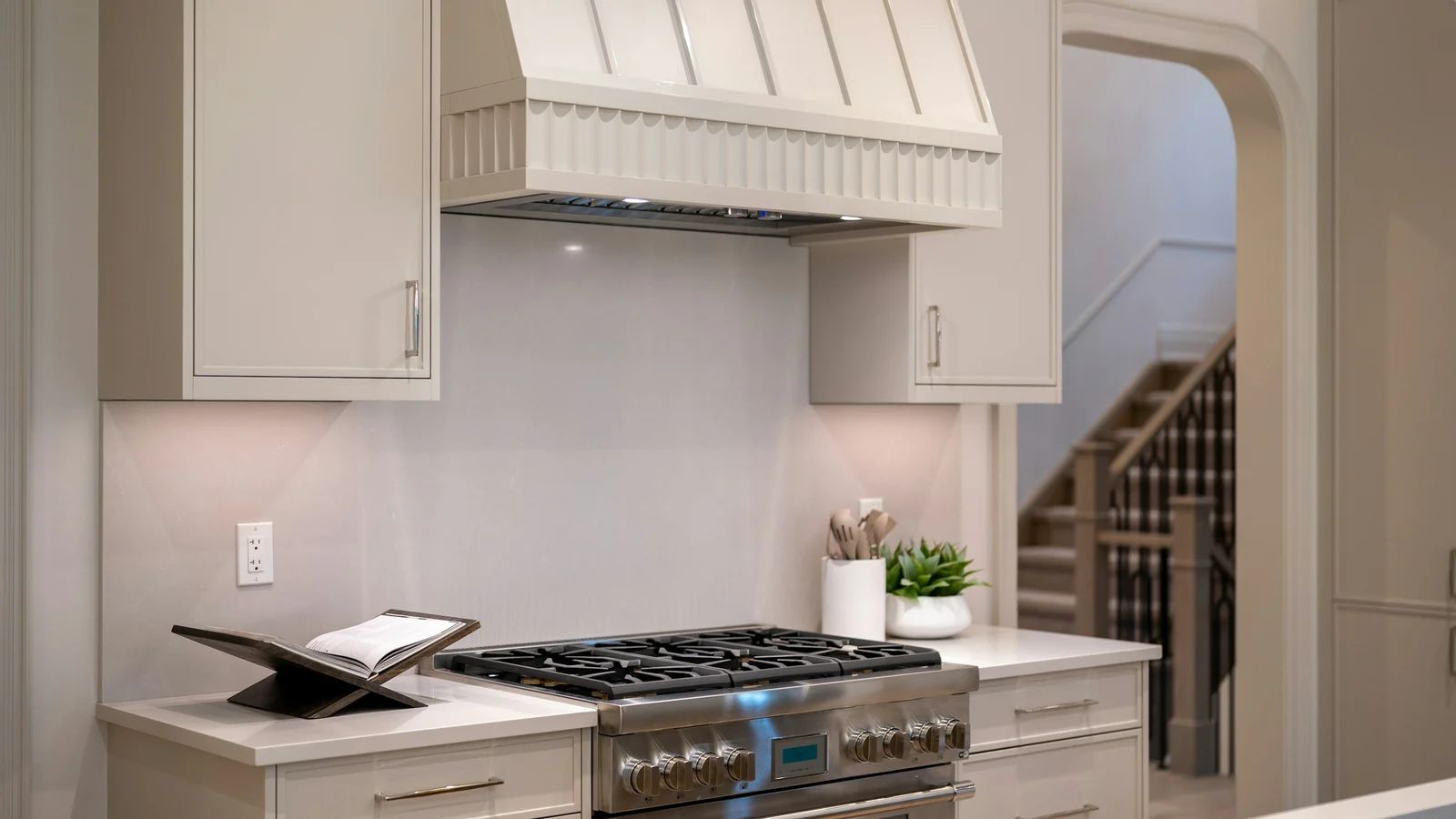
A noisy range hood—or even a tissue that sticks to the filter—proves only that the fan creates some airflow. It does not prove that cooking air reaches the outdoors. Before buying, identify whether the unit is ducted or recirculating, then review performance, filters, duct routing, duct material and the exterior termination.
A recirculating hood is not automatically defective; it is designed to filter and return air to the kitchen. The buyer simply needs to know what is installed, because cooking performance and the cost of adding outdoor exhaust may be very different from what the kitchen’s appearance suggests.
What does a standard Texas inspection cover?
Current Texas Real Estate Commission minimum standards require inspectors to report inoperative range hoods, performance or mounting deficiencies, and missing or damaged components. For a unit that is not designed or configured to recirculate, a duct that does not terminate outside the building and improper duct material are also reportable deficiencies.
The recirculating exception matters. A unit designed to return filtered air indoors does not become defective simply because it has no outdoor duct. The question is whether the appliance is correctly identified and installed for its actual configuration.
Separate the range hood into seven checks
1. Identify ducted versus recirculating
Open the cabinet, look for a duct and find the model label and installation instructions. Recirculating systems commonly use grease and charcoal filters; a ducted system should have a route to the exterior. Do not judge by appearance alone—one model may support more than one installation configuration.
2. Operate every speed and control
Run low, medium and high settings. Listen for scraping, vibration or unstable speed, and check lights, buttons, touch controls and mounting. Loud does not equal powerful, and quiet does not prove that the system is working correctly.
3. Do not treat a tissue test as the whole inspection
A tissue can show that air moves at the intake. It does not measure true airflow or reveal where the air ends. Also observe capture over the back burners, trace the duct and verify the termination. EPA recommends cooking on back burners when possible because the hood captures those emissions more effectively.
4. Trace where the duct actually goes
Follow visible ducting through the cabinet, wall or attic. A ducted system should discharge outside—not into an attic, wall cavity, inter-floor space or cabinet. When the full route is concealed, a short duct above the hood is not proof of outdoor termination.
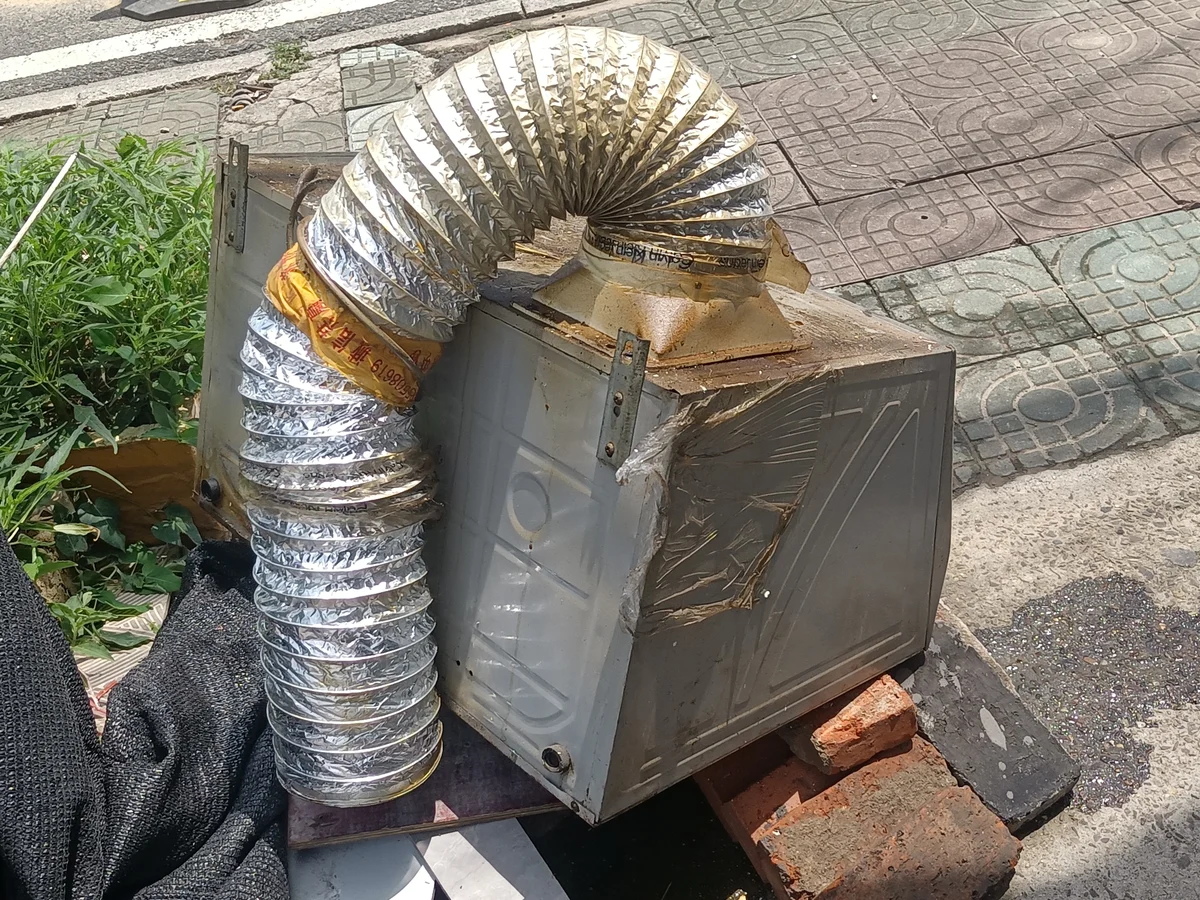
This real photograph shows a removed range hood and exhaust duct. It illustrates how material and bends affect routing; it is not presented as a compliant installation or a Houston property. Evaluate the actual home against the appliance instructions and applicable local requirements.
5. Review duct material, bends and connections
Undersized, crushed or overly long ducting, excessive bends, loose joints and unsuitable material can reduce airflow and collect grease. When the inspection report notes improper material or an unverified route, cleaning the visible hood is not the fix. Have an HVAC or appropriate qualified professional define the route and scope.
6. Verify that the exterior termination opens
While the hood runs, observe the wall or roof termination from a safely accessible location. Check whether the damper opens and whether paint, debris, nesting or heavy grease blocks it. Do not climb onto a roof during a showing or inspection; use an appropriate professional when access is unsafe.
7. Let the filters and grease pattern tell part of the story
A clogged grease filter reduces airflow. Heavy residue under cabinets, on lights, walls or around the hood may point to deferred cleaning, poor capture or a mismatch between cooking habits and equipment. For a recirculating unit, ask when the charcoal filter was last replaced. A spinning fan does not make an exhausted filter effective.
Use this option-period checklist
Photograph the model label, cooktop type and filter condition; identify ducted or recirculating configuration.
Run every fan speed and check lights, controls, noise, vibration and mounting.
Trace all visible ducting through cabinets, walls or attic instead of relying only on a tissue test.
Locate the exterior termination and confirm the damper opens; use a professional when access is unsafe.
Price filter cleaning, appliance repair, duct repair, new exterior venting and full replacement as separate scopes.
With a gas range, also review the gas connection, burner condition and smoke and CO alarms.
Which findings change the budget?
A dirty filter, failed light or loose mounting is usually a defined small repair. The larger questions are a ducted hood that dumps into an attic or wall, a route that needs full replacement, a kitchen with no practical exterior path, or a high-capacity replacement that may require a ventilation professional to evaluate makeup air.
I would not start with “How much is a new hood?” If the route is wrong, a more expensive fan may only become a louder fan. Identify whether the problem is the appliance, filters, duct or building layout, then choose seller repair, a credit or a buyer-managed upgrade.
How to use the existing system more effectively after closing
EPA recommends using an outdoor-vented hood whenever cooking, leaving it on for 10 to 20 minutes afterward, cooking on back burners when possible and cleaning the grease filter routinely. Without outdoor exhaust, bring in outdoor air when weather, outdoor air quality and safety permit, or use another kitchen fan that exhausts outdoors.
Frequently asked questions
Is a recirculating hood always bad?
No. It may be the appliance’s intended design and can be practical where an exterior duct is difficult. It simply does not perform the same job as outdoor exhaust, so the buyer should evaluate cooking habits, odor tolerance and retrofit options.
Does the fan under an over-the-range microwave count?
Some over-the-range microwaves can be configured for outdoor exhaust or recirculation. Verify the model, blower orientation, duct and installation instead of checking only whether the fan runs.
Does an electric cooktop eliminate the need for ventilation?
No. Electric cooking avoids gas-combustion emissions, but frying, searing and baking still produce particles, grease, odors and moisture. EPA still recommends using a range hood and venting outdoors when possible.
Will a home inspector measure exact airflow?
Texas minimum standards cover operation, performance and visible installation deficiencies, but that is not the same as a specialized airflow test. If fan capacity and duct resistance matter to your plans, request a qualified ventilation evaluation.
Related inspection guides
Vent problems often extend beyond the appliance. Continue with the bathroom exhaust fan inspection guide and dryer vent inspection checklist. For a gas range, also review the smoke and carbon-monoxide alarm checklist.
Sources and image note
Primary sources: Texas Real Estate Commission Standards of Practice, EPA cooking and indoor-air guidance, EPA indoor particulate-matter guidance and U.S. Department of Energy Building Science Education. Sources checked October 27, 2026.
The cover is a real residential-kitchen photograph by Franco Debartolo from the original Unsplash page, used under the Unsplash License. The exhaust-duct photograph is by Fumikas Sagisavas from Wikimedia Commons under CC0 1.0. Images were cropped, resized and compressed only; no generative edits were used.
Joyce's Featured Listings

A beautiful kitchen does not prove the exhaust route is correct. Browse Joyce's Featured Listings, then inspect the cooktop, hood configuration and retrofit options for the specific homes that fit your plans.
View Joyce's Featured Listings
Unsure whether the hood in a home really vents outside?
Send me the kitchen photos, hood model, cooktop type and relevant inspection pages. I can help separate filter service, appliance repair, duct repair and a new exterior-vent route before you decide how to handle it during the option period.
About Joyce Tang

Joyce Tang is a Greater Houston real estate agent and investor, co-founder of the North American Real Estate Association, founder of JoyHome and JoyNest, and co-leader of the Dr. Wang Real Estate Team.
She has helped more than 200 families buy or sell homes and has participated in more than 40 renovation projects. Her approach examines not only price, but also location, carrying cost, cash flow, risk and future exit options.
Important notice
This article provides general home-purchase and residential-ventilation information. It is not HVAC, gas, electrical, construction, fire or legal advice and does not replace a property-specific opinion from a licensed inspector or appropriate qualified professional. If you smell gas, experience smoke or receive a carbon-monoxide alarm, leave the hazard area and contact 911, the fire department or the local gas utility.