
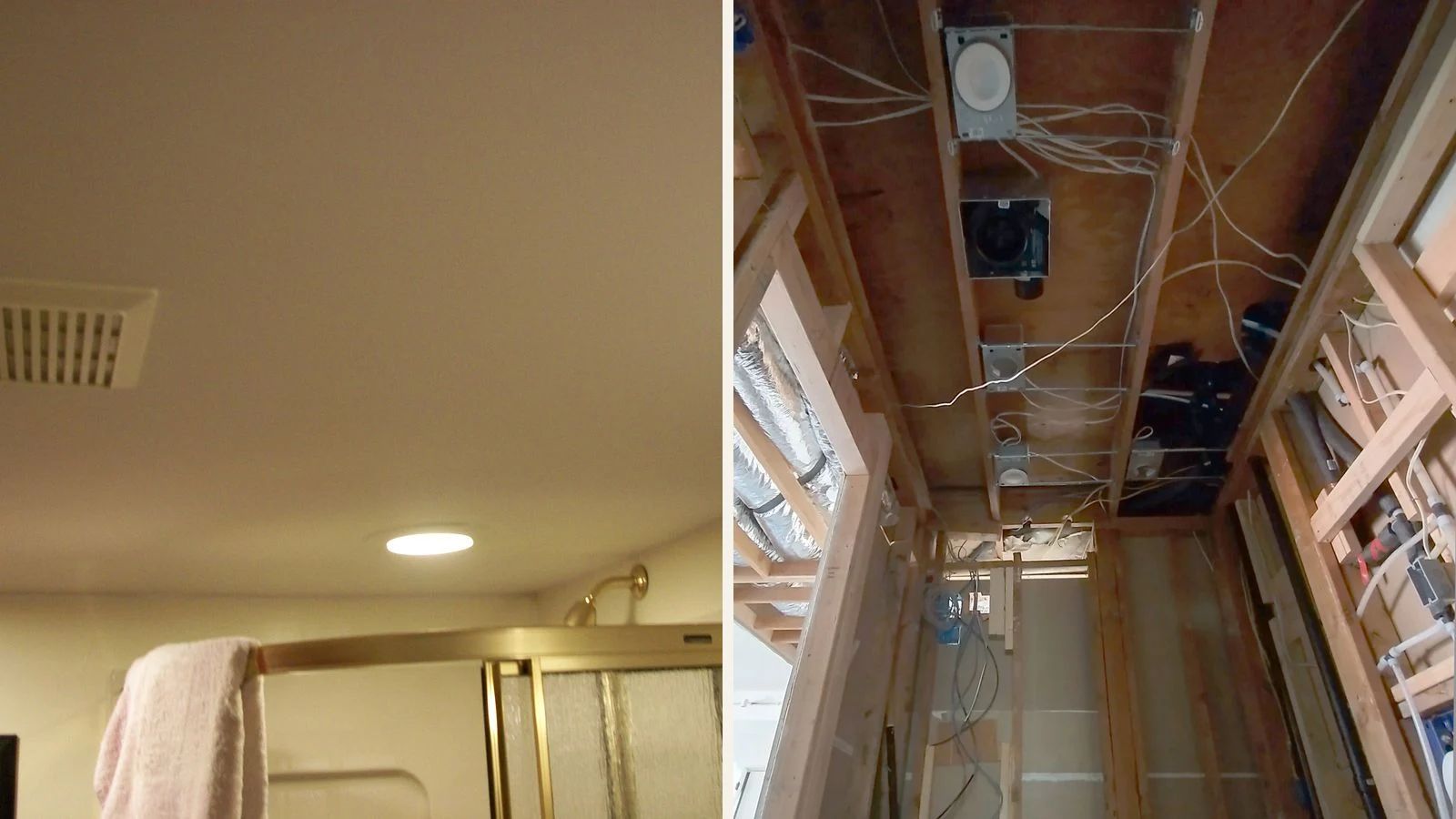
A bathroom fan that makes noise only proves that a motor may be turning. It does not prove that moisture is moving outdoors. Buyers should separate fan operation, airflow, duct connection, termination and the moisture clues left behind.
In Houston’s hot, humid climate, shower moisture that does not leave the house may show up above the bathroom—in ceiling cavities, attic insulation or roof sheathing—before the bathroom itself looks seriously damaged.
What does a standard Texas inspection cover?
Current Texas Real Estate Commission minimum standards require an inspector to report the absence of mechanical ventilation when a bathroom has no operable window. Inoperative equipment, damaged or missing components, installation or performance deficiencies, and ducts that do not terminate outdoors must also be reported.
The standards do not require an inspector to determine overall venting adequacy or the full duct route and length. “Fan operates” is therefore not the same as confirming good airflow, an intact concealed duct or an outdoor termination.
The seven checks I separate during a purchase
1. Is the fan moving air—or only making noise?
Turn it on and listen for rattling, vibration or inconsistent speed. A small piece of lightweight tissue near the grille can be a quick screening tool: poor suction deserves more attention, but a tissue check is not a substitute for measured airflow.
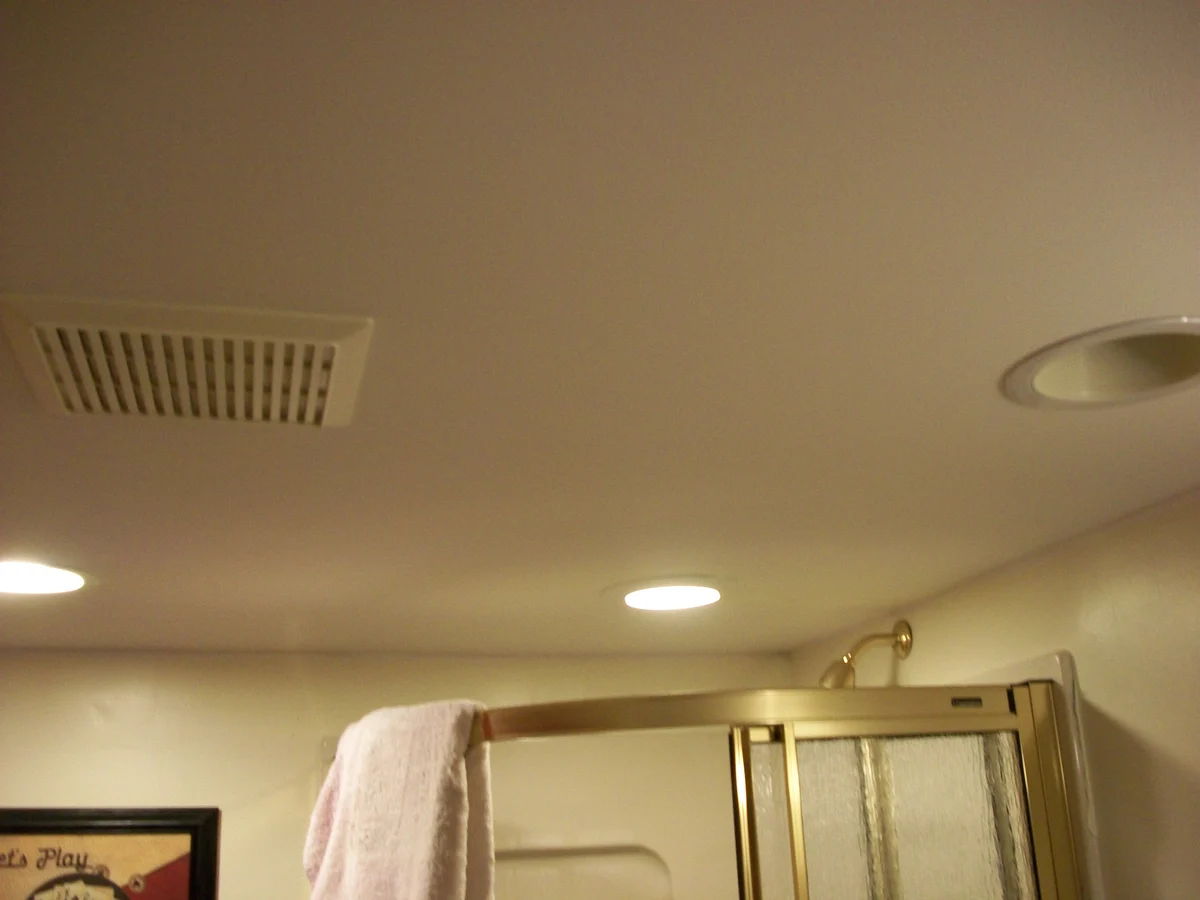
This real bathroom photo shows a ceiling exhaust grille above the shower area. During a showing or inspection, note its location, visible dust and how quickly moisture clears after use—not just whether the switch produces sound.
2. Are the grille and fan housing clogged with dust?
Dust on the grille, wheel and housing can reduce delivered airflow. Older fans can also be very loud without moving much air, so noise is not a useful proxy for performance.
3. Is the duct connected, crushed or leaking?
When the attic is accessible, ask what portion of the duct was visible and whether it was disconnected, sharply bent, damaged or buried under insulation. A working fan with a detached duct can still dump moisture into the attic.
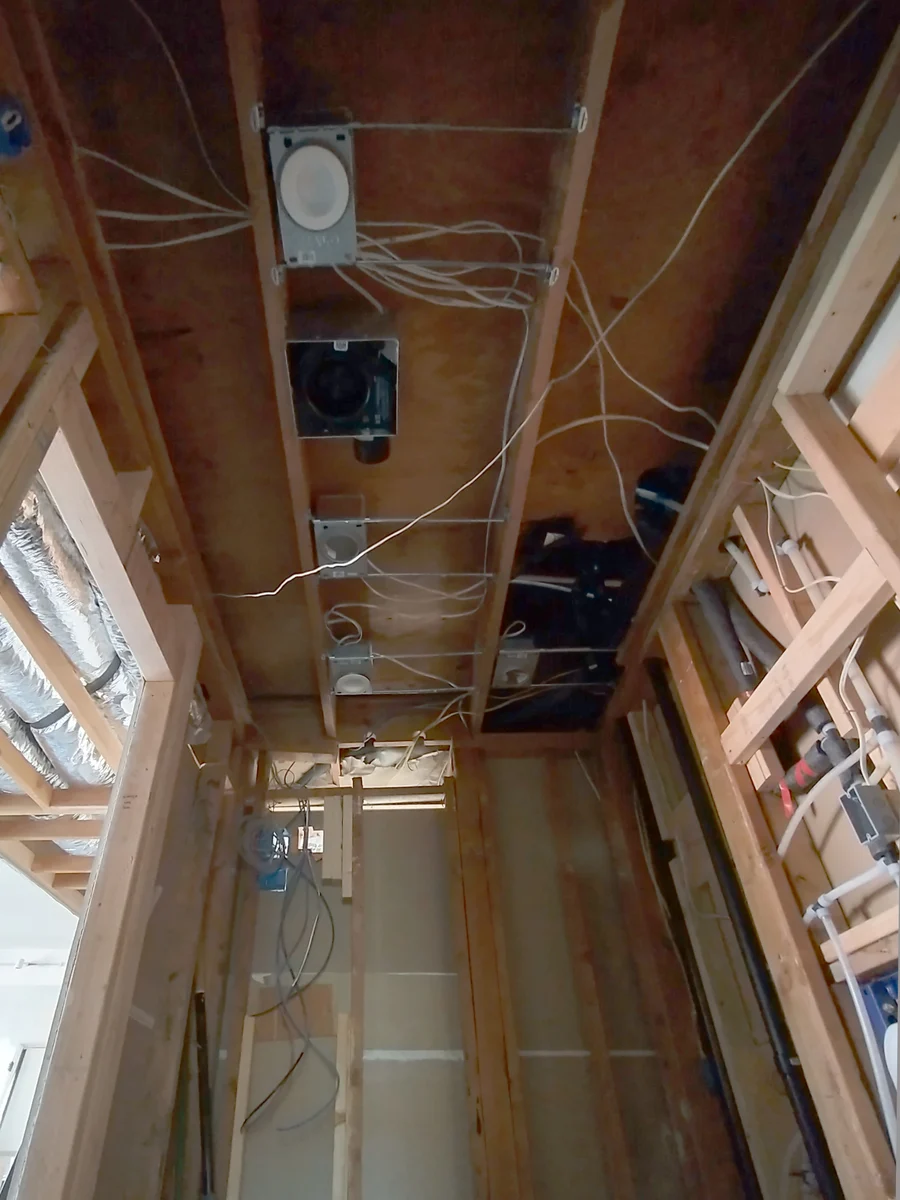
This real renovation photo shows exhaust equipment and routing that became visible only after the bathroom ceiling was opened. Many of the important failure points sit above the grille, outside everyday view.
4. Where does the duct actually terminate?
The U.S. Environmental Protection Agency recommends exhausting bathroom air directly outdoors—not into an attic or another interior space. Locate the matching roof, wall or soffit termination. A duct that merely heads toward the exterior is not proof that it is connected at the end.
5. Is the route long, kinked or full of turns?
A central second-floor bath, a room far from an exterior wall or a later-added bathroom deserves extra questions. Long runs, sharp elbows and compressed flexible duct can reduce airflow. A standard inspection does not have to prove the concealed route or length, so specialized airflow or duct evaluation may be useful.
6. Are there condensation or leak clues near the duct and termination?
- Ceiling stains, bubbling paint, peeling finishes or repeated patching.
- Dark, matted or damp attic insulation above the bathroom.
- Water marks on roof sheathing, framing or duct connections.
- Mirrors and walls that stay wet unusually long or recurring spotting near trim.
These clues do not prove the fan is the only source. Roof leaks, plumbing leaks and HVAC condensation can look similar, but the evidence supports tracing the moisture before choosing a repair.
7. Will the controls encourage anyone to use it long enough?
A separate switch, timer or humidity control can make proper operation easier. ENERGY STAR recommends running the bathroom fan during showers and baths and for about 15 minutes afterward. Missing automation is not a reason to reject a home, but it may be a useful low-cost improvement.
Turn an inspection note into an actionable option-period plan
- Ask the inspector to state whether the fan operated, suction was evident, ductwork was visible and the exterior termination was located.
- When there are ceiling stains or attic moisture, do not assume a new fan is the whole repair; also rule out roof, plumbing and HVAC condensate sources.
- If the termination is missing, the duct is detached or the route is complex, consider a ventilation or HVAC specialist and measured airflow when appropriate.
- Separate estimates for fan replacement, cleaning, reconnection, insulation and a new exterior termination instead of accepting a vague “fix vent” scope.
- If the system cannot be fully evaluated before closing, place testing and repair on the move-in list before continuing to discharge moisture into the attic.
Two common mistakes
Mistake 1: A window means the fan does not matter
An operable window changes how the Texas minimum inspection standard treats the absence of mechanical ventilation. In daily use, however, a window may stay closed and outdoor air may already be hot and humid. Reliable moisture removal matters more than the theoretical ability to open glass.
Mistake 2: A higher-capacity fan fixes every problem
A larger fan cannot correct a detached duct, a blocked termination, too many sharp turns or a poor concealed route. Confirm the duct and outlet before deciding whether the repair is a new fan or a redesigned run.
FAQ
Will a normal home inspection measure bathroom exhaust airflow?
Texas minimum standards do not require an airflow measurement or verification of the entire route and length. Some inspectors may offer more, so confirm the scope and read the report limitations.
Can the fan discharge into the attic if the attic is vented?
That should not be treated as equivalent to an outdoor termination. EPA guidance calls for bathroom exhaust to go directly outdoors so insulation and wood framing do not receive the moisture first.
Do ceiling spots prove the fan is defective?
No. Weak exhaust, condensation, roof leakage, plumbing leakage and persistently wet finishes can create similar evidence. Trace the moisture source before selecting the repair.
Is a roof termination better than a wall termination?
Position alone is not the answer. The system should terminate outdoors with appropriate weather protection and backdraft control, remain securely connected and allow practical inspection and maintenance.
Related inspection guides
Bathroom exhaust often becomes an attic question, so continue with the Houston attic insulation and ventilation inspection guide. When moisture has reached an exterior wall, review the stucco moisture inspection guide. For prioritizing an entire report, use the big-ticket home inspection checklist.
Sources and image note
Primary sources: Texas Real Estate Commission Standards of Practice §535.232, EPA bathroom remodeling and indoor-air guidance, EPA moisture and exhaust guidance, U.S. Department of Energy residential ventilation assessment guide, and ENERGY STAR bathroom exhaust guidance. Sources checked October 24, 2026.
The bathroom ceiling photo is by Tomwsulcer and is dedicated to the public domain from the Wikimedia Commons source page. The open-ceiling renovation photo is by Stilfehler from the Wikimedia Commons source page under CC BY-SA 4.0. Images were only cropped, resized, compressed and combined for the cover; no generative edits were made. The cover collage is shared under CC BY-SA 4.0.
Joyce's Featured Listings

Checking bathroom exhaust and attic moisture together gives a more realistic picture of move-in cost. Browse Joyce's Featured Listings, then build a property-specific inspection list for the homes that fit your plan.
View Joyce's Featured Listings
Did the inspection report flag abnormal bathroom ventilation?
Send me the home’s age, bathroom location, the relevant inspection pages and any attic or exterior-termination photos. I can help sort the issue into cleaning, equipment replacement or a duct and moisture problem that needs more evidence.
About Joyce Tang

Joyce Tang is a Greater Houston real estate agent and investor, co-founder of the North American Real Estate Association, founder of JoyHome and JoyNest, and co-leader of the Dr. Wang Real Estate Team.
She has helped more than 200 families buy or sell homes and has participated in more than 40 renovation projects. Her approach examines not only price, but also location, carrying cost, cash flow, risk and future exit options.
Important notice
This article provides general home-purchase and maintenance information. It does not replace an on-site opinion from a licensed inspector, HVAC or ventilation contractor, mold assessor or local code authority. Moisture stains and microbial growth can have several causes; repair scope should be based on the specific property and written professional estimates.