

A mortgage preapproval is useful, but it is not final loan approval and it does not approve a specific house. The lender still needs to verify updated borrower documents, evaluate the property, clear underwriting conditions, and complete funding. Houston buyers should treat a preapproval as the beginning of the financing plan—not permission to spend up to the number printed on the letter.
I separate two numbers from the start: the lender’s estimated maximum and the monthly housing cost the buyer can comfortably carry. They are rarely the same decision.
Four stages buyers often treat as the same thing
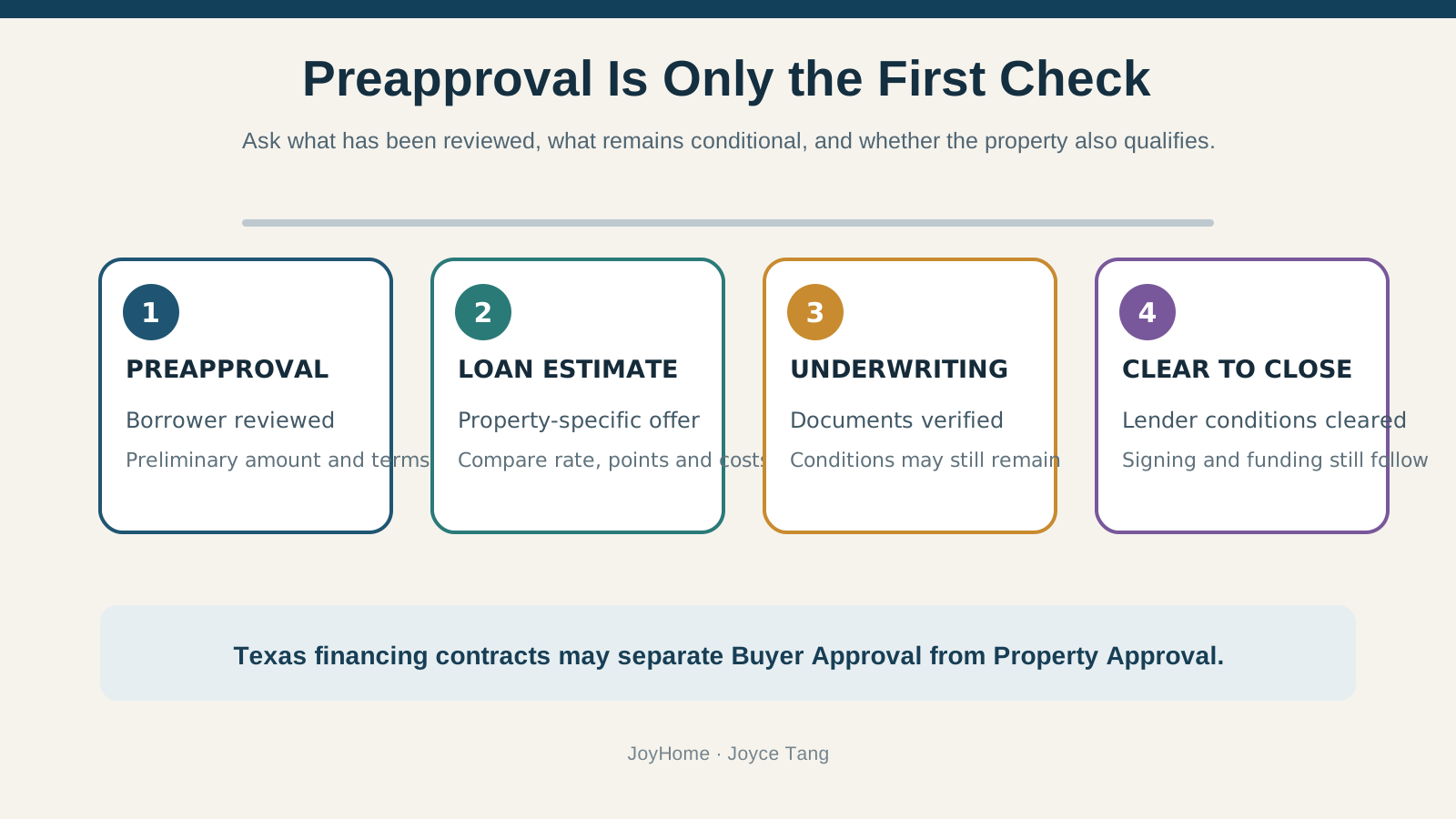
These labels are common, but lenders may use them differently. Ask each loan officer what was actually reviewed, what remains conditional, and what must happen before funding.
1. Preapproval: a preliminary review of the borrower
For a meaningful preapproval, the lender generally reviews credit, income, employment, assets, debts, and the proposed down payment. The letter estimates a loan amount or price range under stated assumptions. If the review used only self-reported numbers or incomplete documents, the letter may be less reliable than one based on verified records.
A preapproval can strengthen an offer because it shows that a lender has begun reviewing the borrower. It does not guarantee the rate, monthly payment, appraisal result, property insurance, or final approval.
2. Loan Estimate: the document for comparing a specific loan—not an approval
The CFPB says a lender must provide a Loan Estimate within three business days after receiving six pieces of information: the borrower’s name, income, Social Security number, property address, estimated property value, and requested loan amount. A signed purchase contract is not required just to receive the form.
The Loan Estimate shows expected loan terms, monthly payment, closing costs, cash to close, points, lender credits, and whether the rate is locked. CFPB also states that receiving this form does not mean the loan has been approved or denied—even when the rate is locked.
3. Underwriting or conditional approval: the file is being verified
At this stage, an underwriter reviews the borrower and property records against the loan program. The lender may still request updated pay statements, bank statements, explanations for deposits or credit inquiries, proof of insurance, appraisal corrections, condominium documents, or other conditions. “Conditionally approved” means conditions remain; it is not the same as a finished loan.
4. Clear to close: lender conditions are cleared, but closing and funding still follow
Clear to close usually means the lender is ready to prepare the closing package, subject to any final checks. Buyers still need to review the Closing Disclosure, bring verified funds, sign, and wait for the lender and title company to complete funding. Ask what “clear to close” means on that specific file and whether any funding condition remains.
Texas contracts may separate Buyer Approval from Property Approval
The current TREC Third Party Financing Addendum separates approval of the buyer from approval of the property. Buyer Approval concerns the buyer’s creditworthiness, assets, income, and related requirements. Property Approval may involve appraisal, insurability, and lender-required repairs. A strong borrower can therefore face a property problem, while an acceptable property cannot cure a borrower approval problem.
The contract and addendum control the deadlines, required notices, and termination rights. Do not assume a delayed loan automatically extends the contract or lets the buyer terminate without consequence; legal interpretation belongs with a licensed Texas attorney.
What the preapproval amount does not tell you
- Whether the estimated payment includes realistic property taxes, homeowners insurance, flood or wind coverage, HOA dues, MUD or PID costs, and mortgage insurance.
- Whether the interest rate is locked, how long the lock lasts, or what points and lender credits are built into the quote.
- Whether the specific house will appraise, qualify for insurance, or meet the loan program’s property standards.
- Whether the buyer has enough cash for down payment, closing costs, reserves, appraisal gap, moving, and immediate repairs without using the same dollars twice.
- Whether the lender can meet the financing and closing deadlines in the signed contract.
For a complete ownership budget, continue with How to Build a Houston Homebuying Budget Beyond the Mortgage Payment.
Compare lenders with the same scenario—not with a headline rate
CFPB recommends shopping with multiple lenders and comparing at least three offers. Use the same purchase price, down payment, loan type, term, occupancy, property type, and rate-lock timing so the comparison is meaningful.
- Interest rate and whether it is locked
- APR and loan term
- Points, lender credits, and total origination charges
- Estimated total monthly payment, including taxes, insurance, and mortgage insurance
- Estimated closing costs and cash to close
- Prepayment penalty, balloon payment, or adjustable-rate features
- The lender’s document process, response time, appraisal timing, and ability to meet the contract calendar
A lower rate can come with more points or higher fees. A lender credit can reduce cash at closing but may be paired with a higher rate. Compare the whole Loan Estimate and the time you expect to keep the loan—not one number from a text message.
Before making an offer, ask the lender these seven questions
- Which income, employment, asset, debt, and credit documents have actually been reviewed?
- Is this only a prequalification, a documented preapproval, or an underwritten preapproval—and how does this lender define the term?
- What assumptions were used for property taxes, insurance, HOA, mortgage insurance, and interest rate?
- What loan programs and down-payment options were compared, and why is the recommended one appropriate?
- What conditions or borrower issues are still open?
- How quickly can the lender issue a property-specific Loan Estimate, order appraisal, and communicate on weekends or offer deadlines?
- What purchase price fits the buyer’s comfortable monthly target, not merely the maximum approval?
When you are ready to structure the offer itself, read Making an Offer on a Houston Home: Price Is Not the Only Term That Matters.
After the contract is signed, protect the approval you already have
- Send the executed contract and requested documents immediately; keep copies of every submission.
- Do not open new credit, finance furniture or a car, increase card balances, change jobs, or move large sums without asking the lender first.
- Document gift funds, sale proceeds, large deposits, and transfers before the underwriter asks.
- Review every revised Loan Estimate and confirm whether the rate is locked and when it expires.
- Track appraisal, property insurance, title, loan conditions, and the contract financing deadline as separate items.
- Tell the real estate agent early when approval or timing changes; negotiation does not extend a deadline by itself.
For the full sequence after acceptance, use the Houston contract-to-closing timeline.
Frequently asked questions
Will shopping with several mortgage lenders hurt my credit?
CFPB says multiple mortgage credit checks made within a 45-day window are recorded as a single inquiry for scoring purposes. Credit models and individual files can differ, so confirm the timing with the lender and avoid unrelated new credit during the mortgage process.
Does a rate lock mean the loan is approved?
No. A rate lock addresses the rate for a stated period and conditions. CFPB specifically notes that a Loan Estimate does not approve the loan even when the rate is locked. Borrower and property underwriting still have to be completed.
Can I change lenders after my offer is accepted?
It may be possible, but the new lender still needs time for disclosures, underwriting, appraisal, and closing. The contract deadline does not automatically move. Compare the savings against timing risk and confirm the effect with the real estate professionals and, when legal interpretation is needed, a Texas attorney.
Should I use the lender who issued my first preapproval?
Not automatically. Responsiveness during preapproval matters, but the property-specific Loan Estimates, loan program, costs, rate-lock terms, and ability to meet the contract calendar should drive the final choice.
Joyce's Featured Listings

AI-generated illustration: a Greater Houston housing scene, not a real or currently available listing.
Once you know your comfortable payment and what the preapproval actually covers, browse Joyce’s Featured Listings to see how current home types and price ranges fit that financing plan. Each property still needs its own tax, insurance, HOA, appraisal, and loan review.
View Joyce's Featured Listings →
Have a preapproval letter but do not know whether the budget is realistic?
Send me the target price, down payment, loan type, monthly-payment ceiling, and the assumptions shown on your current preapproval. I can help organize the property costs, offer timing, and questions to take back to the lender. Loan qualification, rates, and disclosures must be confirmed by a licensed mortgage professional.
About Joyce Tang

Joyce Tang is a Greater Houston real estate agent and investor, co-founder of the North American Real Estate Association, founder of JoyHome and JoyNest, and co-leader of the Dr. Wang Real Estate Team.
She has helped more than 200 families buy or sell homes and has participated in more than 40 renovation projects. Her approach examines not only price, but also location, carrying cost, cash flow, risk and future exit options.
Sources and disclaimer
Sources checked October 17, 2026: CFPB guidance on shopping for a mortgage, requesting and comparing Loan Estimates, the Loan Estimate explainer, mortgage credit inquiries, and the TREC Third Party Financing Addendum (Form 40-11).
This article provides general real-estate education, not lending, credit, legal, tax, appraisal, or financial advice. Approval standards, rates, costs, documents, and timelines depend on the borrower, property, loan program, lender, contract, and market. Confirm loan terms with a licensed mortgage professional and contract interpretation with a licensed Texas attorney.
Cover photo from Pexels by Vitaly Gariev, used under the Pexels License. It shows a general financial-document consultation and does not depict Joyce’s client, a specific lender, a loan approval, or an actual transaction.