

Once an offer is accepted, a Houston home purchase is not a waiting period until closing. The effective date starts several workstreams at once: earnest money and option fee, inspections, loan approval, appraisal, title, insurance, and closing preparation. A missed early deadline can affect a buyer’s termination rights, cash needs, or ability to close, so the first task is to turn every contract deadline into a dated calendar.
This guide uses a common TREC resale contract to explain the sequence. Your signed contract and addenda control; new construction, condominium, cash, and special-loan transactions may follow different forms and timelines.
Confirm the effective date before counting anything
The effective date is not necessarily the moment the buyer signs or when a seller says “accepted.” It is the contract date confirmed after execution and notice. Many deadlines run from it, so a one-day mistake can affect option, deposit, financing, appraisal, or title rights.
- Save the fully signed contract and every addendum, not only the signature page.
- Identify the effective date, option deadline, financing deadline, appraisal terms, title-objection deadline, and closing date.
- Convert every “within X days” provision into a specific date and time; use the contract to determine weekend and legal-holiday treatment.
- Assign each task to the buyer, agent, lender, inspector, insurance professional, title company, or attorney.
Six workstreams move at the same time
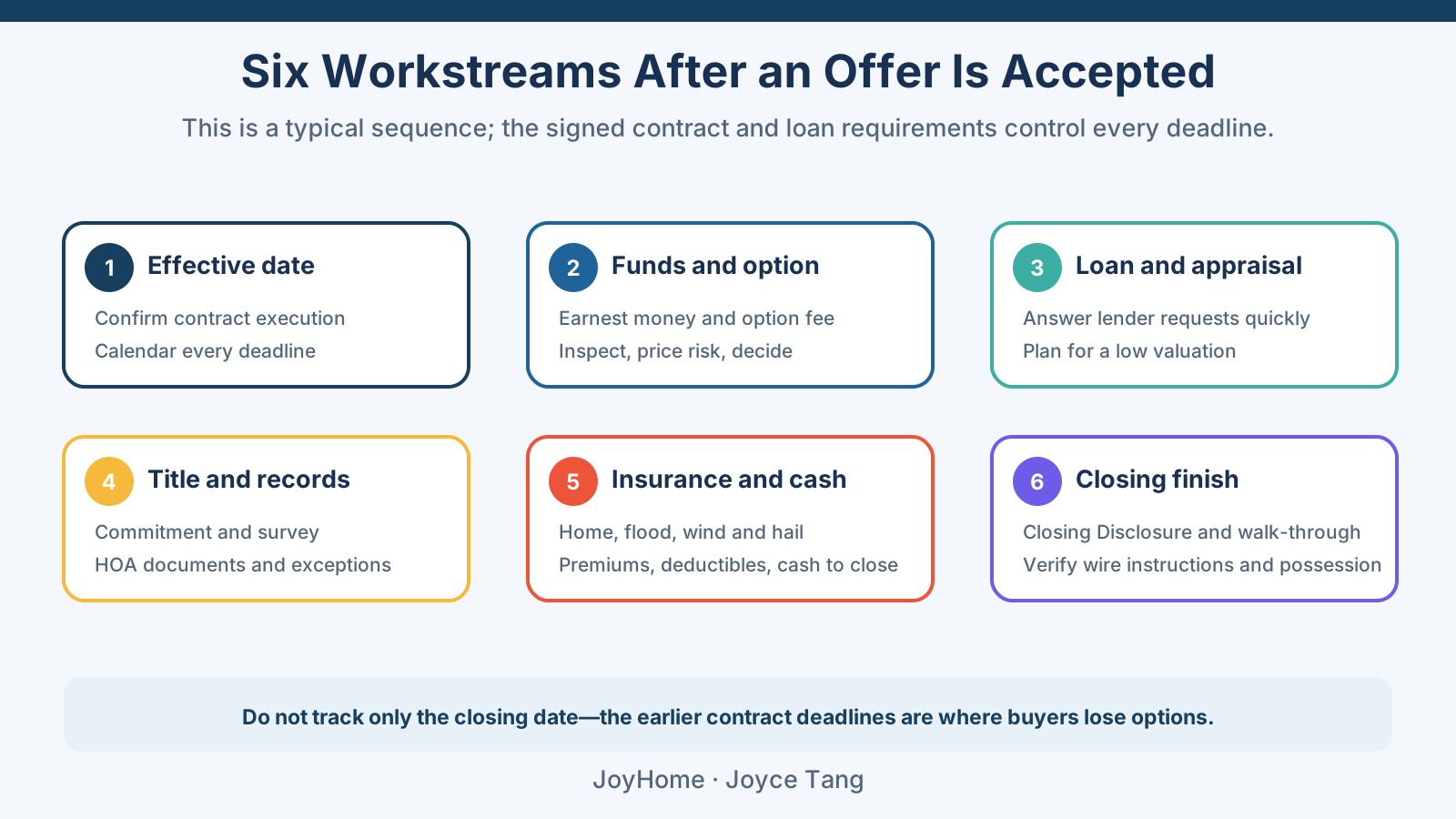
This is a typical sequence, not a universal legal timeline. The most consequential dates are often the short deadlines before closing—not the closing date itself.
Workstream 1: Deliver earnest money and option fee on time
The current TREC 20-19 resale contract generally requires the buyer to deliver earnest money and the option fee to the named escrow agent within three days after the effective date. If the last delivery day falls on a Saturday, Sunday, or a Legal Holiday as defined by the form, the contract provides an extension to the next qualifying day. Paragraph 5 also states that time is of the essence.
The two payments do different jobs. Earnest money supports the buyer’s performance obligation; the option fee supports the negotiated unrestricted termination window. A late option fee can cost the buyer that unrestricted right, while late earnest money can give the seller termination or default remedies. Do not wait for the title company to chase you. Keep the receipt and confirm the funds were posted.
For the 5:00 p.m. termination deadline and an inspection plan, read What Is the Option Period in a Texas Home Purchase?.
Workstream 2: Use the option period to complete the decision—not just an inspection
An inspection report is the starting point. The buyer still needs specialist input where appropriate, usable repair estimates, an early insurance check, a carrying-cost view, and a negotiation plan before deciding to proceed, amend, or terminate while the right remains available.
- Schedule the general inspection promptly and add roof, foundation, sewer, pool, wood-destroying-insect, or other specialist work when the property warrants it.
- Get practical repair opinions or estimates for material issues instead of treating report colors as cost estimates.
- Give the address, roof age, and known condition to the insurance professional early.
- Compare repair requests, price changes, credits, and proceeding without a request in one decision.
- If the contract must change, obtain a valid written agreement before the applicable deadline; negotiation does not extend a deadline by itself.
Workstream 3: Loan approval and appraisal cannot wait for inspection to finish
The lender may be reviewing income, assets, credit, and loan terms while separately evaluating the property through appraisal, insurability, and any required repairs. The current TREC 40-11 financing addendum separates Buyer Approval from Property Approval. A preapproval letter does not mean both are complete.
- Answer lender document requests promptly and keep the information complete and consistent.
- Before opening new credit, increasing card balances, changing jobs, or moving large sums, ask the lender how the change affects approval.
- Confirm that the appraisal was ordered, completed, and returned—not merely requested.
- If value comes in low, immediately check the contract and appraisal addendum for deadlines, gap limits, renegotiation, and termination rights.
- Do not count the same dollars for down payment, closing costs, appraisal gap, and post-closing repairs.
Workstream 4: Start insurance early in Greater Houston
The Texas Department of Insurance notes that a standard homeowners policy does not cover flood. In coastal areas and parts of Harris County along Galveston Bay, wind and hail may also be handled outside the standard policy. A mortgage lender will generally require acceptable homeowners coverage.
That is why insurance should not wait until the last week. Compare coverage amount, flood and wind arrangements, whether deductibles are fixed dollars or percentages of dwelling coverage, roof settlement terms, and the effective date—not only the annual premium. A low premium paired with a large deductible or missing coverage can simply move the cost into a future claim.
Workstream 5: Read the title commitment, survey, HOA documents, and disclosures
A title commitment is more than a title company saying the file is clear. The current TREC resale form provides a process for delivery of the commitment and exception documents, and a contract-specific period for the buyer to object to certain title, survey, or use matters. Review ownership, liens, easements, restrictive covenants, mineral exceptions, boundary or encroachment issues, and Schedule C requirements that must be cleared before closing.
The survey should be compared with fences, drives, structures, pools, property lines, and easements. For an HOA property, review assessments, transfer fees, special charges, restrictions, litigation, and the resale certificate. For MUD, PID, or other special-district property, verify the applicable notice, tax rate, and debt rather than relying on the mailing city. A licensed Texas attorney should address legal title questions or ownership structure.
The end of the option period does not create a general escape right
After option expires, the buyer’s remaining rights depend on the contract and addenda—possibly financing approval, Property Approval, appraisal, title, seller disclosures, or another specific contingency. Each has its own conditions, notice method, and deadline. “My loan is not fully approved” does not automatically mean the buyer can walk away without consequence.
If financing, appraisal, repairs, or timing becomes a problem, identify the affected contract obligation and the documents needed immediately. If dates must change, the parties may need a written amendment before the existing deadline. Nonstandard rights and contract interpretation belong with a licensed attorney.
The final week: bring documents, cash, and property condition together
For most covered residential mortgage loans, the Consumer Financial Protection Bureau explains that the lender must provide the Closing Disclosure at least three business days before closing. Compare it with the latest Loan Estimate: loan amount, interest rate, APR, payment, points, lender credits, escrow, taxes, fees, and cash to close.
- Ask what “clear to close” means on this file and whether any conditions remain.
- Confirm signing time, location, identification, and final cash to close with the title company.
- Verify every wire instruction by calling a previously known, independently obtained phone number; do not rely only on a new email.
- Confirm agreed seller repairs are complete and collect required invoices, permits, or transferable warranty information.
- Complete the final walk-through and check condition, repairs, included items, utilities, and possession terms.
Use the detailed checklist in The Final Walk-Through Is Not a Formality.
On closing day, signing, funding, and receiving keys are not the same event
Signing documents does not always mean immediate possession. The lender must fund, and the title company must confirm money and documents before closing is completed. The TREC resale form commonly provides possession at closing and funding, or under a written temporary residential lease. Keys, access devices, remotes, and app rights should follow the written possession arrangement.
After closing, retain the contract, Closing Disclosure, settlement statement, deed, title policy, survey, insurance, and repair records. Then verify the appraisal district mailing address, homestead-exemption eligibility, and loan escrow. Confirm tax eligibility and filing results with the government agency or a qualified tax professional.
An illustrative 30-day transaction rhythm
- Day 0: Confirm the effective date and build the contract calendar.
- Days 1–3: Deliver earnest money and option fee; start inspections, insurance, and the loan file.
- Early days: Complete inspections, estimates, and the option decision.
- Weeks 1–3: Move loan conditions, appraisal, title commitment, survey, HOA, and insurance in parallel.
- At least three business days before closing for covered loans: Review the Closing Disclosure.
- Before closing: Complete the final walk-through and verify final funds and wire instructions.
- Closing day: Sign, fund, close, and take possession according to the contract.
This example only shows sequence. It does not mean every transaction should close in 30 days, and it never replaces the actual dates in the signed contract.
Frequently asked questions
Can a buyer still terminate after the offer is accepted?
Possibly, but only if a contract right still applies and the buyer follows its conditions, deadline, and notice method. Option, financing, appraisal, title, and disclosure rights are different and cannot be reduced to one rule.
Why can a loan be delayed after preapproval?
Preapproval is generally based on preliminary information. Final underwriting also verifies updated income, assets, credit, appraisal, insurance, title, and loan conditions. Buyer delays, financial changes, or property issues can affect timing.
When should the buyer shop for homeowners insurance?
Start soon after contract execution, not a few days before closing. In Greater Houston, separately check homeowners, flood, and any wind or hail arrangement that may apply.
Does signing at closing mean the buyer gets the keys immediately?
Not necessarily. Possession follows the contract. A common arrangement is after closing and funding; a seller leaseback or buyer temporary residential lease changes the handoff according to that written agreement.
Joyce's Featured Listings

AI-generated illustration: a Greater Houston housing scene, not a real or currently available listing.
Once the contract-to-closing sequence is clear, browse Joyce’s Featured Listings to see current home types and price ranges, then place financing, insurance, taxes, and transaction deadlines into one purchase plan.
View Joyce's Featured Listings →
Already under contract and worried about a deadline?
Send me the effective date, closing date, loan type, option deadline, and the issue that is currently stuck. I can organize the transaction checklist and coordinate the real estate, lending, inspection, insurance, and title follow-up. A licensed Texas attorney should handle legal interpretation or nonstandard contract terms.
About Joyce Tang

Joyce Tang is a Greater Houston real estate agent and investor, co-founder of the North American Real Estate Association, founder of JoyHome and JoyNest, and co-leader of the Dr. Wang Real Estate Team.
She has helped more than 200 families buy or sell homes and has participated in more than 40 renovation projects. Her approach examines not only price, but also location, carrying cost, cash flow, risk and future exit options.
Sources and disclaimer
This guide uses public materials available on October 7, 2026, principally the TREC 20-19 One to Four Family Residential Contract (Resale), TREC 40-11 Third Party Financing Addendum, CFPB guide to reviewing documents before closing, and the Texas Department of Insurance homeowners guide.
This article provides general real-estate education, not legal, lending, appraisal, title, tax, or insurance advice. Every deadline, notice method, cost, and termination right depends on the buyer’s signed contract, addenda, loan requirements, and applicable law. Consult a licensed Texas attorney for contract interpretation or nonstandard terms, and the appropriate licensed or government professional for lending, insurance, tax, and title questions.
Cover photo: RDNE Stock project / Pexels, cropped and used under the Pexels License. It is a general real-estate document handoff scene and does not depict Joyce’s client, a specific property, or an actual transaction.