
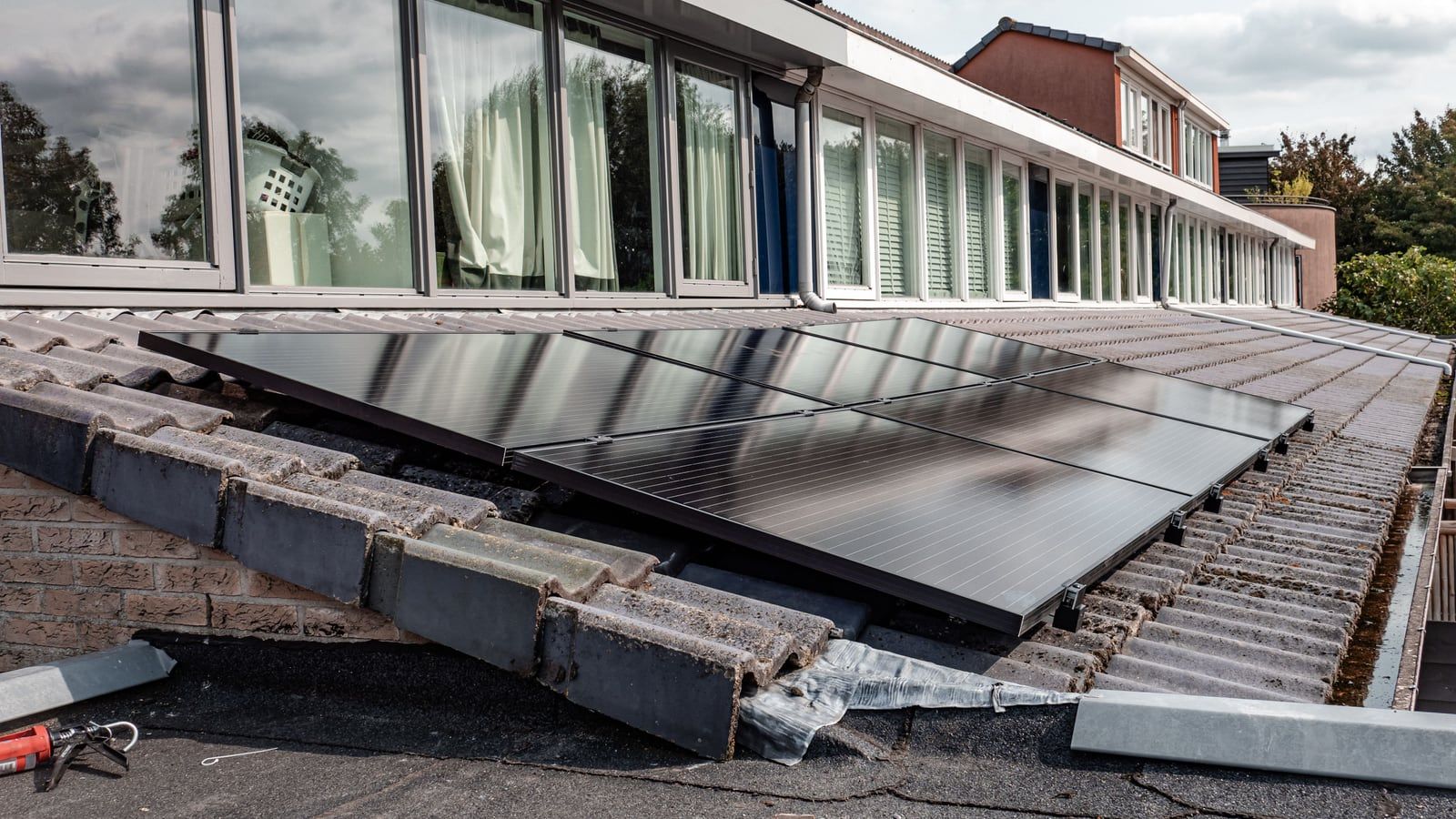
Solar panels can be an asset, a separate monthly obligation or a transfer problem. Before offering on a Houston home, identify who owns the system, what debt or contract follows it, whether your lender and insurer accept the arrangement, and whether the roof and equipment still perform. An electric bill alone cannot answer those questions.
Treat the house, the roof, the solar equipment and the solar contract as four connected items—not one free upgrade.
Start by naming the deal correctly
Ask the seller which of these four structures applies, then require documents that prove it:
- Owned outright: the seller says the equipment is fully paid and transfers with the real estate.
- Financed purchase: the seller owns or is buying the equipment, but a separate loan or security interest may remain.
- Lease: a solar company owns the equipment and charges a scheduled lease payment.
- Power purchase agreement (PPA): a third party owns the equipment and charges for the electricity it produces under a long-term contract.
The words “paid solar,” “included” or “seller will transfer it” are not documentation. Obtain the purchase agreement, loan statement, lease or PPA, payoff or transfer quote, and any filing or lien information. Confirm the account number, legal owner, remaining term, payment schedule and transfer process directly with the company shown on the documents.
Eight checks before you take over a solar home
1. Ownership, balance and collateral
Find out whether the panels are owned by the seller, pledged as collateral for a solar loan, or owned by a third party. A payoff balance is not the same as a transfer balance, and an equipment loan is not automatically assumed just because the buyer purchases the home. Ask the title company and lender what searches or releases they require; do not rely on the salesperson’s original promise that the lien “will not affect a sale.”
If the seller promises to pay off an obligation at closing, the contract and closing instructions should identify the amount, payee, required release and what happens if the payoff changes. Legal questions about liens, fixtures or enforceability belong with a Texas real-estate attorney.
2. Contract transfer, price escalator and end-of-term choices
For a lease or PPA, read the complete agreement and current transfer packet. Check whether the buyer must qualify, whether monthly or per-kWh charges rise over time, transfer or prepayment fees, production guarantees, maintenance duties, default remedies, roof-removal charges and end-of-term options. The FTC notes that some solar leases and PPAs can run for 20 years and may be costly to end early.
Texas uses TREC Form 52-1, Addendum Regarding Fixture Leases, when the property is subject to a fixture lease. The form specifically includes solar panel leases and lets the parties address assignment, removal, document delivery and costs. That form does not turn a bad lease into a good one; it makes the transaction terms clearer. Use the current contract and deadlines, and involve the lessor and attorney when assignment or termination language is unclear.
3. Your mortgage lender’s solar review
Tell the lender about the panels before appraisal, not a few days before closing. Fannie Mae distinguishes systems that are owned, separately financed, leased or under a PPA. Its 2026 Selling Guide requires lenders to review lease or PPA documents; depending on the structure, a payment may affect debt-to-income, and leased or PPA panels cannot be included in the property’s appraised value. Separately financed equipment that serves as collateral may also receive no contributory value.
This does not mean every solar home is unfinanceable. It means the lender needs accurate ownership, debt and lien documents. A buyer can be personally preapproved while the solar arrangement still creates a property-level condition. For the larger approval timeline, read Mortgage Preapproval vs. Final Approval.
4. Roof age, penetrations and removal cost
Solar may last longer than the remaining life of the roof beneath it. Check roof age, installation permits when available, flashing and attachment details, leak history, prior wind or hail claims, workmanship warranty and whether the original roof warranty changed after installation. Ask who pays to remove, store and reinstall the array when the roof needs replacement.
A general home inspector can identify visible concerns, but may not evaluate the full solar system or concealed roof attachments. When the roof or installation raises questions, use qualified roofing, electrical or solar specialists. The related Houston Roof Inspection Guide explains the roof-side review.
5. Equipment, battery and actual production
Collect the panel, inverter, optimizer and battery make, model, serial numbers, installation date and warranty documents. Inverters and batteries have different lifespans from panels. Confirm who can service the system if the original installer is gone, and whether warranties transfer automatically or require notice and a fee.
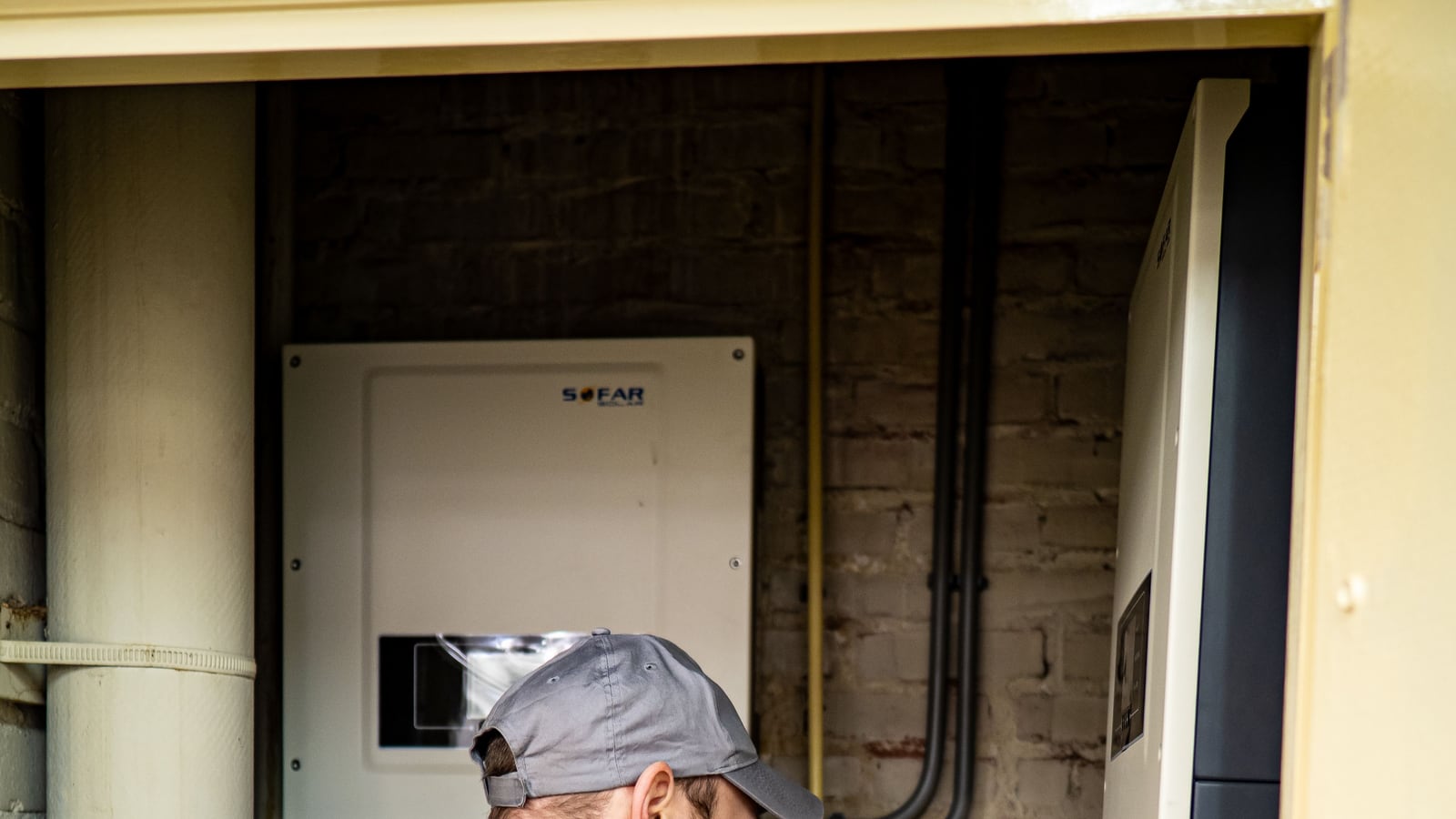
Real stock photograph of a technician examining solar equipment. It is not a Houston property or a Joyce client inspection, and visible branding is not an endorsement.
Ask for at least 12 months of monitoring reports and electric bills, preferably more, then compare production by month rather than using one low bill. The U.S. Department of Energy recommends reviewing production history and monitoring access; it says a year-over-year production drop greater than 10% could indicate a maintenance issue. Also confirm that the monitoring account and login can be transferred to the buyer.
6. Insurance, wind and hail
Send the system information to the buyer’s insurer before the option period ends when possible. Ask whether panels, mounting hardware, inverter and battery are covered; whether leased equipment needs special treatment; how wind or hail deductibles apply; whether removal and reinstallation are covered after a roof claim; and whether the carrier needs an inspection or proof of permitted installation.
Do not assume the seller’s carrier, premium or claim history follows the buyer. Compare coverage and exclusions using How to Review Houston Home Insurance Before Closing.
7. Interconnection and the electricity plan
Verify the local utility or transmission and distribution provider, permission to operate, interconnection agreement and meter configuration. In CenterPoint Energy’s Houston service territory, its current guidance says a buyer or renter taking over a home with solar must contact the distributed-generation team and complete the process for a revised interconnection agreement before permission to operate and meter reprogramming. Procedures differ outside that territory.
Export or “buyback” credit is also not guaranteed to match the seller’s arrangement. CenterPoint directs customers to their Retail Electric Provider for buyback-program terms. Compare the current Electricity Facts Label or contract, import rate, export credit, monthly fees, caps and expiration date. Do not project savings by multiplying the seller’s best month across a year.
8. Warranty transfer and your future resale
Confirm the transfer steps for equipment, workmanship, roof-penetration, inverter and battery warranties before closing. Keep proof of ownership, payoff or assignment, permits, interconnection approval, monitoring access and service records in one file. When you sell later, the next buyer, lender, title company and insurer will ask the same questions.
An owned and documented system may be easier to explain than an agreement with rising payments or unclear collateral, but value is market-specific. Fannie Mae allows an appraiser to consider owned panels under standard appraisal requirements; it does not guarantee that the system adds a particular dollar amount.
Documents to request before the option period ends
- Original purchase contract, loan agreement, lease or PPA and every amendment.
- Latest statement plus a written payoff, buyout or transfer quote valid through the expected closing.
- UCC, fixture-filing, lien, release or subordination information requested by title and lender.
- Panel, inverter, optimizer and battery specifications, serial numbers and installation date.
- Permits, inspection approvals, interconnection agreement and permission to operate.
- At least 12 months of production reports and electric bills, plus monitoring-transfer instructions.
- Equipment, workmanship and roof-penetration warranties with transfer requirements.
- Roof age, repair and claim history, and a quote for removal and reinstallation if roof work is near.
- Insurance quote or written coverage confirmation for the buyer’s ownership and financing structure.
How to write the offer without guessing
The cleanest structure depends on the documents. A buyer might require seller payoff and release, agree to assume an acceptable fixture lease, request a credit for near-term roof or equipment work, or decide the combined obligation is not worth the price. Put the chosen result, delivery duties and deadlines in the contract; do not leave “solar to transfer” as a verbal closing-day task.
The Seller’s Disclosure Notice helps identify whether solar panels are present, but it does not replace the loan, lease, warranty, production and interconnection file. Disclosure is the beginning of due diligence, not the conclusion.
Frequently asked questions
Do solar panels always increase appraised value?
No. Ownership and financing structure matter, and any contributory value still requires market support. Fannie Mae says leased and PPA systems may not be included in appraised value, while owned systems may be considered under standard appraisal rules.
Can the seller simply pay off the solar loan at closing?
Sometimes, but confirm the exact payoff, timing, payee, lien or security-interest release and contract wording. A loan payoff, lease buyout and PPA prepayment are different transactions.
Will solar keep the house powered during an outage?
Do not assume it will. Ask whether the system has a compatible battery, transfer equipment and an approved backup configuration, then have a qualified professional demonstrate how it operates.
Can I use the seller’s electric plan and buyback rate?
Not automatically. Retail-plan eligibility, import rates and export credits can change and may require a new account. Verify the plan available to the buyer at the property’s service address.
Joyce's Featured Listings

AI-generated navigation illustration representing Greater Houston housing choices; it is not a real or currently available listing.
Once you know how to separate home price from a solar obligation, browse Joyce’s Featured Listings to compare current Greater Houston options. A home with panels still needs its own contract, roof, lender, insurance and utility review.
View Joyce's Featured Listings →
Comparing a solar home with a similar home without panels?
Send me the address, asking price, roof age, solar ownership documents, financing type and intended closing timeline. I can help organize the real-estate due diligence and compare the total obligation. A lender, title company, insurer, qualified contractor, tax professional and Texas attorney should handle conclusions within their fields.
About Joyce Tang

Joyce Tang is a Greater Houston real estate agent and investor, co-founder of the North American Real Estate Association, founder of JoyHome and JoyNest, and co-leader of the Dr. Wang Real Estate Team.
She has helped more than 200 families buy or sell homes and has participated in more than 40 renovation projects. Her approach examines not only price, but also location, carrying cost, cash flow, risk and future exit options.
Sources and disclaimer
Sources checked October 23, 2026: TREC Addendum Regarding Fixture Leases, Form 52-1 and Seller's Disclosure Notice; Fannie Mae guidance on appraising properties with solar panels and its April 22, 2026 Selling Guide; the U.S. Department of Energy guide to buying a house with solar panels; the FTC solar contract guide; and CenterPoint Energy Houston-area interconnection guidance.
This article provides general real-estate education, not legal, lending, title, tax, insurance, engineering, electrical or solar-performance advice. Contracts, loan rules, utility procedures, electric plans, warranties and incentives can change and differ by property. No energy savings, system life, appraisal value, financing, coverage, tax result or resale outcome is guaranteed. Use the current documents and qualified professionals for address-specific conclusions.
Rooftop and equipment photographs by Stefan de Vries via Pexels under the Pexels License. Both were cropped and resized to 1600×900. They are illustrative real stock photographs, not Houston properties, Joyce clients or actual inspections. Visible equipment branding does not imply endorsement. Original pages: rooftop solar panels and solar equipment inspection.