

A low appraisal does not automatically force the seller to reduce the price, and it does not automatically let the buyer cancel. It changes the lender’s view of the property value; what happens next depends on the appraisal report, the loan calculation, the signed contract and addenda, and whether the parties can reach a new written agreement.
My first question is not “Who should pay the gap?” It is “What does the report say, what rights are still alive, and how much cash changes under the actual loan?”
Appraisal, inspection, tax value and market analysis are not the same thing
A lender appraisal is an opinion of value used in mortgage underwriting. A home inspection focuses on condition and systems. A county appraisal-district value is used for property-tax administration, and an agent’s comparative market analysis helps buyers and sellers evaluate pricing. One number does not automatically replace the others.
The lender may base the loan on the lower of the contract price or appraised value under the applicable program. That can reduce the loan amount and increase the buyer’s cash requirement, but the exact change is not always identical to the headline “appraisal gap.” Ask the lender for a revised cash-to-close calculation before promising any amount.
When the appraisal is low, work in this order
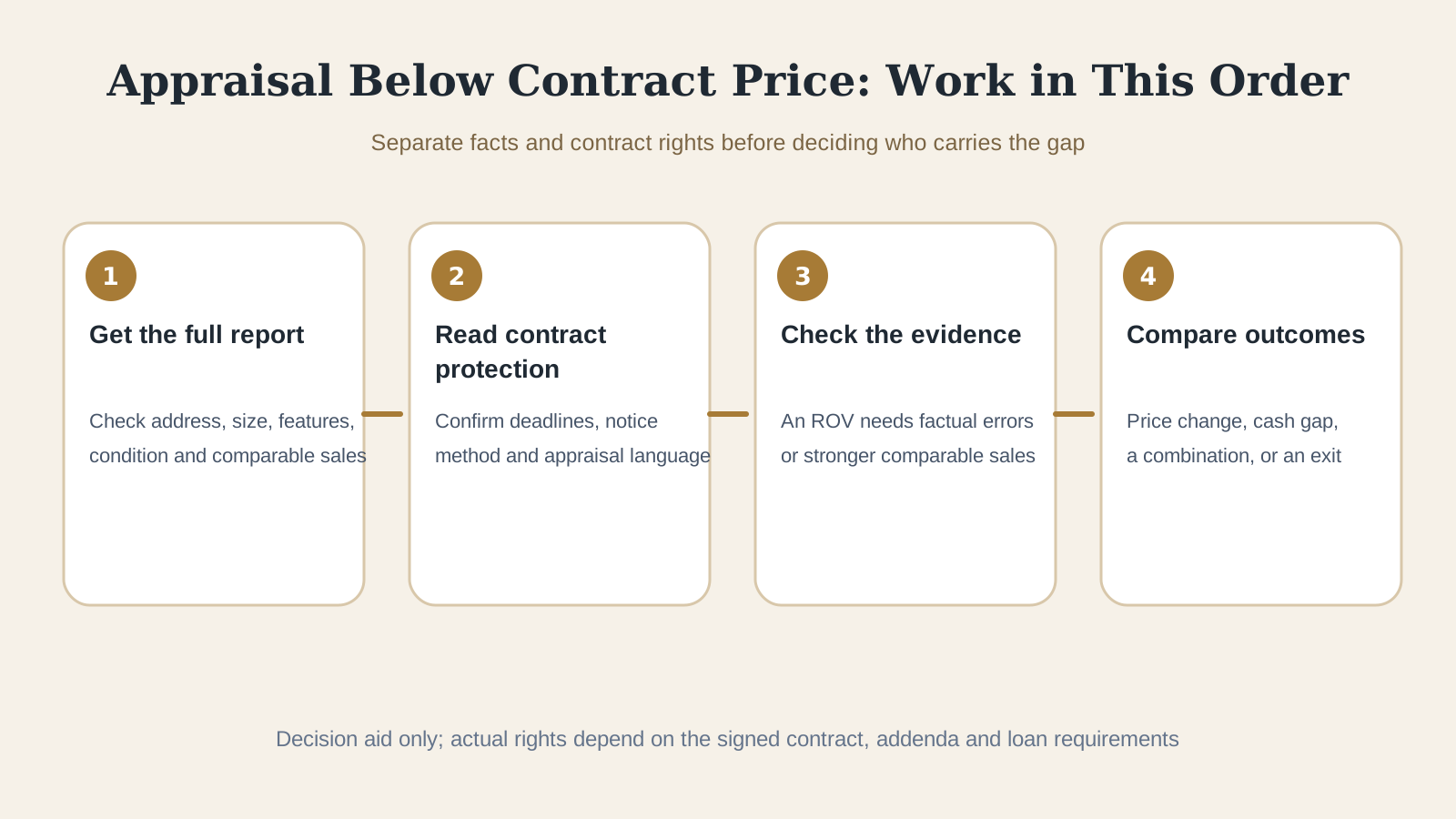
1. Get the complete report and check the facts
For a typical first-lien home loan, CFPB says the borrower is entitled to a free copy of the appraisal or other written valuation obtained by the lender, delivered promptly and no later than three days before closing. Read the full report, not just the final value.
- Property address, legal description and property type
- Living area, bedroom and bathroom count, lot size, year built and major features
- Condition or renovation assumptions that do not match the property
- Comparable sales: distance, date, size, condition and adjustments
- Photos or comments that appear inconsistent with the subject property
A value lower than the contract price is not, by itself, proof that the report is wrong. The useful question is whether a factual error, omitted feature, unsupported adjustment, or stronger closed comparable sale could materially change the analysis.
2. Read the contract protection before negotiating
Texas financing paperwork may separate Buyer Approval from Property Approval. TREC Form 49-1 can address waiver, partial waiver, or an additional termination right tied to a lender appraisal, but the form states that it is not for FHA-insured or VA-guaranteed financing. Those loan programs have their own appraisal language and requirements.
Deadlines and notice requirements matter. A low number does not pause the contract calendar, create an extension, or guarantee an earnest-money refund. Review the exact contract, Third Party Financing Addendum, appraisal addendum, amendments and lender notice before a deadline expires. Legal interpretation belongs with a licensed Texas attorney.
For the broader timing picture, see the Houston contract-to-closing timeline.
3. Request an ROV only when there is usable evidence
A Reconsideration of Value, or ROV, asks the lender and appraiser to review a possible appraisal problem. CFPB identifies examples such as factual errors, omissions, inadequate comparable properties, or prohibited bias. Fannie Mae requires a borrower-initiated ROV process for loans subject to its appraisal rules, but a request is not a promise that the value will change.
- Mark each factual error and attach objective support.
- Offer a small set of closed, genuinely comparable sales—not a pile of higher list prices.
- Explain why each proposed comparable is more relevant by location, date, size, condition or property type.
- Send the request through the lender’s process; do not pressure or contact the appraiser outside permitted channels.
- Ask how the ROV timing affects financing and closing deadlines.
A second appraisal is also not an automatic reset. The lender decides whether another valuation is permitted or useful under its rules and must address appraisal-independence requirements.
4. Compare the four practical outcomes
- Seller reduces the price to the appraised value or another agreed amount.
- Buyer and seller split the difference through a price change and additional buyer cash.
- Buyer covers some or all of the lender-calculated cash difference while the price remains unchanged.
- Buyer uses an available contract right to terminate correctly and on time when no acceptable agreement is reached.
Renegotiation is not automatic. A seller may disagree with the report, have another buyer, or be unable to reduce the price. The buyer may decide that the location, replacement cost or long holding period supports some extra cash—but that is a personal risk decision, not evidence that the appraisal is irrelevant.
Before covering an appraisal gap, answer these six questions
- What is the lender’s revised loan amount and cash to close?
- Will the extra cash reduce emergency reserves or money needed for repairs?
- How long do you expect to own the home, and how would a near-term resale affect the decision?
- Are there closed sales or property features that support paying above the appraisal?
- What contract protection is being reduced or waived?
- If the seller will not change price, what is your maximum additional cash—and is walking away still available?
Do not count the same funds for down payment, closing costs, appraisal gap and post-closing repairs. Revisit the full plan in How to Build a Houston Homebuying Budget Beyond the Mortgage Payment.
Plan for appraisal risk before the offer is signed
The best time to decide your appraisal-gap limit is before the offer goes out. Compare recent closed sales, ask the lender how the loan will be calculated, verify available cash, and make the appraisal language match the actual loan type. A competitive offer should still have a defined downside.
Use Making an Offer on a Houston Home: Price Is Not the Only Term That Matters to coordinate price, financing, appraisal protection and closing terms.
Frequently asked questions
Does the seller have to lower the price after a low appraisal?
No. The contract price changes only if the parties agree in writing or another contract provision applies. The seller can decline, counter, or pursue another available path.
Can the buyer simply pay the full difference?
Possibly, if the buyer has verified funds, the lender allows the structure, and the contract permits it. First obtain the lender’s revised figures; the required extra cash may depend on loan-to-value calculations rather than a simple subtraction.
Can an appraisal be challenged?
Yes, a borrower may ask the lender about its ROV process. The strongest requests identify objective errors, missing facts or more relevant closed comparable sales. Disagreement with the result alone may not be enough.
Is a low appraisal the same as a failed inspection?
No. An appraisal addresses value for lending and may flag certain property requirements; an inspection evaluates condition and systems for the client. The two reports serve different purposes.
Joyce's Featured Listings

AI-generated illustration: a Greater Houston housing scene, not a real or currently available listing.
Once you know how appraisal risk changes cash and contract protection, browse Joyce’s Featured Listings to compare current home types and price ranges. Every property still requires its own valuation, loan, tax, insurance and condition review.
View Joyce's Featured Listings →
Received a low appraisal and need to organize the next decision?
Send me the contract price, appraised value, loan type, appraisal deadline and the additional cash you could realistically use. I can help organize the report questions, negotiation scenarios and contract calendar for discussion with your lender and, when needed, a Texas attorney.
About Joyce Tang

Joyce Tang is a Greater Houston real estate agent and investor, co-founder of the North American Real Estate Association, founder of JoyHome and JoyNest, and co-leader of the Dr. Wang Real Estate Team.
She has helped more than 200 families buy or sell homes and has participated in more than 40 renovation projects. Her approach examines not only price, but also location, carrying cost, cash flow, risk and future exit options.
Sources and disclaimer
Sources checked October 17, 2026: CFPB guidance on low appraisals, copies of appraisal reports, reconsideration of value, Fannie Mae ROV guidance, and TREC pages for Form 49-1 and the Third Party Financing Addendum.
This article is general real-estate education, not legal, lending, appraisal, tax or financial advice. Rights, deadlines, valuation methods and cash requirements depend on the signed documents, property, loan program and lender. Confirm loan calculations with a licensed mortgage professional, valuation questions through the lender and appraiser, and contract interpretation with a licensed Texas attorney.
Cover photo from Pexels by Vitaly Gariev, used under the Pexels License. It is a general document-review scene and does not depict Joyce’s client, an appraisal dispute or an actual transaction.