
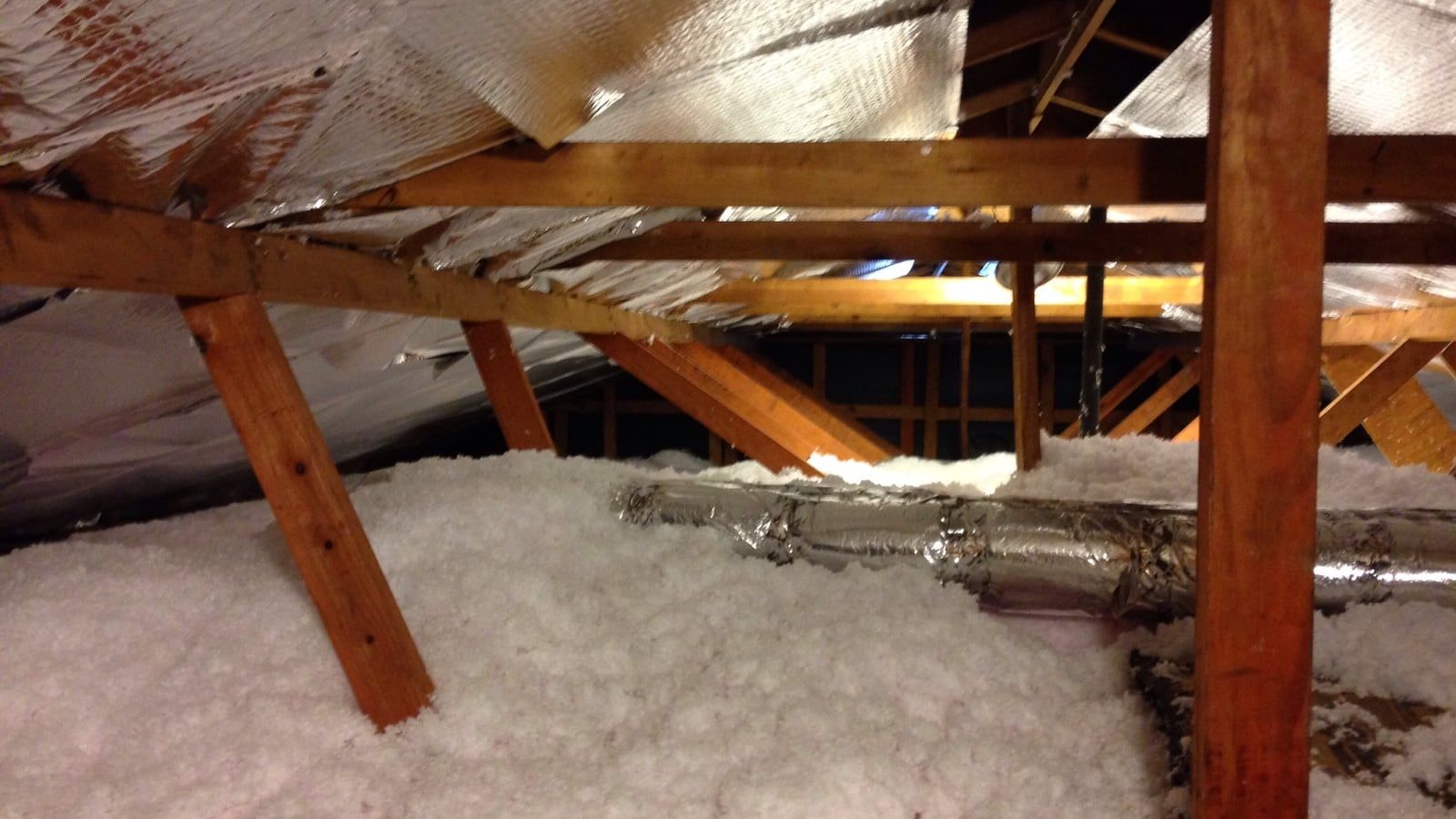
An inspection note saying “insufficient attic insulation” does not automatically mean the buyer should simply add another layer. First rule out roof leakage, exhaust ducts terminating in the attic, leaking or sweating HVAC ducts, blocked soffit vents, and air leakage from the house. New insulation can otherwise cover the real problem.
The practical sequence is usually: control water and air first, address ducts and ventilation, then decide where insulation belongs.
What does a standard Texas inspection cover?
TREC standards require the inspector to report the attic inspection vantage point, approximate average insulation depth, and evidence of water penetration. Missing insulation, poorly performing ventilation, ventilator defects, framing, decking, access openings, and damaged duct insulation are also reportable within the applicable systems.
The inspection is still a limited visual survey. An inspector need not enter when the opening is smaller than 22 by 30 inches, headroom is below 30 inches, or conditions are unsafe. The standards also do not require an exhaustive list of every defect or water-penetration location. “Viewed from the access” provides less information than an entered attic.
Six signs to sort out before adding insulation
1. Thin, uneven, or displaced insulation
Determine whether coverage is generally low or only compressed around service paths, fixtures, and repaired areas. Settlement, uneven installation, and later trade work can create local gaps. A proposal should define area, material, and intended finished condition—not only the number of bags.
2. Insulation blocking soffit intake vents
An attic can look heavily insulated while the eave intake path is buried. ENERGY STAR specifically warns not to cover soffit vents with insulation and describes maintaining airflow with rafter vents or baffles. More insulation is not automatically better when it is placed in the wrong location.
3. Bath, kitchen, or dryer exhaust ending in the attic
Moist indoor air discharged into the attic can contribute to damp roof decking and framing. DOE and EPA guidance directs bathroom and kitchen exhaust outdoors, not into the attic. Seeing a flexible duct is not enough; verify where it actually terminates.
4. Wet or matted insulation and stained roof decking
Wet, compacted, or locally discolored insulation may point to roof leakage, equipment condensate, duct sweating, or indoor moisture migration. Find the source before replacement. Covering wet material does not stop the water and makes later inspection harder.
5. Damaged duct insulation, loose connections, or condensation
Many Houston homes place air-conditioning ducts in a hot, humid attic. Damaged jackets, loose joints, inadequate insulation, or visible condensate can waste conditioned air and create moisture issues. This is an HVAC and duct question as well as an attic-insulation question.
6. An uninsulated access or an attic that could not be fully viewed
Pull-down stairs, access panels, and perimeter gaps are common weak points. More importantly, an access-only inspection may miss remote eaves, decking, and ducts. The inspection limitation itself should inform whether a targeted follow-up is warranted.
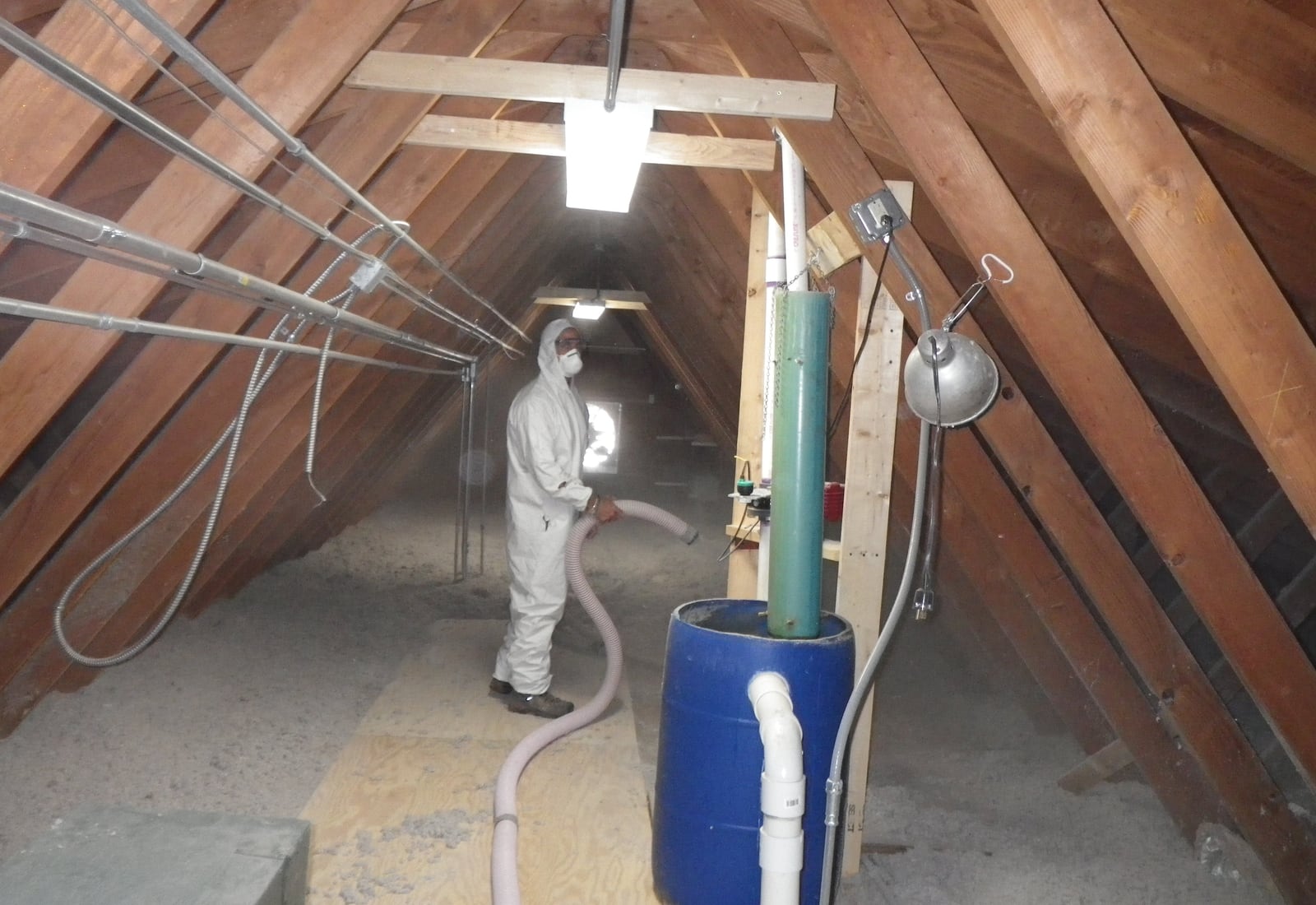
Real installation of blown cellulose across an attic floor. Even coverage matters, but leakage, exhaust termination, air sealing, and ventilation paths should be addressed first. Photo: Rob Holm / U.S. Fish and Wildlife Service, public domain; cropped, resized, and compressed.
Can one depth or R-value settle the question?
Not by itself. Different materials deliver different thermal performance at the same depth. A vented attic and an unvented spray-foam assembly also place insulation and control moisture differently. Duct location, existing material condition, air sealing, roof design, and local requirements all matter.
ENERGY STAR recommends identifying the existing material and insulation level, then evaluating the climate zone and project. For a buyer, the inspection report’s approximate depth is a useful clue, not a complete energy design. Use a qualified insulation, HVAC, or home-performance professional for a property-specific scope.
Use this seven-step option-period checklist
- Confirm whether the inspector entered the attic, viewed it from the access, or used another vantage point.
- Record the material, approximate average depth, bare areas, and compressed service paths.
- Look for roof-deck staining, wet insulation, rust, condensate pans, and unusual odor without diagnosing mold from color alone.
- Verify that bathroom, kitchen, and dryer exhausts actually terminate outdoors.
- Check soffit intake paths, baffles, roof exhaust vents, and powered ventilators for blockage or damage.
- Separate duct leakage, duct insulation, equipment condensate, and building insulation into distinct estimates.
- Correct water, exhaust, air-sealing, and duct problems before finalizing added-insulation scope.
If the second floor stays warmer, continue with Why Is the Upstairs Hotter Than Downstairs? 7 Things Houston Homeowners Should Check. For roof-deck staining, add Houston Roof Inspection: 6 Warning Signs Buyers Should Not Ignore. For the full inspection budget, use Five Big-Ticket Problems Houston Buyers Should Watch During a Home Inspection.
Frequently asked questions
Does thin insulation always justify a seller repair request?
No. Determine whether it is an efficiency upgrade, routine maintenance, or a defect tied to missing coverage, water, exhaust, or ducts. Then negotiate from the property-specific scope and estimate.
Will an attic fan automatically make the upstairs cooler?
No. ENERGY STAR notes that when soffit intake is blocked or the attic floor leaks air, a powered fan can pull conditioned air from the house and make the HVAC system work harder. Evaluate intake, air sealing, and the full ventilation design first.
Does a radiant barrier replace attic insulation?
No. Radiant barriers, bulk insulation, air sealing, and ventilation address different heat and moisture pathways and are not simple substitutes.
Does dark roof decking prove mold?
Appearance alone is not a diagnosis. Investigate moisture sources and material condition, and use a qualified building-envelope, indoor-environmental, or remediation professional when appropriate.
Joyce's Featured Listings

AI-generated illustration: a Greater Houston housing scene, not a real or currently available listing.
Budget the attic, roof, ductwork, and HVAC together so a seemingly small insulation note does not hide a larger scope. Browse Joyce’s Featured Listings, then tailor the inspection plan to the address.
View Joyce's Featured Listings →
Did the inspection flag low attic insulation?
Send me the address, attic photos, relevant inspection pages, and HVAC information. I can help separate insulation, ventilation, duct, water, and inspection-limit questions and organize the estimate sequence during the option period. Diagnosis, construction, energy performance, and mold assessment remain with the appropriate professionals.
About Joyce Tang

Joyce Tang is a Greater Houston real estate agent and investor, co-founder of the North American Real Estate Association, founder of JoyHome and JoyNest, and co-leader of the Dr. Wang Real Estate Team.
She has helped more than 200 families buy or sell homes and has participated in more than 40 renovation projects. Her approach examines not only price, but also location, carrying cost, cash flow, risk and future exit options.
Sources and disclaimer
Sources checked October 21, 2026: TREC Standards of Practice, the DOE Consumer Guide to Durable Attics, ENERGY STAR attic-ventilation guidance, ENERGY STAR attic inspection guidance, and EPA moisture-control guidance.
This article provides a general real-estate and inspection framework, not insulation, HVAC, building-envelope, engineering, mold, environmental, insurance, legal, or contract advice. Attics present heat, dust, exposed wiring, and fall-through hazards; buyers should not enter them casually. Confirm causes, construction, permits, and safety with the appropriate licensed or qualified professionals.
Cover photo from Wikimedia Commons by Jason Dale, used under CC BY-SA 3.0 and cropped/compressed. Inline photo from Wikimedia Commons by Rob Holm / U.S. Fish and Wildlife Service, a U.S. federal government public-domain work, cropped/resized/compressed. The cover adaptation remains under a compatible license; depicted people and source organizations do not endorse Joyce.