
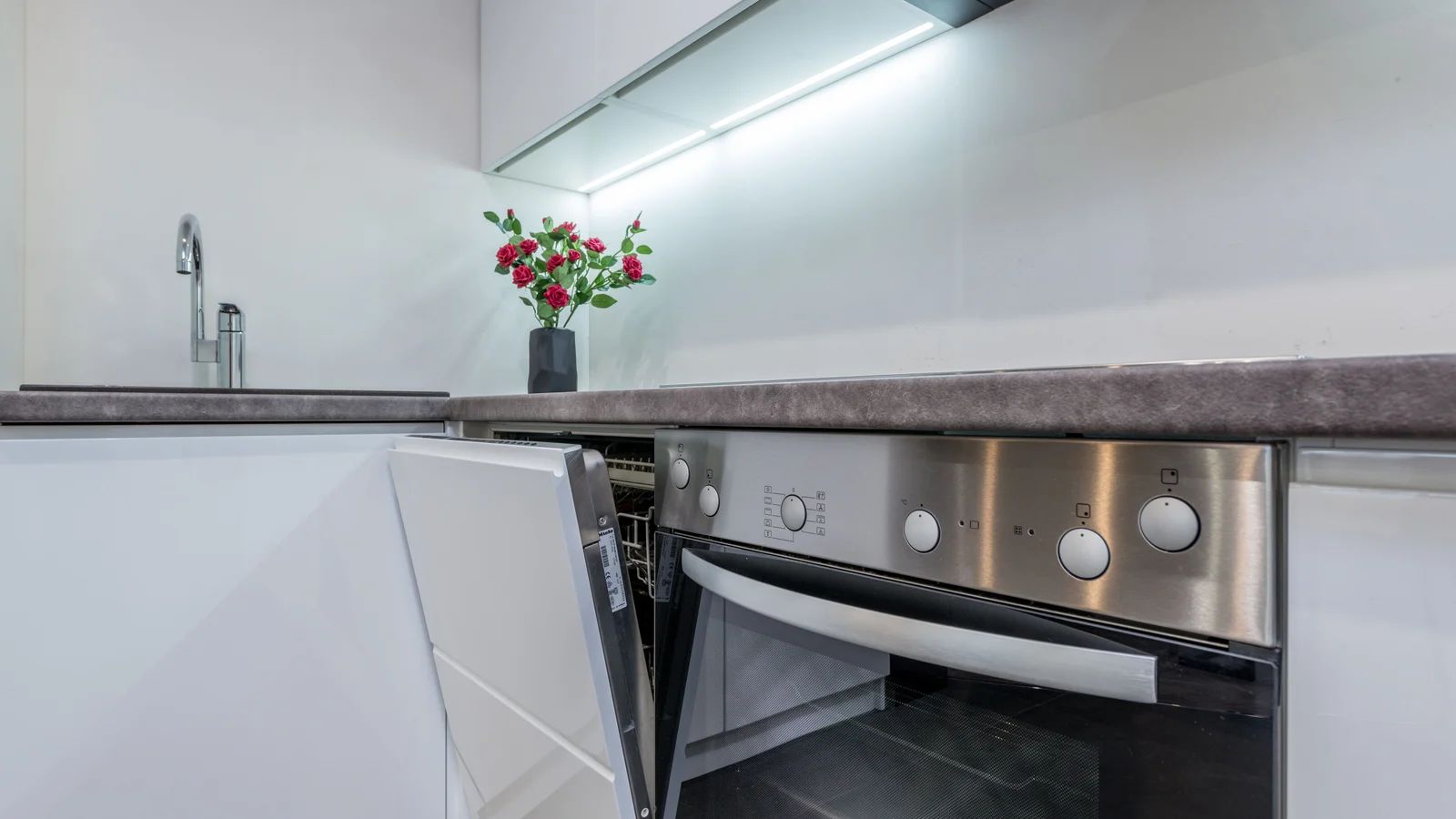
A dishwasher that starts and sprays water has not necessarily passed the important checks. Before buying, review a full operating cycle, mounting, the door seal and tub, visible leaks, supply and drain connections, and visible backflow prevention.
These problems often hide below the sink or along the cabinet base. A slow leak discovered after closing may involve more than the appliance; cabinet and flooring damage can become part of the scope.
What does a standard Texas inspection cover?
Current Texas Real Estate Commission minimum standards require an inspector to operate installed appliances with ordinary controls and report an inoperative dishwasher, performance or mounting deficiencies, rusted, missing or damaged components, visible active water leaks, and the absence of visible backflow prevention.
A general inspection still describes accessible, visible conditions at the time of inspection. The inspector normally does not remove the dishwasher or predict its remaining life. TREC consumer guidance specifically notes that mechanical components can fail later and that an inspection is not a life-expectancy guarantee.
Separate the dishwasher into six checks
1. Do not stop at the Start button
Control-panel response proves very little. A meaningful check observes filling, spraying, continued operation and draining, then looks for unusual standing water or error messages. During the option period, ask whether the inspector completed a normal operating mode.
2. Watch for movement when the door and racks open
The dishwasher should be secured to the cabinet or supporting structure. If the whole unit tips or slides forward as the door or racks open, the mounting needs attention. Also check whether moisture or damage has weakened the surrounding cabinet.
3. Inspect the gasket, tub, spray arms and racks
Look for a cracked or deformed door gasket, rust or damage around the tub, spray arms that do not turn freely, and broken rack wheels. A door that latches is not proof of a good seal; observe the lower corners and sides while the appliance runs.
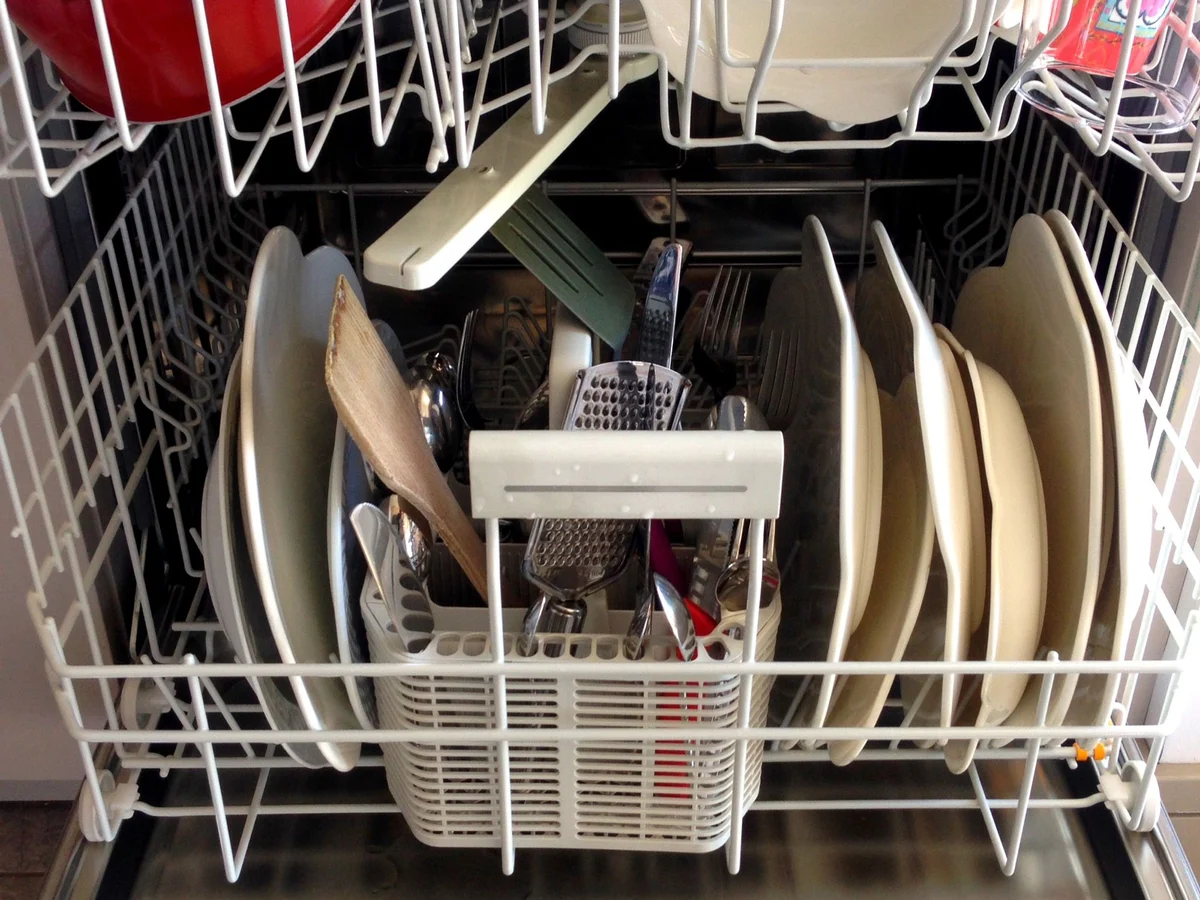
This is a real photograph of dishwasher racks and the tub area. It identifies useful inspection locations; it is not a Houston listing or an assessment of any particular brand or installation.
4. Look below the sink for evidence of a slow leak
While the machine runs, observe visible supply and drain hoses, fittings and the disposer connection. In addition to active drips, look for swelling, peeling cabinet finish, musty odor, staining, rust or freshly placed liner paper. A new liner is not proof of a problem, but it is worth a question.
5. Identify the drain’s backflow protection
Dirty drain water should not easily return to the dishwasher. Common arrangements include a countertop air gap or a high-mounted drain hose configured according to the appliance instructions and applicable local requirements. Texas standards require reporting when visible backflow prevention is absent, but the correct configuration depends on the appliance and the property.
Do not diagnose the installation from one photograph alone. Confirm that the visible route is clear, supported and not crushed or loose, then ask the inspector to explain the basis for any reported deficiency.
6. Know how power and water are disconnected
Identify how the dishwasher is powered and where the water shutoff is located. TREC does not require an inspector to report a deficiency merely because a dishwasher receptacle is not in the adjacent cabinet, so receptacle location alone is not the decision. Exposed wiring, scorching, loose fittings or questionable alterations call for the appropriate qualified trade.
Use this option-period order of operations
Photograph the model label, gasket, mounting points and visible supply and drain connections.
Ask whether the inspector completed normal operation and whether the finding concerns function, installation or an active leak.
Use a dry paper towel along visible joints and the cabinet base; do not remove the appliance or turn unfamiliar valves yourself.
Price cleaning or parts, remounting, drain correction, leak repair and full replacement as separate scopes.
If cabinets or flooring show moisture damage, define that scope instead of negotiating only the price of a dishwasher.
Use the appropriate specialist for electrical issues, recurring leakage or concealed damage during the option period.
Which findings can change the budget?
A dirty filter, failed rack wheel or loose mounting is usually defined and limited. Repeated drain failure, door leakage, swollen cabinets or flooring, long-term seepage and a drain route that needs rework deserve more attention.
I would not ask only, “What does a new dishwasher cost?” If water has reached woodwork or flooring, the scope may include the appliance, installation, cabinetry and moisture remediation. Separate those pieces before choosing seller repair, a credit or a buyer-managed replacement.
Frequently asked questions
Does a little water in the bottom mean the dishwasher is broken?
Not necessarily. Designs vary and a small amount may be normal for a particular model. Significant standing water, odor, drain errors or repeated backflow need further evaluation. Check the model instructions and the full-cycle result.
Can a good inspection guarantee the dishwasher will not fail after closing?
No. A general inspection describes observable condition at that time; it is not a warranty of future performance. An older appliance that operates today may still deserve a replacement allowance in the ownership budget.
If it leaks, should the seller simply replace the dishwasher?
Find the source first. The gasket, hose, fitting, drain connection or appliance may be responsible, and adjacent materials may already be affected. Replacing only the machine may not resolve the whole scope.
Can I pull the dishwasher out myself during a showing?
No. Moving a built-in appliance may damage flooring, plumbing or wiring and can exceed the inspection scope. With seller authorization, use an appropriate professional when concealed areas need review.
Related inspection guides
Dishwasher findings often connect to water supply, hot water and other kitchen equipment. Continue with the water-supply pipe inspection guide, water-heater checklist and range-hood exhaust guide.
Sources and image note
Primary sources: current Texas Real Estate Commission inspection rules and TREC consumer FAQs. Sources checked October 30, 2026.
The cover is a real kitchen photograph by Max Vakhtbovych; the inline photograph is by Devilishly Good. They come from the Pexels cover source page and inline source page and are used under the Pexels License. Images were cropped, resized and compressed only; no generative edits were used.
Joyce's Featured Listings

A newer-looking kitchen does not prove that appliance connections and drainage are correct. Browse Joyce's Featured Listings, then use this checklist on the specific homes that fit your plans.
View Joyce's Featured Listings
Unsure how to read a dishwasher finding?
Send me the property address, model number, photos and the relevant inspection pages. I can help separate a small appliance repair from mounting, drainage, leakage and possible cabinet or flooring scope before you decide how to respond during the option period.
About Joyce Tang

Joyce Tang is a Greater Houston real estate agent and investor, co-founder of the North American Real Estate Association, founder of JoyHome and JoyNest, and co-leader of the Dr. Wang Real Estate Team.
She has helped more than 200 families buy or sell homes and has participated in more than 40 renovation projects. Her approach examines not only price, but also location, carrying cost, cash flow, risk and future exit options.
Important notice
This article provides general home-purchase and residential-appliance information. It is not inspection, plumbing, electrical, mold-remediation, construction or legal advice and does not replace a property-specific opinion from a licensed inspector or appropriate qualified professional. Do not operate unfamiliar electrical connections or valves or remove a built-in appliance yourself.