
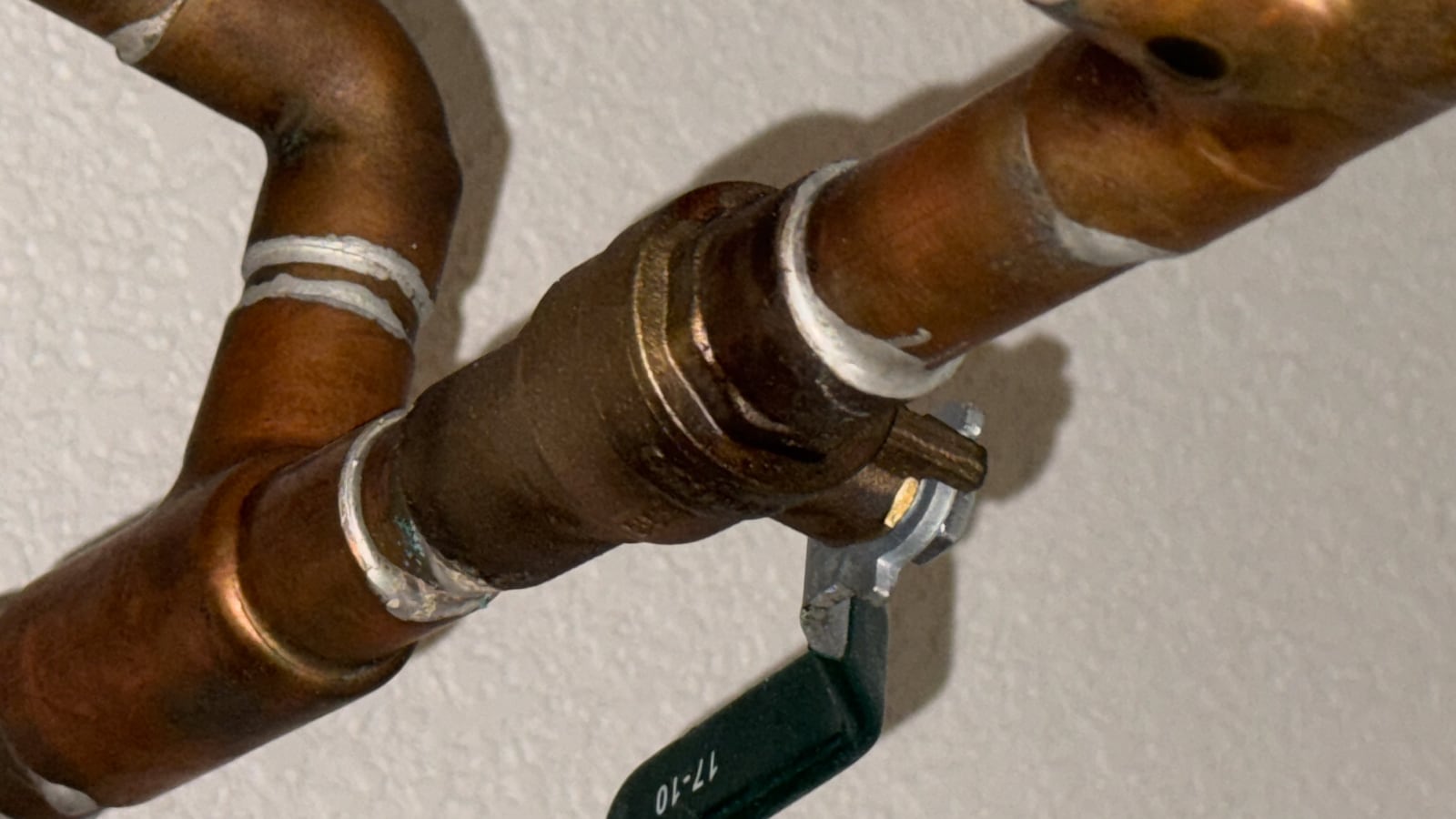
Normal water pressure at one moment does not prove that concealed supply piping is free of corrosion, restriction, slow leakage, or past patchwork. A buyer should identify the visible pipe materials, determine what has actually been replaced, observe flow with simultaneous use, and decide whether the evidence supports a localized repair or a broader repipe estimate.
One faucet flowing well is not a clean bill of health for the entire supply system.
Supply piping and drain piping are different systems
Pressurized supply lines deliver hot and cold water to fixtures and appliances. Drain lines carry wastewater away. A sewer camera primarily examines the waste line and does not evaluate supply piping. A general inspection also does not pressure-test every concealed line.
What does a standard Texas inspection cover?
TREC standards require the inspector to report the water meter, main shutoff location, static water pressure, and visible supply and drain materials. Active leaks and supply-pipe deficiencies are reportable, and functional flow is observed with two fixtures operating simultaneously. Pressure above 80 PSI is also reported as deficient.
The inspector is not required to operate main or branch shutoff valves, inspect the water main, or determine water quality, potability, or supply volume. Concealed piping is not fully visible. “No active leak observed” is not a warranty against future leakage.
Six signs that deserve more than “the pressure is fine”
1. One faucet flows well, but simultaneous use drops sharply
Static pressure and usable flow are not the same. A large drop when a shower and another fixture run together can involve pipe sizing, internal restriction, valves, equipment, or other conditions. Identify the cause before raising pressure.
2. One new section does not prove a whole-house repipe
Newer plastic pipe below a sink or in the attic only proves that section was changed. Other branches, the water-heater area, the entry line, and concealed runs may remain original. Ask what was replaced, why, by whom, and whether invoices and permits exist.
3. Rust, mineral buildup, or staining at threaded joints and mixed-metal connections
Galvanized steel can corrode, and dissimilar-metal connections can create localized concerns. Copper still requires attention to pinhole-leak evidence, soldered joints, and fittings. Plastic systems should be identified by markings, fittings, support, and installation condition. Material name alone is not a warranty.
4. Old ceiling, cabinet, or baseboard stains with a vague “fixed” explanation
Find out what failed and what was repaired. A loose fitting, nail puncture, appliance drain, and recurring supply leak are different scopes. One documented repair does not automatically justify a repipe, but repeated repairs in several areas support a closer system review.
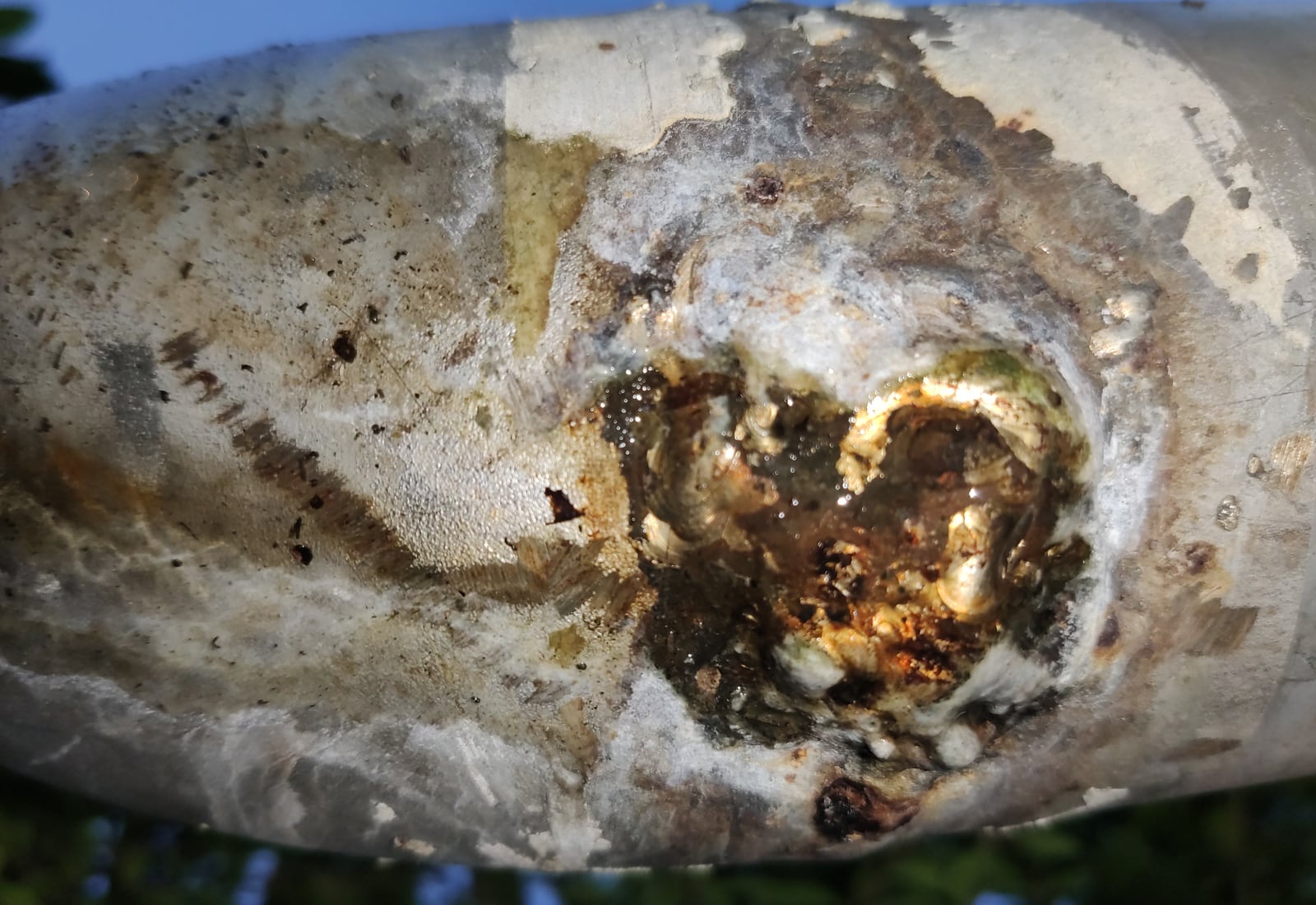
Real active leakage at a corroded metal-pipe bend. The photo shows that corrosion and leakage can occur together; it cannot identify every pipe material or remaining life in a home. Photo: Shamrock Lee / Wikimedia Commons, CC BY 4.0; cropped, resized, and compressed.
5. Changes in color, sediment, or odor
Corroding metal pipe can produce deposits, but changes can also come from the public supply, water heater, or another source. A home inspector does not determine drinking-water quality. Select testing and sampling for the specific concern and review local utility information rather than diagnosing by appearance.
6. The main shutoff is missing, inoperable, or the repair path is unclear
Fast water shutoff matters during a leak. Buyers should also understand whether new lines would run through the attic, walls, or another route and how much ceiling, wall, cabinet, and finish work is involved. Pipe material is only one part of the project cost.
Do galvanized pipes automatically require a full repipe?
No single rule applies. First confirm the visible material and whether part of the house has already been repiped. Then weigh functional flow, visible corrosion, leak history, connections, concealed areas, and a plumber’s property-specific evaluation. EPA notes that galvanized steel can corrode and collect metal deposits, but drinking-water risk cannot be determined from a pipe name or photo alone.
Ask for two scopes when appropriate: a targeted repair for the verified defect and a broader repipe estimate if the evidence supports a system-wide concern. That prevents one small repair from being inflated into a whole-house project—and prevents a small repair quote from hiding a larger risk.
A repipe estimate should separate these eight items
- Material, sizing, and fitting system.
- Included hot and cold branches and explicit exclusions.
- Main shutoff, fixture shutoffs, and exterior hose connections.
- Water-heater, washer, refrigerator, and other appliance connections.
- Routing and the walls, ceilings, or cabinets to be opened.
- Drywall, paint, tile, cleanup, and finish restoration responsibility.
- Permit and inspection responsibility for the property’s actual jurisdiction.
- Schedule, payment milestones, and labor and material warranties.
The Texas State Board of Plumbing Examiners advises consumers to verify the Responsible Master Plumber’s license and insurance, obtain detailed written estimates, and confirm permit and inspection requirements with the local authority. A Houston mailing address does not always mean the property is inside City of Houston jurisdiction.
Use this seven-step option-period checklist
- Photograph the meter, main shutoff, water-heater connections, visible pipe, and pipe markings.
- Record static pressure and observe functional flow with multiple fixtures operating.
- Keep supply-flow, drain-flow, and hot-water problems separate.
- Review seller disclosures, leak repairs, repipe scope, invoices, warranties, and permits.
- Look for staining and patches at ceilings, cabinets, walls, attic areas, and garage.
- When corrosion, repeat leaks, mixed materials, or flow concerns appear, obtain a focused evaluation from a qualified plumber.
- Compare targeted repair and broader repipe scopes before deciding on repair, credit, price, or further investigation.
For underground waste piping, read Should You Get a Sewer Scope Before Buying a Houston Home?. For water-heater connections and drainage, use The Water Heater Still Works—So Is It Fine? 6 Signs Houston Buyers Should Check. Before negotiating, continue with What Should a Buyer Ask the Seller to Fix?.
Frequently asked questions
If the inspection found no leak, do I still need a plumber?
Possibly. Visible corrosion, several historic water stains, abnormal functional flow, unclear partial repiping, or a large potential scope can justify a focused evaluation.
Are copper or plastic pipes always better than galvanized steel?
Material name alone is not enough. Installation quality, fittings, support, environment, repair history, and the specific product system all matter.
Why do whole-house repipe estimates vary so much?
Routing, floor count, fixture count, material, wall access, restoration, permits, and warranty may differ. Align inclusions and exclusions before comparing price.
Can a sewer scope tell whether supply piping leaks?
No. A sewer scope images waste piping. Supply piping requires a separate review of visible material, pressure, functional flow, leak evidence, and appropriate professional testing.
Joyce's Featured Listings

AI-generated illustration: a Greater Houston housing scene, not a real or currently available listing.
Budget supply piping, sewer piping, the water heater, and finish restoration together when comparing older homes. Browse Joyce’s Featured Listings, then tailor the plumbing review to the address.
View Joyce's Featured Listings →
Not sure whether a home needs one repair or a repipe evaluation?
Send me the address, year built, plumbing section of the inspection, visible-pipe photos, and seller repair records. I can help organize missing information, estimate scope, and negotiation priorities during the option period. Pipe identification, leaks, construction, and permits remain with the appropriate licensed professionals.
About Joyce Tang

Joyce Tang is a Greater Houston real estate agent and investor, co-founder of the North American Real Estate Association, founder of JoyHome and JoyNest, and co-leader of the Dr. Wang Real Estate Team.
She has helped more than 200 families buy or sell homes and has participated in more than 40 renovation projects. Her approach examines not only price, but also location, carrying cost, cash flow, risk and future exit options.
Sources and disclaimer
Sources checked October 21, 2026: TREC Standards of Practice, Texas State Board of Plumbing Examiners consumer guidance, the Houston permit portal, and EPA plumbing-material guidance.
This article provides a general real-estate and inspection framework, not plumbing, construction, engineering, water-quality, health, environmental, insurance, legal, or contract advice. Do not operate an old, corroded, or suspect main valve yourself. Confirm materials, leaks, testing, construction, permits, and drinking-water concerns with the appropriate licensed or qualified professionals.
Cover photo from Wikimedia Commons by Tony Webster, used under CC BY 2.0 and cropped/compressed. Inline photo from Wikimedia Commons by Shamrock Lee, used under CC BY 4.0 and cropped/resized/compressed. Depicted people and source organizations do not endorse Joyce.