
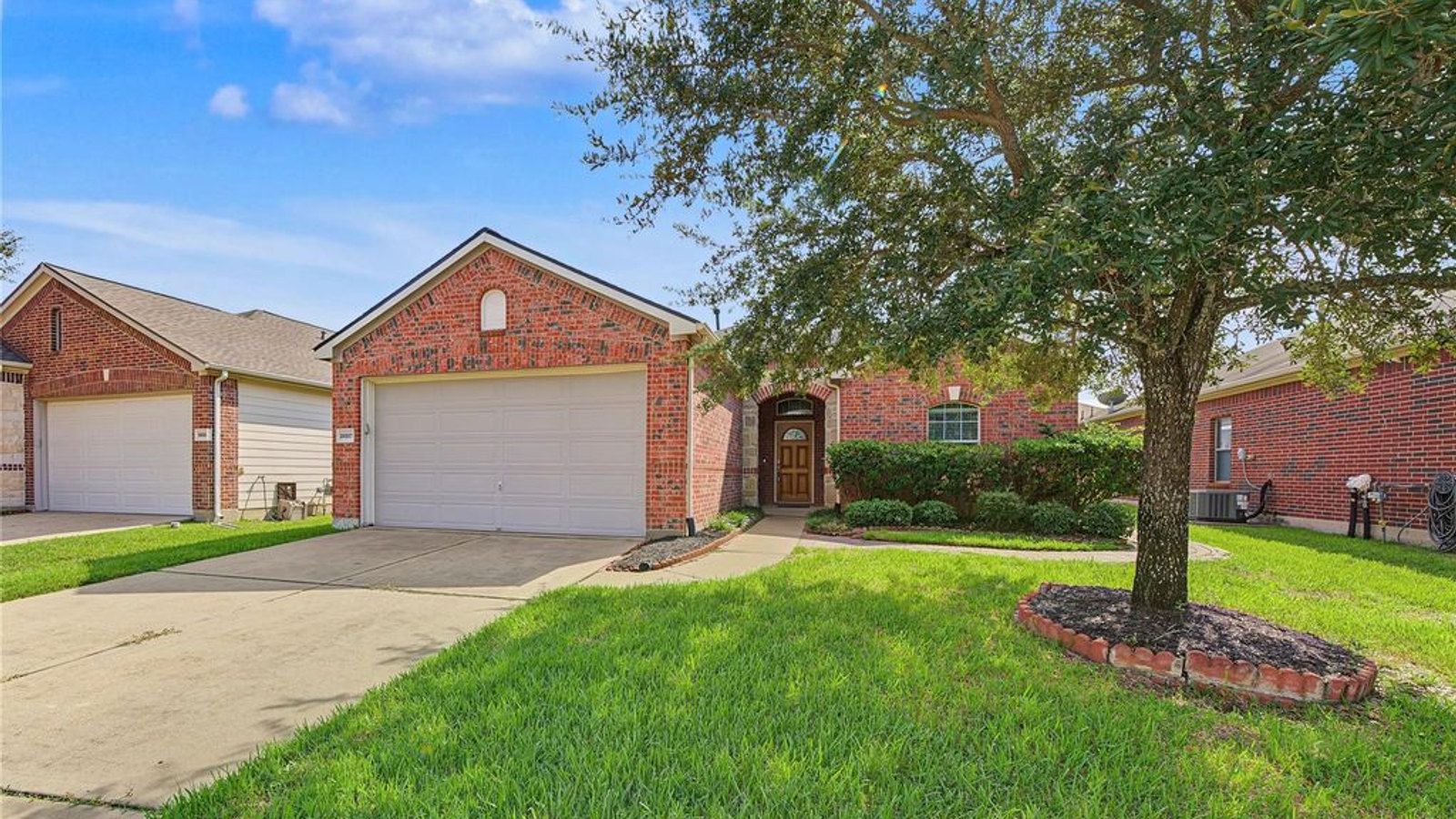
Buyers had choices when this home entered the market. Among the nearby competing listings our team was tracking, some had already been listed for more than three months and had reduced their prices repeatedly without selling.
In that same market environment, 24307 Sunrise Springs Ln was listed on October 19, 2026, received a cash offer on day three, and closed on November 4—16 calendar days from listing to closing.
The useful question is not simply why it sold quickly. It is why this furnished home stood out when price cuts alone were not producing a sale for some of the competition. The answer involves pricing, editing the existing rooms, professional photography, the post-listing presentation, and transaction follow-through.
Buyers compare more than price. A listing that is easier to understand, raises fewer unanswered questions, and feels executable has a better chance of being chosen.
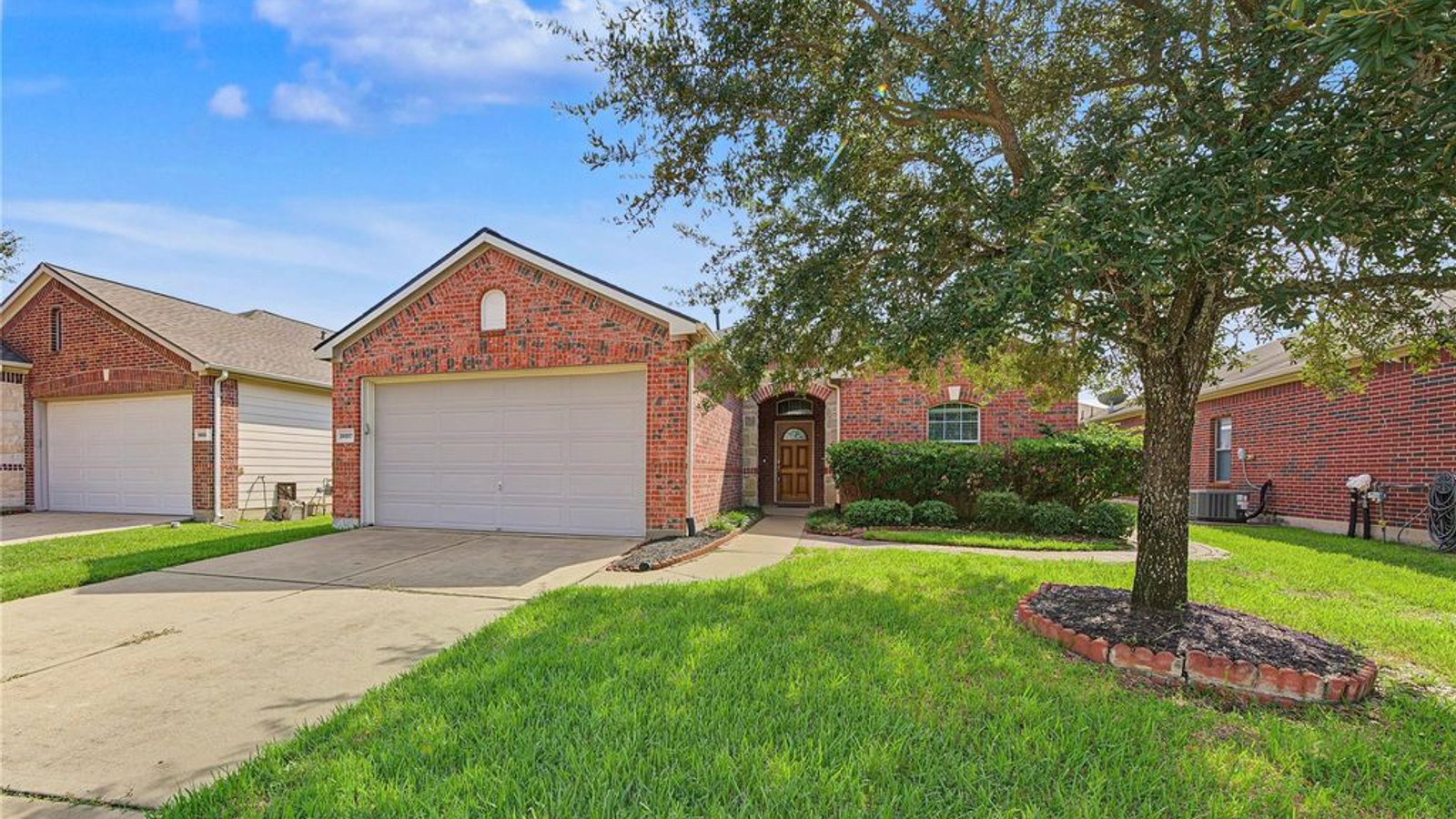
Front exterior of the case property, which closed on November 4, 2026.
Case at a glance
- Address: 24307 Sunrise Springs Ln, Katy, TX 77494
- MLS: 98286992
- Community: Lakes at Grand Harbor Sec 2
- Property: built in 2008; 3 bedrooms, 2 bathrooms; approximately 1,957 square feet
- Lot: approximately 0.1199 acres
- Final public list price: $299,900 (the first two days tested a price that included part of the furniture investment, then adjusted in response to the market)
- List date: October 19, 2026
- Outcome: cash offer received on day three; closed November 4, 2026—16 days from listing to closing
- Seller representation: Joyce Tang
Basic property facts and public listing information come from the HAR page available on November 4, 2026. The closing date and transaction milestones were confirmed from this transaction. The sale price is not disclosed in this article.
Start with the market context: buyers had options, and price cuts did not automatically create offers
Some of the nearby competing listings we tracked had been active for more than three months and had gone through one or more price reductions. Even after the numbers changed, they did not immediately sell. Price matters, but it is not the only part of a buyer’s decision.
If the photos make rooms difficult to read, the use of space is unclear, the price is not supported by condition, or buyers still see uncertainty around the transaction, another reduction may not solve the real friction. The reverse is also true: attractive presentation cannot replace realistic pricing or actual condition.
Our strategy was not simply to be cheaper. At the $299,900 public list price, we worked to make the layout easier to understand, reduce visual distraction online, and move contract and closing details forward efficiently once an offer arrived.
The original plan was a short-term rental—so why sell?
The seller did not initially prepare this property for sale. Renovations were complete, the home was fully furnished, and even cookware, dishes, and everyday supplies were in place for a short-term rental launch.
Plans changed. As operations approached, the seller realized that a short-term rental required more ongoing time and attention than was practical, and decided to sell instead. That pivot happened quickly, and a setup designed for guest convenience could not simply become the listing strategy without review.
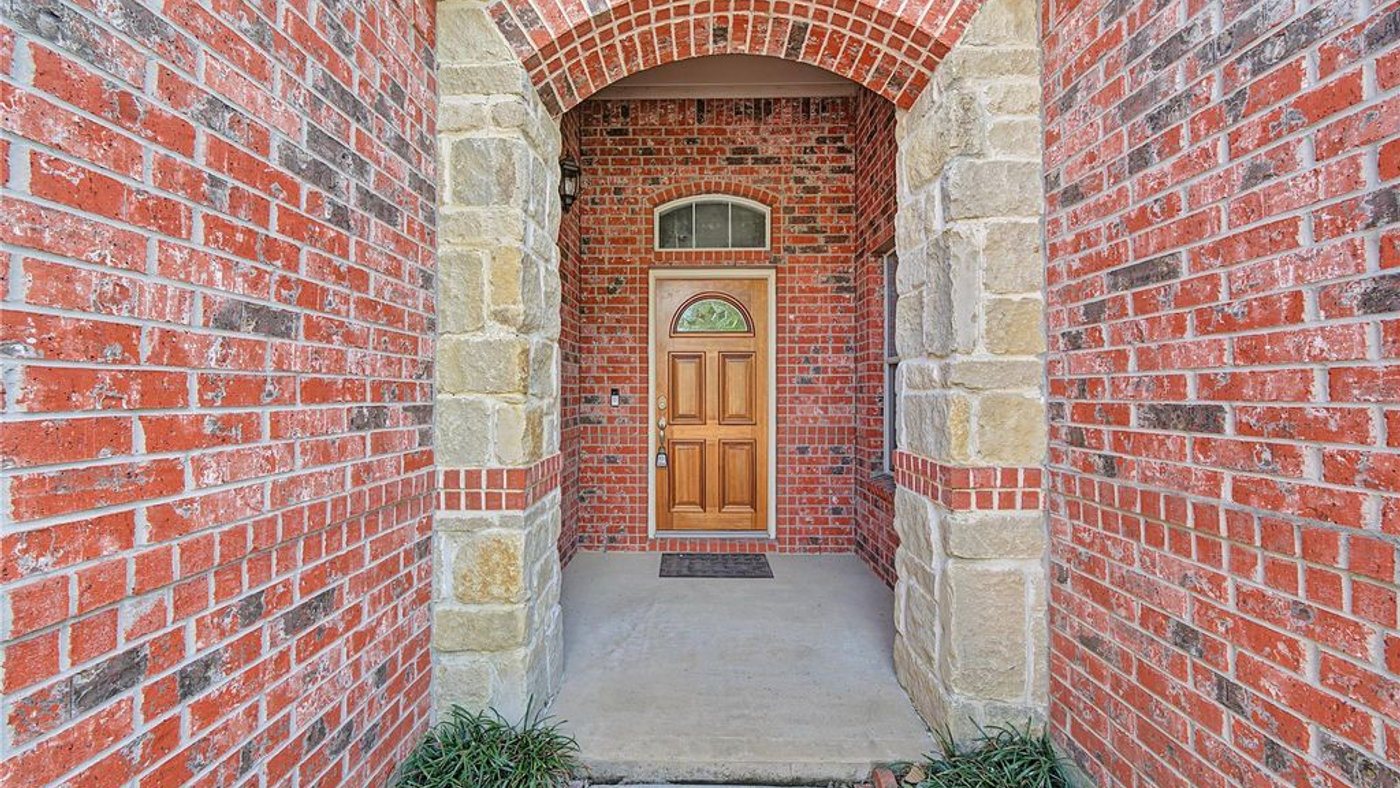
The front entry and covered approach. Once the decision changed from operating a rental to selling, the preparation goal had to shift from “everything a guest may need” to “help a buyer see the property itself.”
The seller called in the evening, and I arrived before dark
The seller called me late in the day. Rather than wait, I went over while there was still enough daylight to evaluate the main rooms, furniture scale, window treatments, natural light, and the photography path.
I had a preparation plan before leaving. The issue was not a lack of furniture or renovation. A rental setup asks whether enough items are available; a sales presentation asks whether buyers can quickly see the home’s scale, light, and advantages. The next day, I returned with the team and began implementing the plan.
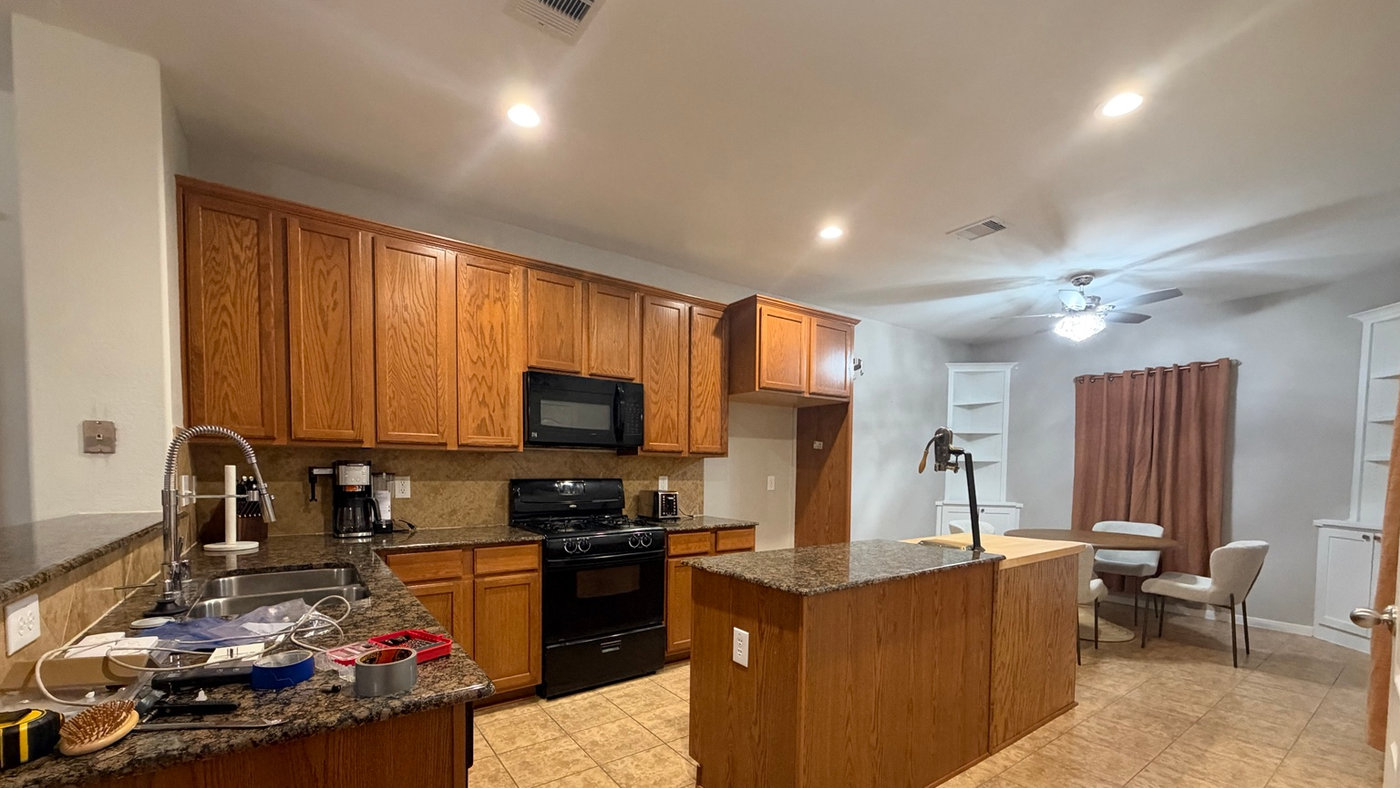
The kitchen during the fast preparation process. With a compressed timeline, the team coordinated editing, furniture moves, styling, photography preparation, and on-site logistics at the same time.
We started by removing visual weight, not by adding more
- Moved furniture that was too heavy or poorly scaled into the garage so the living, dining, and circulation areas could read more clearly.
- Removed heavy window treatments to release natural light and make the windows, walls, and room proportions easier to see.
- Added a limited number of plants, accessories, and wall pieces where they created warmth without competing with the property.
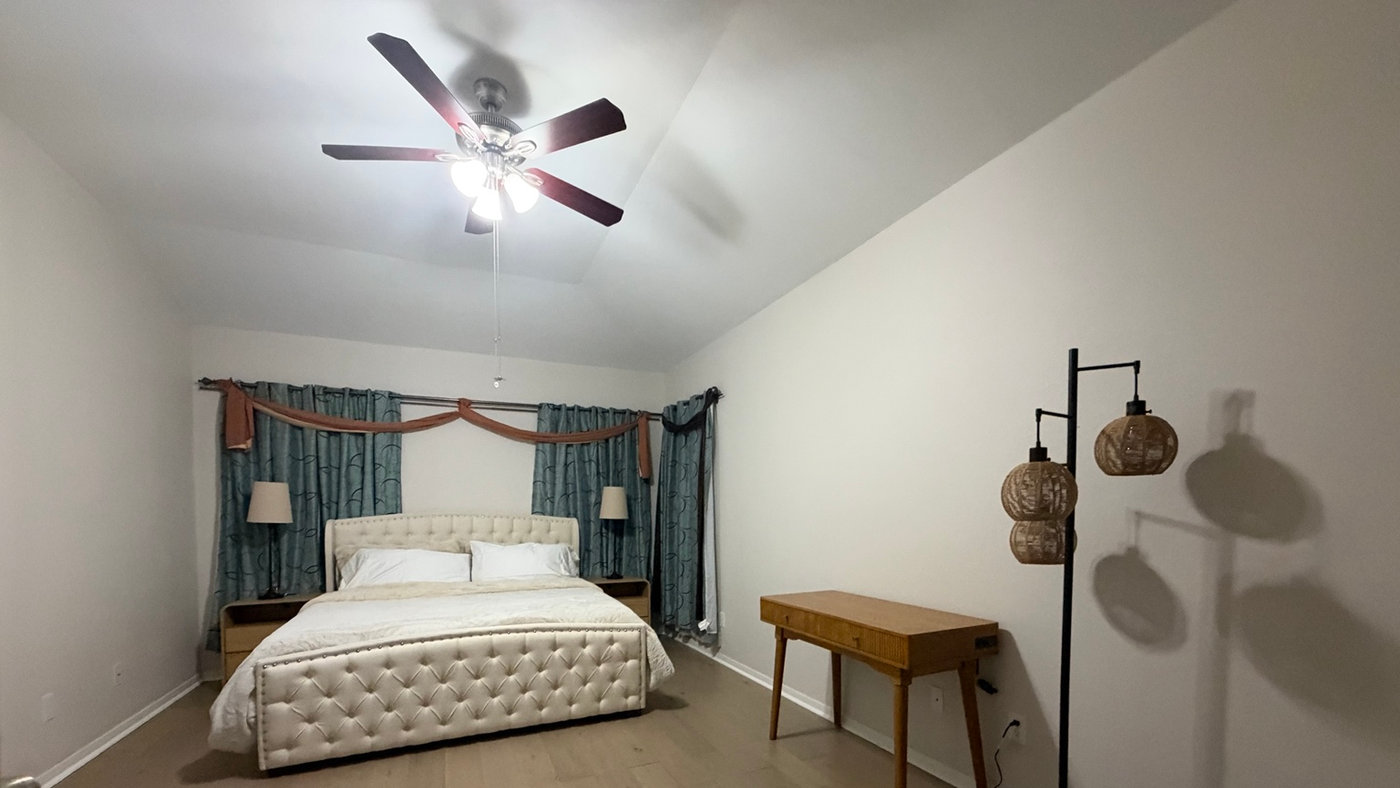
The primary bedroom before listing preparation shows the original furniture and heavier window treatments. The question was not whether the room had a bed; it was whether buyers could easily judge the room’s scale and light.
This required restraint. Less furniture is not automatically better, and more decoration is not automatically warmer. We kept items that explained function and scale, and removed the elements that distracted from the room.
The real preparation came first; only a few image details were lightly adjusted
Most of what buyers saw in the listing photos came from real work inside the home: existing furniture was edited and repositioned, heavy drapery was removed, and selected plants and artwork were added. The post-listing photos primarily show that actual setup. Only a few areas received light virtual touch-ups, so the images in this article are labeled “After Listing Preparation,” not presented as fully virtual staging.
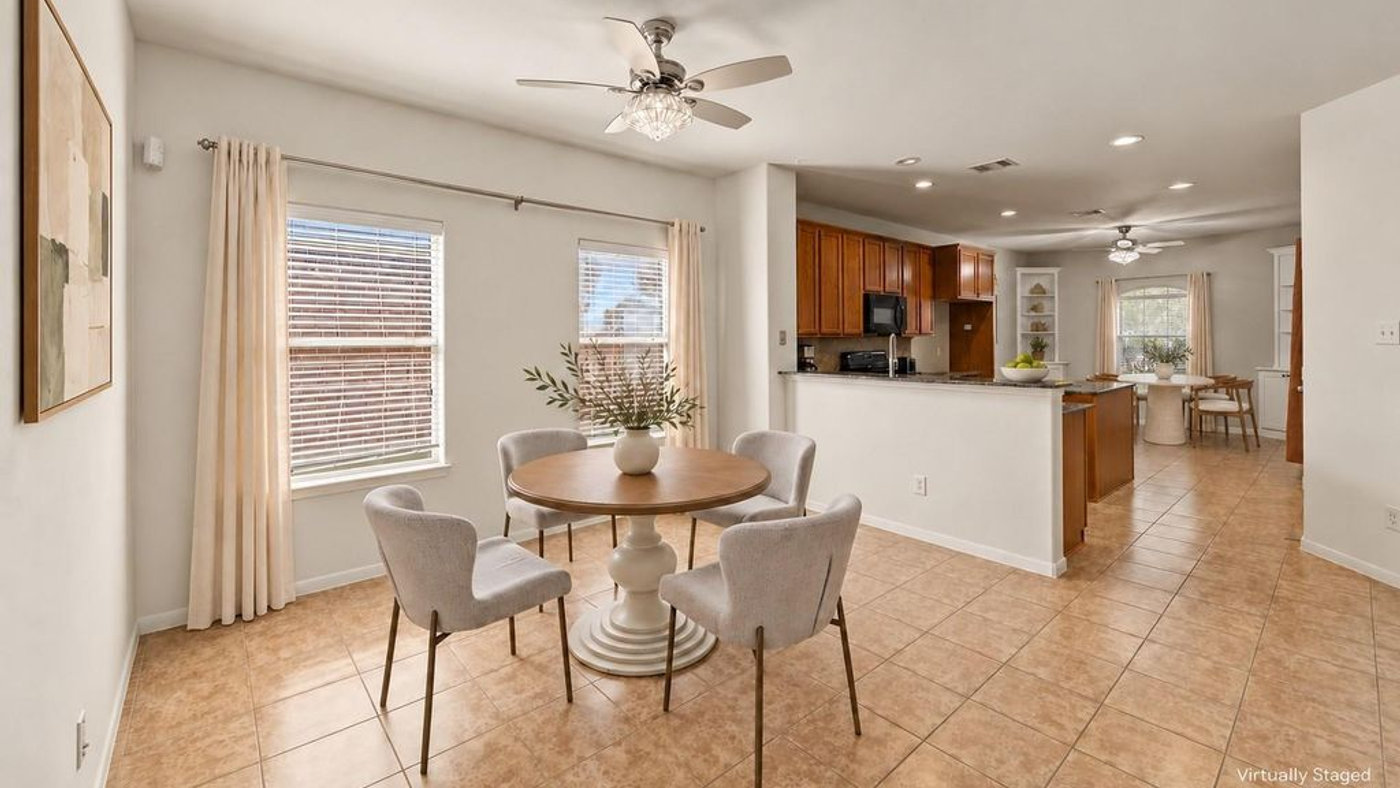
This dining-to-kitchen view is labeled “After Listing Preparation.” The room, main furniture, circulation, and overall setup came from the actual home; only limited image details received light virtual treatment. Those touch-ups did not change the structure, square footage, condition, or items included with the sale.
Professional photography and video were followed by active team distribution
Once the home was ready, we arranged professional photography and video. The goal was not simply to brighten rooms. The image sequence followed the way a buyer tours online: exterior, approach, entry, main public areas, focal points, and connections between spaces.

The twilight exterior had a different job: show the lighting, entry, and overall care without changing the property facts. After launch, team members continued distributing the listing through their client and social-media channels rather than relying only on passive MLS exposure.
The pricing had a small turn: furniture cost is not automatically market value
The seller had invested significantly in furniture and supplies for the rental plan and understandably hoped to recover that cost in the sale price. But a seller’s real expense and a buyer’s valuation of the real estate do not always convert dollar for dollar.
For the first two days, we tested a price that included part of that furniture investment. Online attention, showing activity, and market response did not support the added amount. We did not wait. We removed the premium and repositioned the price around the home itself. A full-cash offer followed quickly.
That does not mean every listing should reduce price after two days. The lesson is to define the signals before launch. If the response is clearly inconsistent with expectations, identify whether the friction is price, presentation, condition, or reach—and act before the listing develops a long-market history.
The smooth closing was a shared result
The contract, title, and closing process moved smoothly. That outcome depended on the seller trusting the recommendations and cooperating quickly with furniture changes and pricing correction. It also depended on team members arriving the next day to execute, then continuing promotion and follow-up after launch.
The most useful part of this case is not the number “three days.” It is that the critical decisions did not sit still: we viewed the property immediately, implemented the plan the next day, corrected the price when feedback arrived, and continued managing the transaction through closing.
A complete presentation is an online walkthrough, not a stack of pretty photos
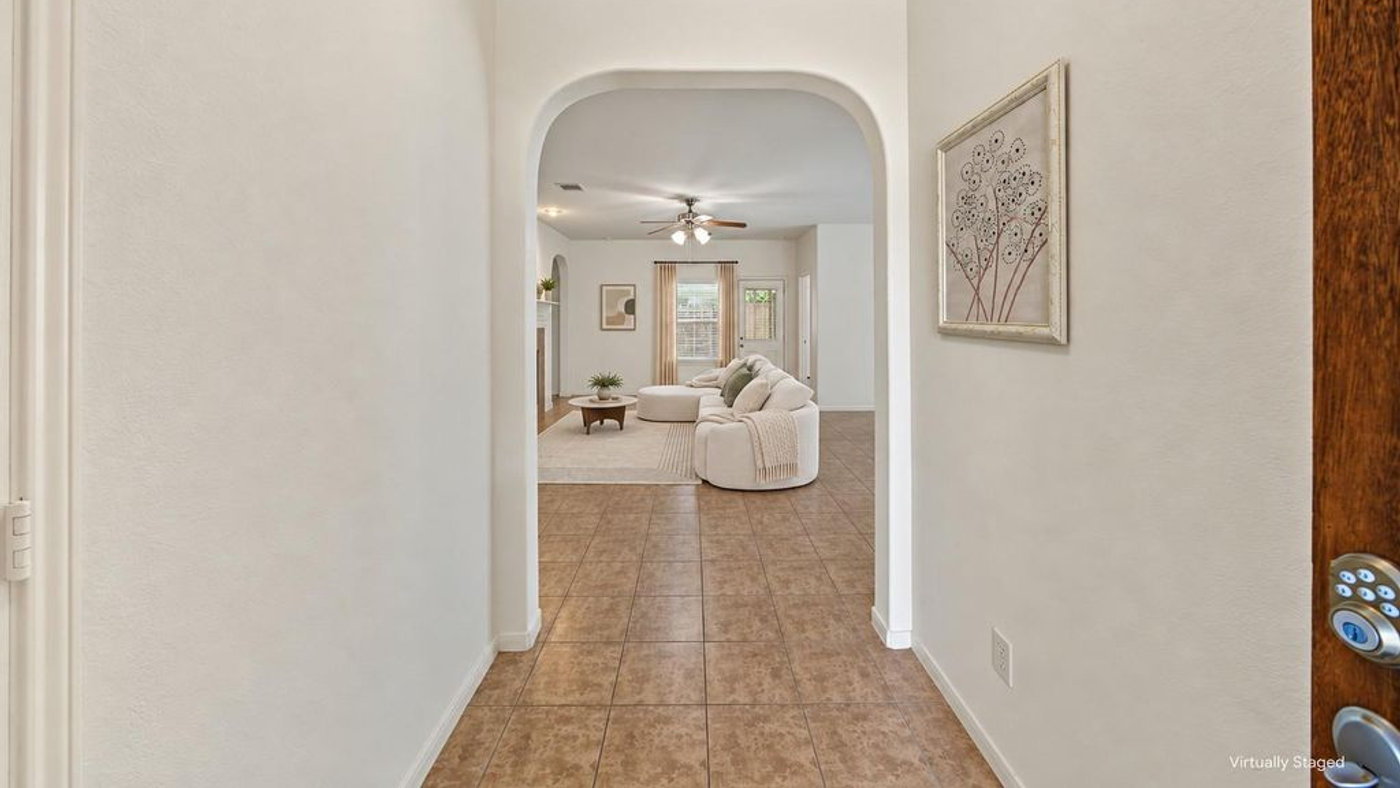
The first post-listing interior view looks from the entry toward the living room, helping buyers place the foyer, hallway, and main public space. The openings, walls, flooring, circulation, and primary furniture arrangement reflect the actual home.
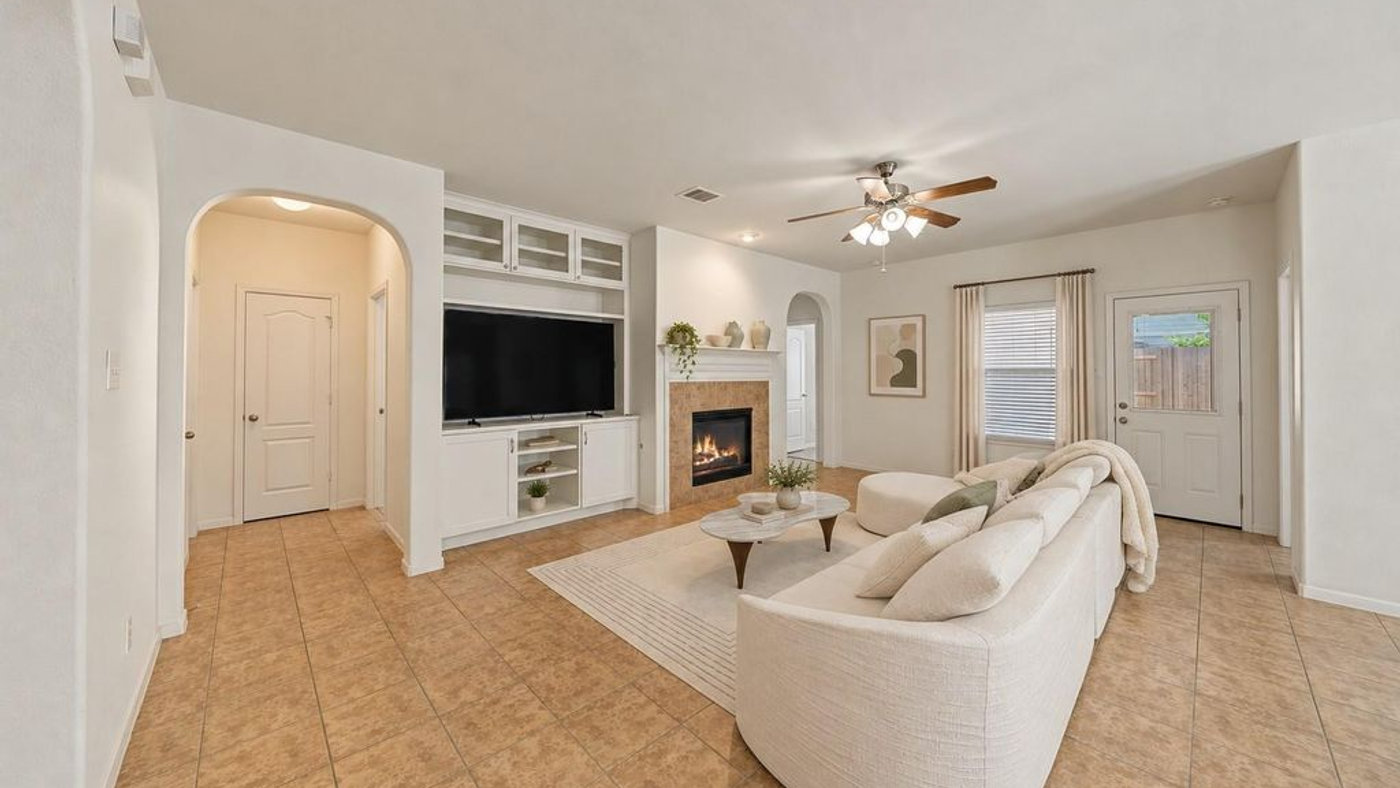
The next view establishes the fireplace and media wall before the photo sequence returns to the open dining and kitchen areas. Each image has a separate job: entry, focal point, furniture scale, or connection between rooms. A complete presentation is not about adding every possible angle; it is about helping buyers build a reliable mental map of the home.
A furnished home can still be hard to read online
Before listing, the living room, dining area, and bedrooms were already furnished and their day-to-day functions were clear. But a buyer scrolling on a phone still had to work out the main circulation path, whether the furniture fit the room, and how the living, dining, and kitchen areas connected.
I usually start with three questions: What does the eye see first? Is the furniture explaining scale or creating distraction? Does each camera angle answer a specific question about the home?
Living room: make the open plan easier to understand
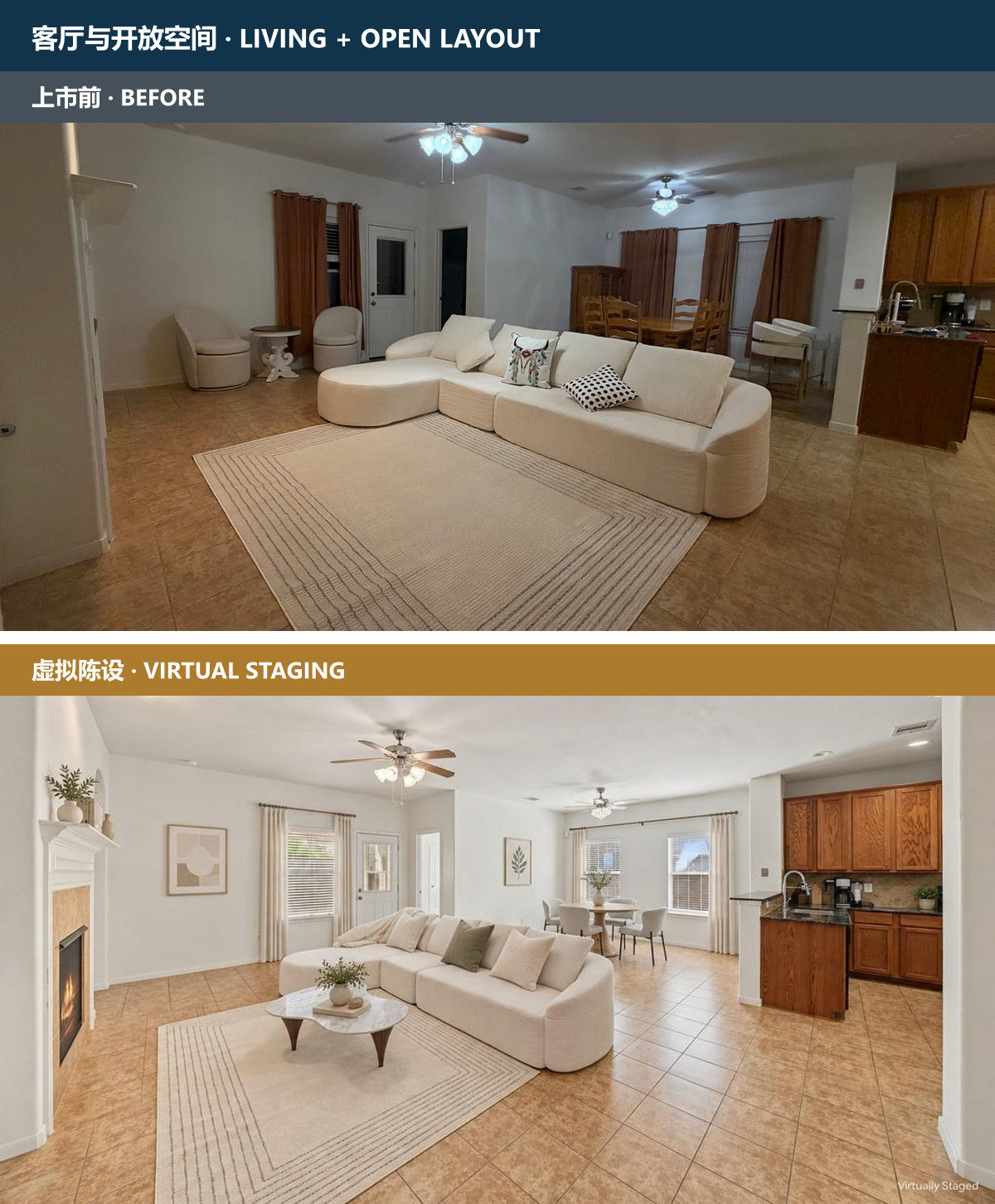
Before listing, the room already had the white sectional, rug, and chairs, but the visual hierarchy was loose. After the furniture edit, styling, and professional photography, the post-listing version made the relationship among the living area, dining space, and kitchen easier to understand. A few image details received light virtual touch-ups, but the room and primary furniture were real.
The camera position and lighting are not identical, so this is not a measurement or construction comparison. It demonstrates a presentation decision: the same open area can be easier to read when each visual element has a purpose.
A reverse angle should answer a different question
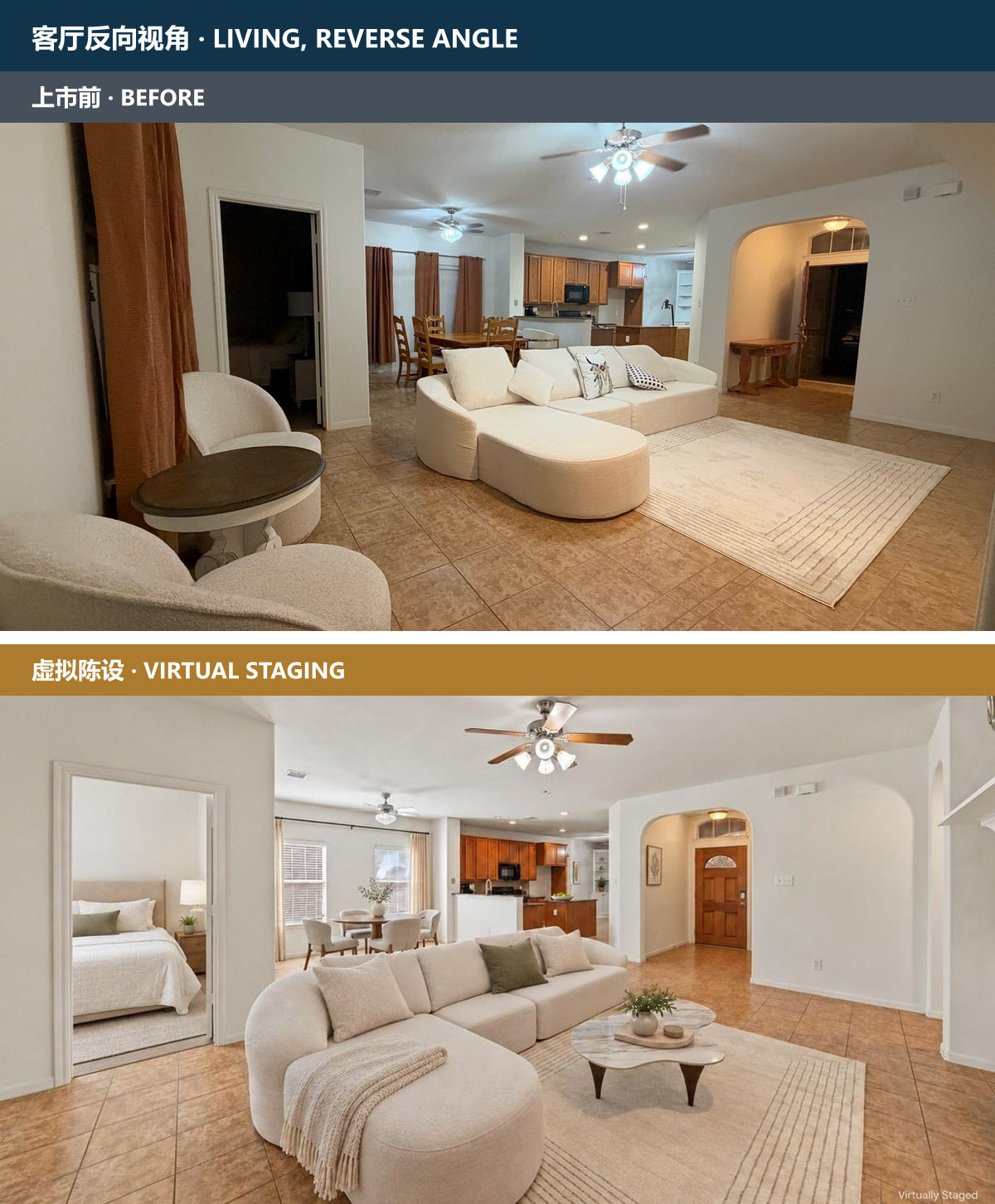
The reverse view lets buyers see the living room, entry, dining area, and kitchen together. Its job is not to sell the sofa. It is to show how someone moves from the living area toward the bedrooms, kitchen, and front door.
This article labels the image “After Listing Preparation.” The room and primary furniture came from the actual setup, while a few decorative details received light virtual treatment. Furniture, accessories, and included items were governed by the listing and contract, not by the marketing image alone.
Dining area: having enough furniture is not the same as having the right visual scale
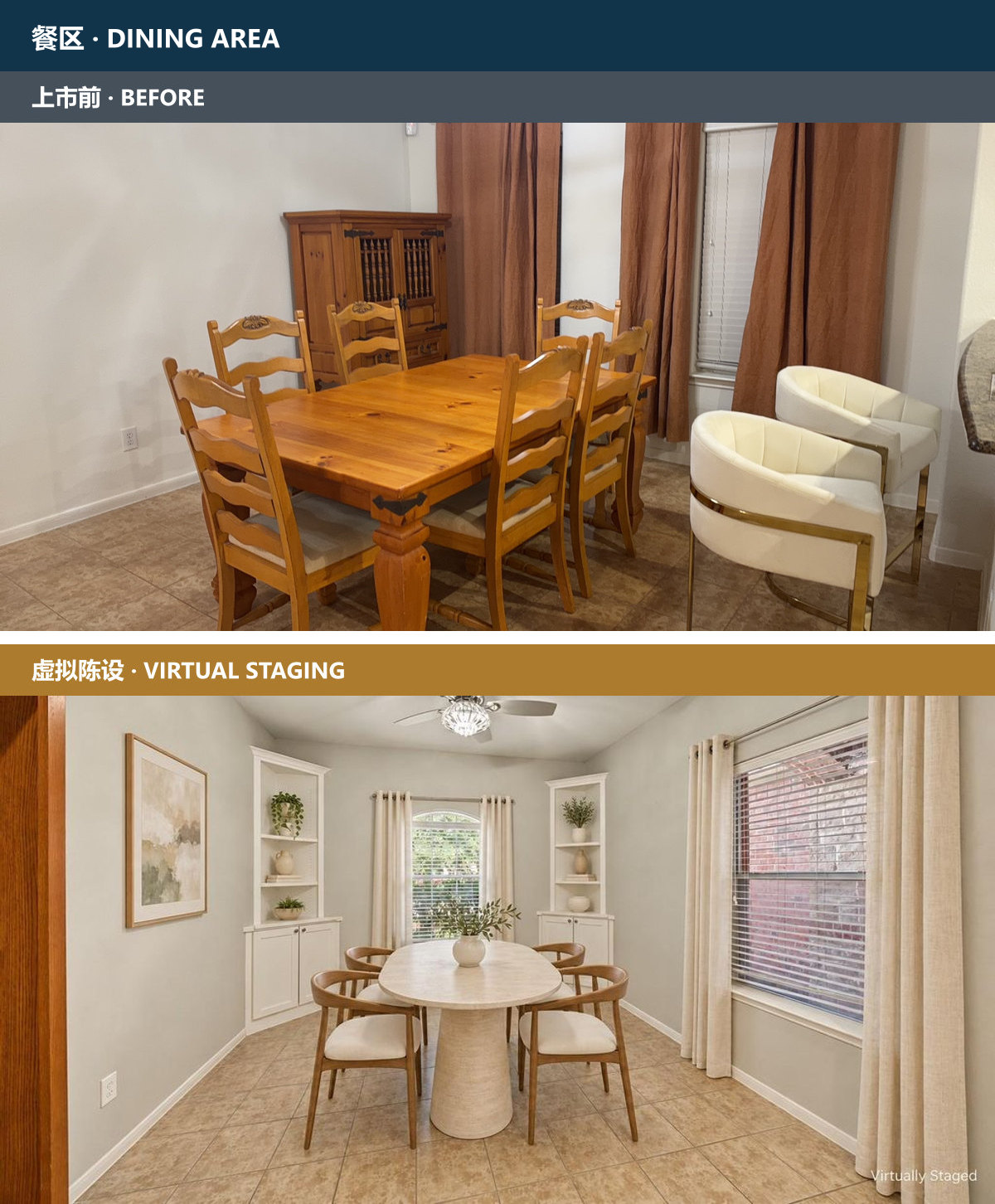
The original rectangular table, six chairs, cabinet, and two counter stools all served real functions, but they competed for attention in the frame. For the post-listing presentation, the furniture arrangement and styling were simplified so the windows, circulation, and dining zone became easier to understand.
That does not mean every dining room needs a round table or that wood furniture hurts a sale. The useful test is whether furniture size, walking clearance, window placement, and camera composition work together.
Bedrooms: not every room needs a forced before-and-after
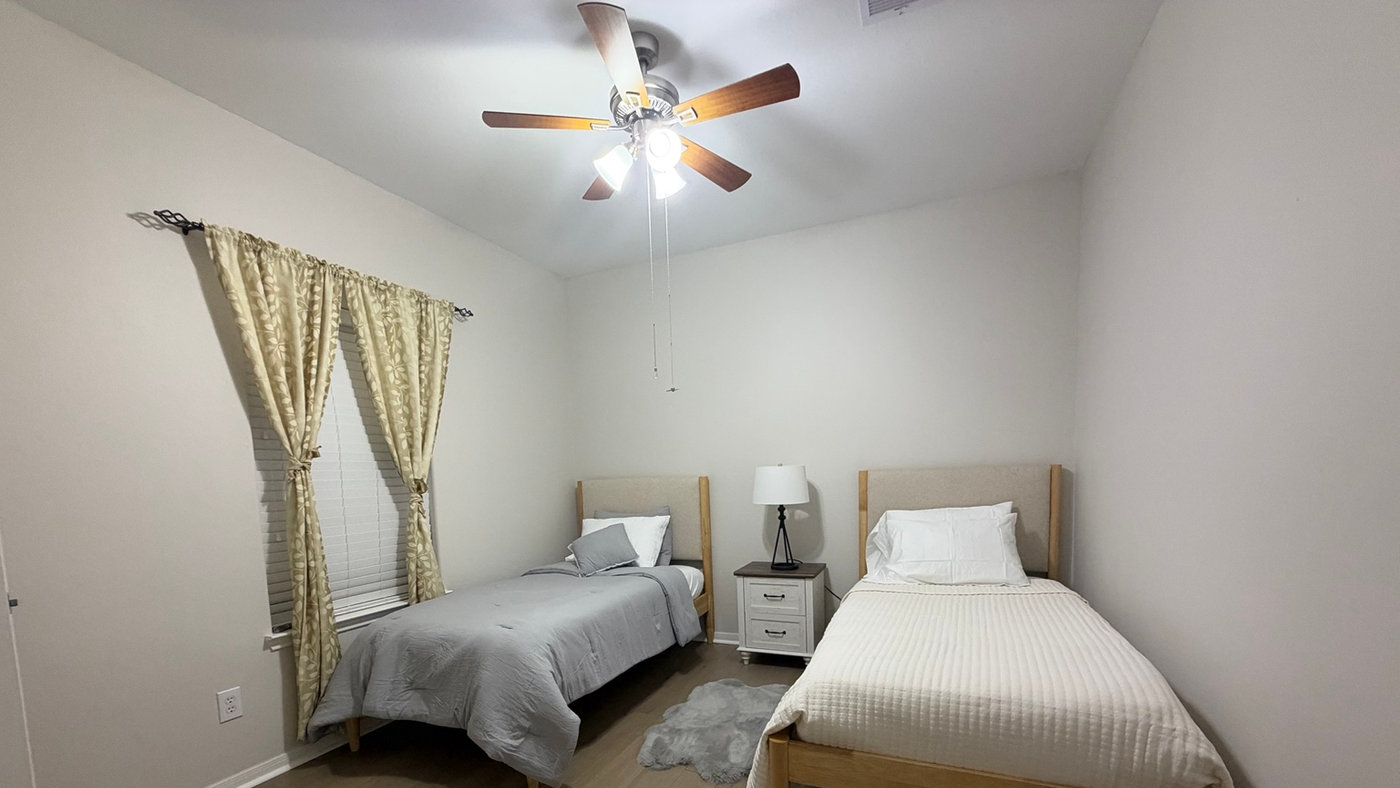
This secondary bedroom already communicated a two-bed layout before listing. Because the public listing gallery did not include a directly matching post-listing angle, this article keeps the real record instead of forcing an unrelated image into an “after” comparison.
That is an important boundary in listing preparation. If existing furniture already explains use, the better next step may be checking bed clearance, pathways, lighting, and visual order—not replacing everything simply to create a dramatic change.
Why the result cannot be credited to photos alone
The cash offer is important context for the pace of this transaction. Cash can remove traditional loan underwriting, but inspection, title, proof of funds, contract terms, and closing coordination still affect timing. Not every cash purchase closes in a little over two weeks.
Professional photography and a clearer listing presentation can strengthen the first impression, but they do not replace pricing, condition, contract quality, or transaction management. Here, the home itself, the $299,900 public list-price position, buyer terms, listing presentation, and follow-through all contributed to the outcome.
A practical order for seller preparation
- Address real issues that affect safety, use, inspection, or the contract. Photo presentation is not a repair.
- Edit and reposition existing furniture before deciding whether additional physical staging or limited image treatment is necessary.
- Give each major image one job—scale, circulation, light, or function—instead of asking every image to show everything.
- Describe listing photos accurately. Any limited image treatment should be disclosed, and physical furniture, accessories, and included items must be confirmed in the listing and contract.
- Evaluate price, terms, and closing certainty together. Do not ignore other provisions simply because an offer is cash.
For more detail, read Should You Stage a Houston Home Before Selling?, How to Prepare for Houston Listing Photography, and The Complete Houston Home Selling Guide. Together, they cover presentation, photography, and the larger transaction process.
Frequently asked questions
If a home already has furniture, does it still need staging?
Not always. Start by checking whether furniture blocks circulation, fits the room, and helps photographs communicate function. Sometimes editing and repositioning are enough; sometimes only one or two key spaces need additional help.
Can listing-photo treatment replace actual repairs?
No. Photography, styling, and light image treatment are presentation tools, not substitutes for repairs or disclosure. Buyers should confirm condition, materials, dimensions, and included items through an in-person visit, inspections, and contract documents.
Does a cash offer always close faster?
No. Cash may eliminate traditional loan approval, but title, inspection, proof of funds, contract deadlines, and the parties’ readiness still matter. This case closed in 16 days; that timeline is not a promise for another sale.
Why do some homes remain unsold after repeated price cuts?
A reduction changes the number, but it may not resolve condition, presentation, market positioning, showing experience, contract terms, or buyer confidence. A specific listing should be evaluated against current competition, its photos and in-person condition, showing feedback, days on market, and the response after each adjustment—not only the total price reduction.
Joyce's Featured Listings

After reviewing this Katy seller case, you can also browse Joyce's Featured Listings to see how current Greater Houston properties present space, price, and everyday use. The page changes with current public inventory.
View Joyce's Featured Listings →
Not sure which pre-listing work is worth the cost?
Send me the property address, expected listing date, current occupancy, and preparation budget. I can start with nearby competition and help separate items that need real work from those that can be improved through editing, photography, or clear disclosure.
Contact Joyce about your selling plan →
About Joyce Tang

Joyce Tang is a Greater Houston real estate agent and investor, co-founder of the North American Real Estate Association, founder of JoyHome and JoyNest, and co-leader of the Dr. Wang Real Estate Team.
She has helped more than 200 families buy or sell homes and has participated in more than 40 renovation projects. Her approach examines not only price, but also location, carrying cost, cash flow, risk and future exit options.
Case notes and disclaimer
The short-term rental plan, on-site preparation, first-two-day pricing feedback, cash offer, and transaction sequence are based on Joyce’s direct participation and work records for this sale. Furniture and supply costs do not automatically equal real-property market value, and this article is not a universal recommendation for another listing’s price or adjustment timing.
This article is based on a completed transaction, the public listing record, transaction milestones, and pre-listing photos provided by Joyce. Property facts and the list date come from HAR MLS 98286992 as reviewed on November 4, 2026. The cash-offer milestone, closing date, and transaction timing come from this transaction. The sale price and client identities are not disclosed.
The statement that some competing homes had been listed for more than three months and reduced prices without selling is based on the team’s ongoing tracking of nearby competition during this listing period. It describes the market context for this case; it is not a claim about every Katy property, a formal appraisal, or an assessment of another agent’s services.
Images labeled “After Listing Preparation” primarily show the home’s existing furniture and real on-site preparation; a few areas received light virtual touch-ups. Camera angles and lighting may differ between before-and-after views. Image treatment does not establish actual condition, measurements, repairs, or included items. Price and timing depend on condition, pricing, buyer terms, title, contract execution, and market factors. This case is not a guarantee of price or closing time.