

Not every Houston home needs full staging. The real purpose of staging is not to make a property look more luxurious. It is to help buyers understand how a space works, where furniture fits and how large a room feels. If the home is already clean, bright and easy to read, professional photography may be enough. If the real problem is price, odor, leaks, clutter or visible damage, staging is usually the wrong first expense.
I start with one question: Are buyers struggling to understand the space, or are they rejecting the condition and price? Staging can directly help with the first problem. It cannot erase the second.
A situation that leaves many sellers unsure
The home is vacant. The walls and floors have been refreshed, and the seller likes the clean, open look. Then the photographs come back: the living and dining areas blend into one empty zone, the primary bedroom offers no clue whether a king bed will fit, and the upstairs open area could be a game room, office or second living room.
That home may not need to look prettier. It needs scale and purpose. Selective staging can solve that. But when the rooms are rectangular, proportions are obvious, natural light is strong and the finishes carry the photographs, furnishing the entire home may not be worth the cost.
What staging can—and cannot—do
It can make space easier to understand
Furniture can define an open living and dining area, show the usable width of a primary bedroom, or give a flex room one clear purpose. Buyers are then evaluating the home instead of trying to solve a floor-plan puzzle.
It can give the photography a visual hierarchy
Most buyers first experience the property as a set of online images. Thoughtful furniture, lighting and accessories can lead the eye toward the windows, fireplace, ceiling height or flow between rooms.
It cannot repair a property problem
Staging does not remove pet odor, water stains, failed equipment or an unrealistic asking price. Placing furniture over a crack, stain or damaged area is not staging; it creates a new trust problem.
I divide the staging decision into four levels
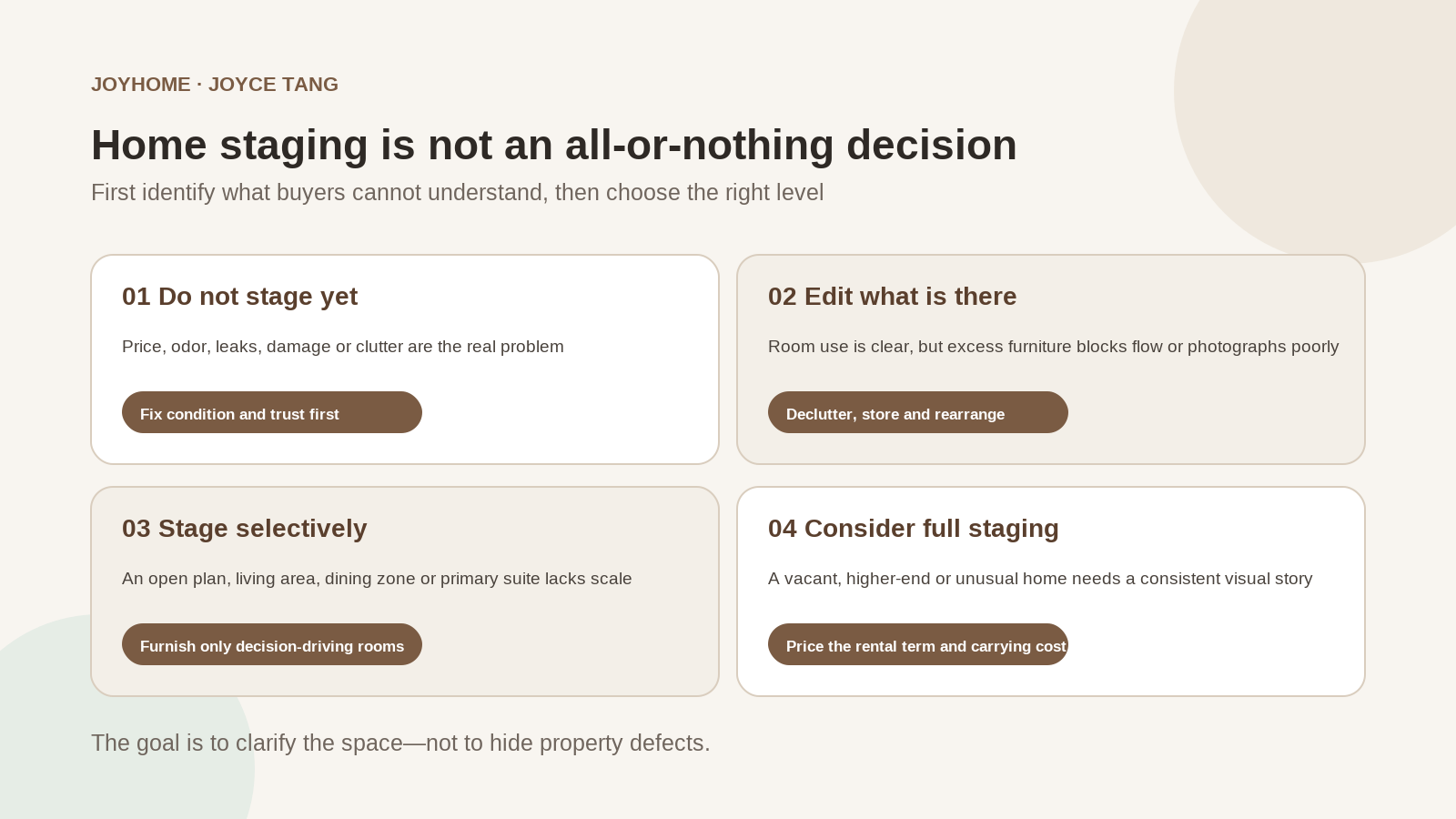
Level one: do not stage yet
Address obvious repairs, deep cleaning, odor, lighting and clutter first. When buyers do not trust the condition, an attractive sofa will not change the decision.
Level two: edit the furniture already there
An occupied home rarely needs to be emptied automatically. Removing an oversized sectional, extra side tables, children’s items and personal photographs—then adjusting placement, bedding and lighting—can materially improve the photographs and walking paths.
Level three: stage selectively
With a limited budget, focus on the spaces buyers have difficulty reading and the rooms that drive the first impression: living room, dining area and primary bedroom, plus one unclear flex room when needed. Secondary bedrooms, laundry and garage do not need furniture simply for completeness.
Level four: consider full staging
Full staging may make sense for a vacant home, a higher price point, a complicated layout, or a segment where competing listings are presented exceptionally well. Price the rental term, installation, removal and carrying cost before approving the first proposal.
For an occupied home, the goal is readable—not lifestyle-free
Give each room one primary purpose instead of letting an office double as storage and a playroom
Remove furniture that blocks windows, doors or the main walking path
Clear most surfaces while keeping a few items that show scale and use
Secure medication, bills, identification, family photographs, valuables and documents with personal information
Use consistent light temperatures and confirm that blinds, curtains and fixtures work
Plan for pets, laundry, trash and temporary storage before photography day
Decluttering does not mean filling the garage. Buyers look inside garages, closets and storage areas. A packed storage space can make the home appear to have too little capacity. Short-term storage is often more useful than another set of decorative accessories.
For a vacant home, ask whether buyers will misread scale
Vacant homes are easy to show, visually clean and independent of the seller’s daily schedule. The tradeoff is a lack of scale. Small rooms can look even smaller, large rooms can feel empty, and an open plan can lose its boundaries.
Not every vacant home needs full staging. Ask whether the photographs clearly show the relationship between living and dining areas, whether the primary bedroom layout is obvious, and whether one area leaves buyers unsure of its purpose. If all three are clear, strong photography may be enough.
Physical staging or virtual staging?
Physical staging supports both the photographs and the in-person showing. The online presentation matches what buyers see at the property. It also brings rental, installation, removal and scheduling costs.
Virtual staging can be more economical and can illustrate a reasonable use for a vacant room, but it must be clearly labeled. It should not change walls, windows, flooring, cabinets, room dimensions or add upgrades that do not exist. A dramatic gap between the image and the property can reduce buyer confidence.
I do not treat virtual staging as a way to conceal condition. At most, it adds clearly disclosed furniture to an accurate image of the real space.
Which rooms deserve the budget first?
Living room: it drives the opening impression and explains the main living space
Dining area: a table often defines the boundary inside an open floor plan
Primary bedroom: buyers need to see bed placement, nightstands and circulation
An unclear flex room: a desk, chair or simple arrangement can demonstrate one credible use
Outdoor living: invest only when the patio, view or yard is a meaningful property feature
A common budget mistake is fully furnishing every secondary bedroom while leaving the living-and-dining proportions, primary suite or first listing image unresolved.
Staging, photography, pricing and launch timing must work together
Starting a furniture rental before repairs are complete, or waiting until staging is finished to locate a photographer, adds avoidable cost. A better sequence is to complete necessary repairs and cleaning, confirm the furniture plan, and then coordinate photography and the launch date.
Price cannot be separated from presentation. Staging may make a home easier to understand; it does not guarantee that buyers will accept a price above comparable sales and current competition.
How I decide whether the cost is justified
Is the main obstacle space, condition or price?
How well are competing listings in the same price segment presented?
Would staging only the decision-driving rooms solve the issue?
What happens to rental and carrying costs if the term extends by one month?
Would cleaning, paint, minor repairs or better photography deserve the budget first?
Will the home be ready to launch as soon as staging is complete?
I do not justify the decision with a promise that staging will add a certain amount to the sale price. A more useful goal is to reduce buyer misinterpretation, compete visually online and avoid losing an otherwise suitable buyer because the space was difficult to read.
Common seller mistakes
Choosing furniture for appearance instead of scale
Undersized furniture may make a room appear larger without helping buyers understand real use. Oversized furniture blocks circulation. Staging should clarify proportion, not manufacture an illusion.
Treating personal taste as a universal buyer preference
When color and décor become too strong, buyers evaluate the style instead of the property. Neutral does not need to be bland; it means letting architecture, light and space remain the focus.
Starting the rental before the home is ready
Repair delays, an unconfirmed photographer or an unfinished move consume the rental term. Work backward from the intended launch date.
Changing the photographs without addressing market feedback
If the home has already been listed for a while, staging and new photography are only part of the review. Price, condition, showing feedback and changes in competing inventory need to be evaluated at the same time.
Frequently asked questions
Does every seller need a professional stager?
No. An occupied home with suitable furniture may need only editing and rearrangement with the agent. A vacant, unusual or higher-end home is more likely to benefit from a professional plan and furnishings.
Is staging furniture included in the sale?
Usually not. Rented furniture and accessories generally are not part of the property sale. Fixtures, personal property and exclusions should be described separately in the listing and contract process to avoid confusion.
Can a seller stage after the home is already listed?
Yes, but do not treat it as a furniture-only change. Review the existing photographs, showing activity, buyer feedback, days on market and current competition. The right response may combine selective staging and new photography with a pricing or launch-strategy adjustment.
Can virtual staging replace physical staging?
It can help online viewers understand a vacant room, but it does not change the in-person experience. When the dimensions are clear and the main goal is stronger empty-room photography, virtual staging may work. When buyers will struggle with the layout at the showing, selective physical staging is more direct.
Related reading
The home was not showing well vacant—what changed after staging?
Should you move out before selling a Houston home?
Should you renovate before selling a Houston home?
Joyce's Featured Listings

AI-generated illustration: a Greater Houston housing scene, not a real or currently available listing.
After working through the staging decision, browse Joyce's Featured Listings to see how current homes present space, natural light and everyday flow.
View Joyce's Featured Listings →
Preparing to sell and unsure whether to edit, stage selectively or furnish the full home?
Send me the property address, target listing date, whether the home is occupied, and photographs of the living room, primary bedroom and open areas. I can help identify whether the real presentation issue is space, condition or price before you commit the budget.
About Joyce Tang

Joyce Tang is a Greater Houston real estate agent and investor, co-founder of the North American Real Estate Association, founder of JoyHome and JoyNest, and co-leader of the Dr. Wang Real Estate Team.
She has helped more than 200 families buy or sell homes and has participated in more than 40 renovation projects. Her approach examines not only price, but also location, carrying cost, cash flow, risk and future exit options.
Disclaimer
This article provides general home-sale preparation and property-presentation information. It is not an appraisal, a guarantee of staging results, a repair opinion or contract interpretation for a specific property. Results vary with condition, price, competing inventory, market timing, budget and execution. Evaluate the plan for the individual home and current market.