

The option period is a negotiated window in a Texas residential contract. In the widely used TREC resale contract, a buyer who satisfies the agreed amount, deadline, and delivery requirements receives an unrestricted right to terminate during that window. It is not an automatic three-day cooling-off period, and it is not the same as a financing, appraisal, title, or disclosure contingency.
I treat the option period as a due-diligence window with a hard stop: inspect the property, price the material risk, check insurance and available documents, and decide before the clock runs out.
Option fee and earnest money do different jobs
The two payments may go to the same escrow agent, but they are not interchangeable. The option fee pays for the termination option in Paragraph 5. If the buyer exercises that right, the option fee is generally not refunded. Under the current form, it is credited to the sales price at closing. Earnest money is the buyer’s contract deposit. What happens to earnest money after a default or dispute depends on the full contract and the facts; blanket promises that it is always returned or always forfeited are unsafe.
The current TREC 20-19 form requires the buyer to deliver the option fee and earnest money to the named escrow agent within three days after the Effective Date. If the last day falls on a Saturday, Sunday, or Legal Holiday, that delivery deadline moves to the next day that is not one of those days. The escrow agent applies money received first to the option fee, then to earnest money and additional earnest money.
A common mistake is assuming that a signed contract and a scheduled inspection automatically create the option right. The current form states that if no option fee is stated or the buyer does not deliver it on time, the buyer does not have the unrestricted Paragraph 5 termination right. Time is of the essence.
When does the option period start, and what time does it end?
TREC’s public guidance explains that contract days are calendar days and Day 1 is the day after the Effective Date. The signed contract’s Effective Date, negotiated number of option days, and final date control the transaction.
Under the current resale form, termination notice must be given by 5:00 p.m. local time where the property is located on the agreed final day. It is not a midnight deadline, and sending something before midnight is not enough. I put the exact time on the transaction calendar and leave room for delivery and confirmation instead of planning for 4:59 p.m.
Different forms can produce different rules. Condominiums, builder transactions, farm and ranch property, and contracts with added language or addenda should not be managed from a friend’s resale timeline.
Five jobs to finish during the option period
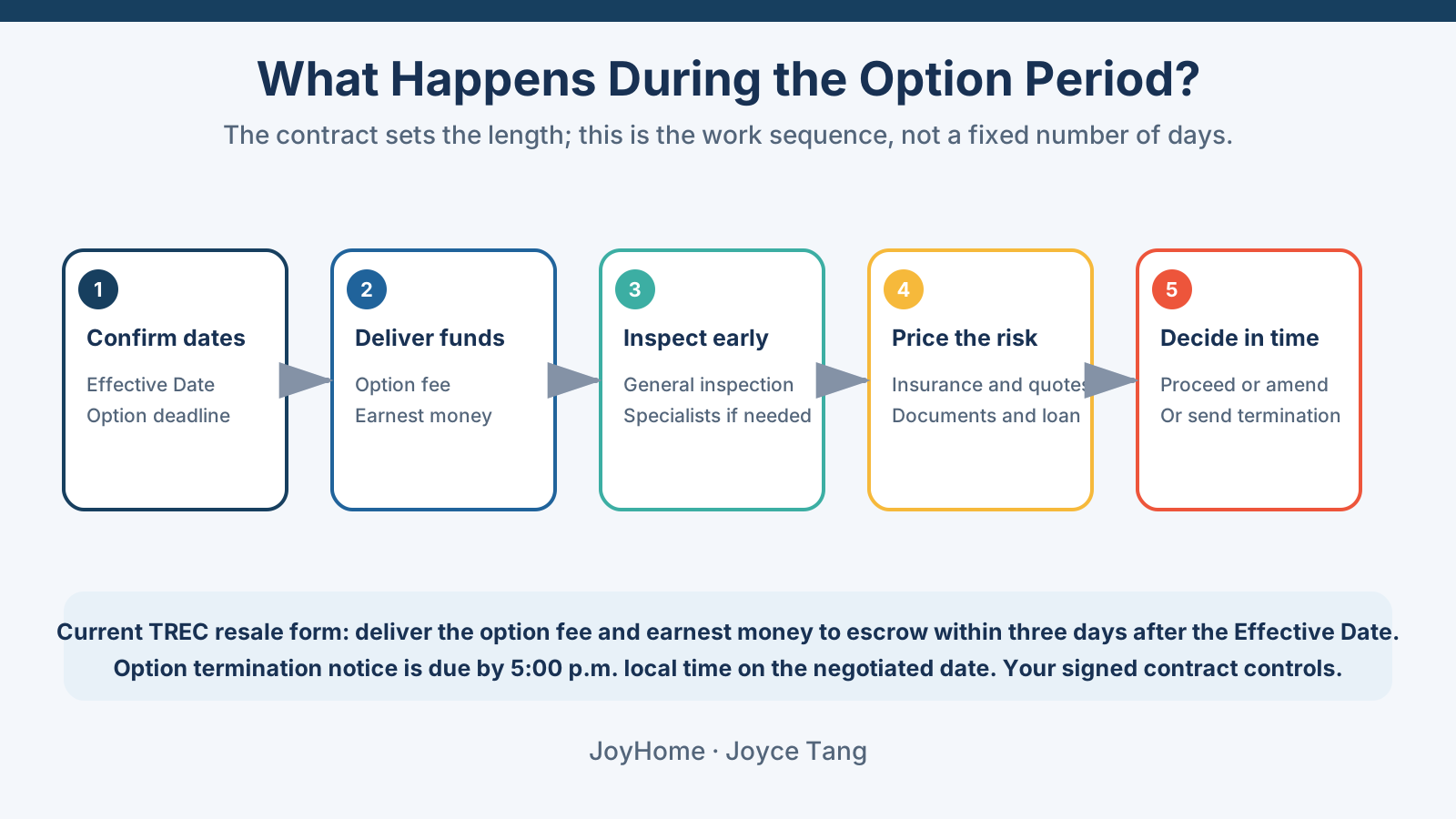
The graphic is a work sequence, not a fixed option length. The number of days and the option fee are negotiated. Competition, property complexity, inspector availability, and holidays all affect how the window should be organized.
1. Confirm the contract, escrow instructions, and every deadline
As soon as the contract is effective, confirm the escrow agent, verify wiring or payment instructions through a known telephone number, and record the option fee, earnest money, delivery deadline, final option date, and 5:00 p.m. cutoff. Never rely on a new email alone for wire instructions.
List loan, appraisal, title, seller-disclosure, and HOA deadlines separately. They can overlap the option period, but they are different rights and do not automatically share its deadline.
2. Schedule the general inspection early
An early inspection leaves time to read the report, ask follow-up questions, return with a specialist, and obtain a useful estimate. The goal is not a perfectly “passing” house. It is to identify current conditions and likely cost. The current TREC form permits access at reasonable times for inspections by appropriately licensed or otherwise legally qualified people. Certain testing, including hydrostatic testing, requires separate written seller authorization.
Not every report item needs a separate specialist. Prioritize what could change the decision: structure and foundation, roof, drainage, plumbing, electrical, HVAC, wood-destroying insects, pool, chimney, or sewer line. The property’s age, visible symptoms, and general inspector’s findings should determine the next step.

Photo: a technician inspects a residential outdoor HVAC unit. Source: Kathleen Austin Kuhn / Pexels. Whether a particular home needs an HVAC specialist depends on age, performance, and the general inspection; every property does not need the same list of specialists.
For a deeper look at the Houston systems most likely to change the budget, read Eight Home-Inspection Items Most Likely to Become Major Expenses.
3. Obtain insurance guidance and repair pricing in parallel
In Houston, insurability can change a decision as quickly as the repair list. Roof age and condition, prior claims, electrical equipment, plumbing material, flood zone, and selected coverage can affect premium, deductible, or eligibility. Insurance should be quoted for the exact address and confirmed by a licensed insurance professional.
Do not spend the whole window pricing every small note in the report. Start with safety, insurability, daily use, and near-term capital expense. If there is not enough time for a formal bid, a specialist’s written assessment and a reasonable range can support the decision—but a range is not a construction contract.
4. Review documents without forcing every issue into the option period
Seller disclosures, an existing survey, title commitment, HOA documents, MUD or PID information, flood information, and repair records can all matter. Review what is available during the option period, but identify whether the contract gives a separate notice, review, or termination right for documents that arrive later.
Financing and appraisal also run on their own tracks. The end of the option period does not mean final loan approval. A low appraisal does not necessarily create an option termination right. Financing addenda, appraisal language, and other contract provisions have their own requirements and deadlines.
5. Make one clear written decision before the deadline
The option window generally ends in one of three directions: proceed under the current terms, negotiate a written amendment for repairs, a credit, or another change, or send timely termination notice under the contract. The seller does not have to accept a repair request, and sending the request does not pause the option clock.
“We are still negotiating” and a verbal promise from the seller do not replace a signed amendment. If the parties need more time, an effective written extension must be completed before the original deadline, and the seller is not required to agree.
“As Is” does not prohibit an inspection—and does not force a repair
The TREC resale contract generally begins with the buyer accepting the property in its present condition. The current form also says that this does not prevent inspection, later repair negotiations, or termination during a valid option period.
At the same time, an inspection report is not a mandatory repair order for the seller. The buyer can ask; the seller can accept, reject, or offer a different solution. The useful negotiation is about conditions that change value, risk, insurability, or near-term cash needs—not turning every page of the report into a demand.
Six mistakes that cost buyers leverage
- Treating the option period as an automatic cooling-off period without checking the fee, delivery, and completed contract terms.
- Scheduling the inspection so late that there is no time for a specialist or meaningful estimate.
- Focusing on repairs and waiting until the end to ask whether the home can be insured on acceptable terms.
- Assuming repair negotiations, loan approval, or appraisal automatically extends the option deadline.
- Relying on a verbal promise or ordinary text instead of the notice and signed writing required by the contract.
- Spending attention on paint and hardware before understanding the roof, foundation, drainage, system life, and insurability.
A practical way to schedule the window
- Effective Date: confirm the exact option date, 5:00 p.m. cutoff, escrow agent, and verified delivery instructions.
- Within three days after the Effective Date: make sure escrow receives the option fee and earnest money, accounting for the contract’s weekend and Legal Holiday rule.
- Early in the option window: complete the general inspection and ask the decision-changing questions.
- Middle of the window: schedule any warranted specialists while obtaining insurance guidance and priority repair estimates.
- Before the deadline—with a buffer: complete the decision to proceed, amend in writing, or terminate, and confirm contract delivery.
Frequently asked questions
Does every Texas buyer get an automatic three-day cancellation period?
No. TREC states that there is no general three-day or 72-hour cooling-off period for a residential purchase. The option right is negotiated in the contract and depends on valid performance.
Can a buyer really terminate for any reason during the option period?
Under Paragraph 5 of the commonly used TREC resale contract, a buyer receives an unrestricted termination right during the negotiated period when the fee, deadline, and delivery requirements are satisfied. The exact signed contract, form type, amendments, and delivery method control.
Can the seller reject every repair request?
Yes. The option period gives the buyer room to inspect, negotiate, and—when the requirements are met—terminate. It does not compel the seller to repair. A change becomes part of the contract only when the parties complete a valid written agreement.
Does a repair request stop the option clock?
No, not automatically. Unless the parties complete an effective written extension before the original deadline, the buyer still has to decide on the original timeline.
Joyce's Featured Listings

AI-generated illustration: a Greater Houston housing scene, not a real or currently available listing.
Once the option-period framework is clear, browse Joyce’s Featured Listings to see current home types and price ranges. Then evaluate each actual property through inspection, insurance, repair cost, and total carrying cost.
View Joyce's Featured Listings →
Already under contract and unsure what to do first?
Send me the address, Effective Date, option deadline, inspection report, and the issues you are most concerned about. I can help organize inspections, specialists, insurance questions, and estimates around the transaction decision. Contract interpretation and legal advice should come from a licensed attorney.
About Joyce Tang

Joyce Tang is a Greater Houston real estate agent and investor, co-founder of the North American Real Estate Association, founder of JoyHome and JoyNest, and co-leader of the Dr. Wang Real Estate Team.
She has helped more than 200 families buy or sell homes and has participated in more than 40 renovation projects. Her approach examines not only price, but also location, carrying cost, cash flow, risk and future exit options.
Sources and disclaimer
This guide uses Texas Real Estate Commission materials publicly available on September 26, 2026, principally the TREC 20-19 One to Four Family Residential Contract (Resale) effective July 1, 2026, the TREC form page, TREC contract FAQ, and the TREC Contracts directory.
This article provides general real-estate education, not legal, lending, insurance, inspection, tax, or engineering advice. Option rights, delivery, notice, termination, repairs, and refund outcomes depend on the signed contract, addenda, facts, and delivery record. Ask your real-estate agent to coordinate the transaction. Consult a licensed Texas attorney for contract interpretation or legal advice, and the appropriate licensed professionals for lending, insurance, and property-system questions.
Cover photo: RDNE Stock project / Pexels, cropped and used under the Pexels License. It is a general home-inspection scene and does not depict Joyce’s client, a specific property, or an actual transaction.