
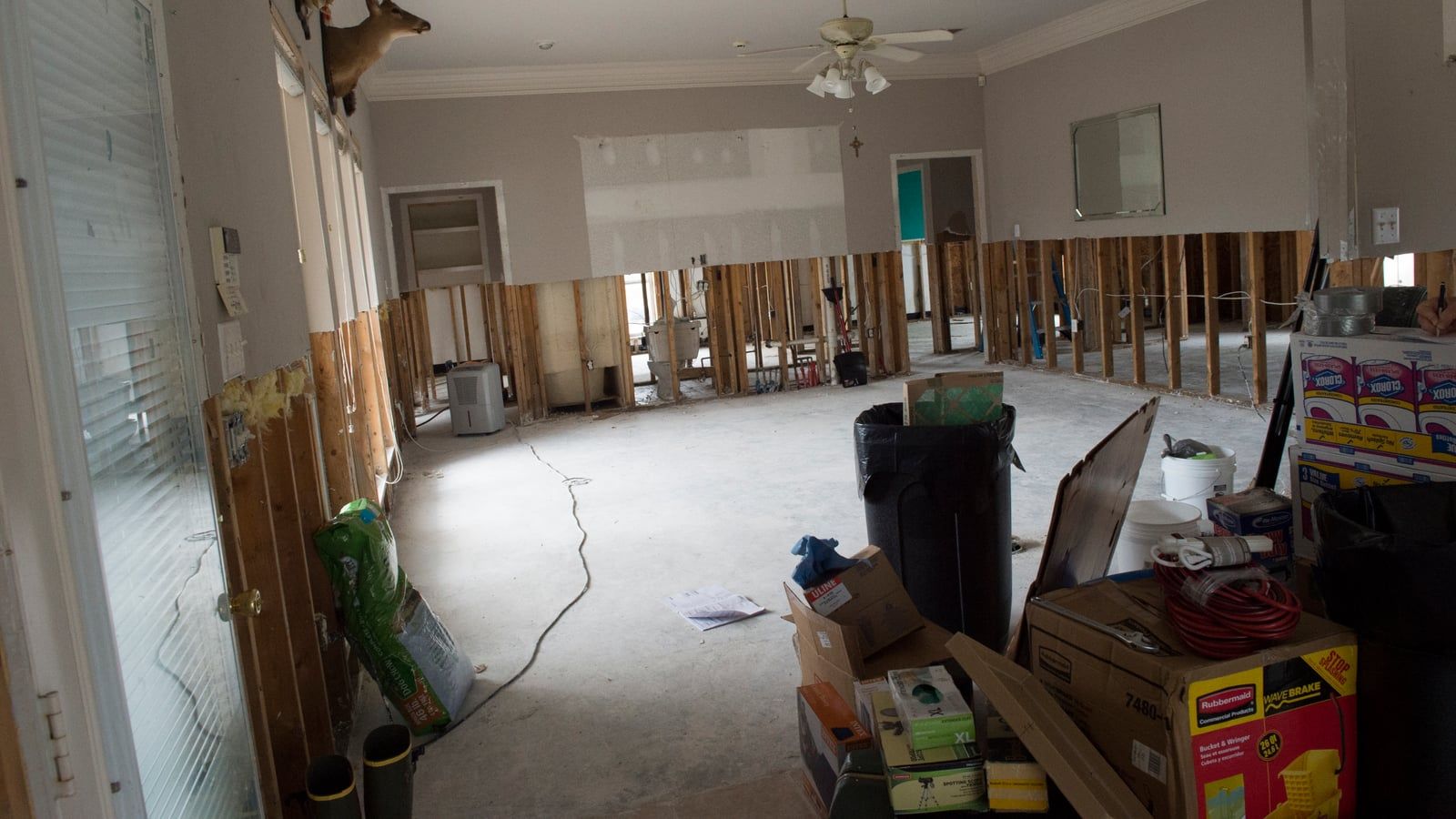
A Houston home that flooded before is not automatically a bad purchase. But “fully repaired” is a conclusion, not evidence: before you offer, identify what happened, how far the damage reached, what was removed, who repaired it, and whether the home can be insured on acceptable terms today.
The event itself matters. The repair record matters more. And the chance of the same problem happening again still has to be evaluated separately.
A one-time appliance leak, a roof leak and rising floodwater can all produce an insurance claim, but they create different inspection and future-risk questions. These eight checks help you decide whether the past damage is documented and resolved—or simply covered by new finishes.
1. Identify the event before evaluating the repair
Ask for the date, source, duration and affected areas. Was the water from a broken supply line, overflowing drain, roof opening, wind-driven rain, sewer backup or natural flooding? How high did it reach? Which rooms, walls, cabinets, flooring, insulation, ducts, outlets and equipment were affected? Was the property occupied, and how quickly did drying begin?
Do not use “water damage” and “flood damage” as interchangeable labels. The source changes the likely contamination, repair scope, insurance coverage and future-risk analysis. If the seller’s explanation stays vague, treat the missing detail as an unresolved due-diligence item.
2. Read the disclosure, then ask for the CLUE report
Texas’s current Seller’s Disclosure Notice asks about water damage not caused by a flood event, previous fires, natural-flood water penetration, prior flood claims, FEMA or SBA flood assistance, and whether the seller has been unable to insure the property. The form itself states that it reflects the seller’s knowledge and is not a substitute for inspections or warranties. Disclosure requirements also have exceptions, so confirm what applies to the transaction rather than assuming every sale uses the same form.
The Texas Department of Insurance says a CLUE report generally shows property claims from the past seven years, including the date of loss, loss type and amount paid. A buyer can ask the owner to provide the property’s report. It is useful, but it is not a complete damage history: it may not show older events, uninsured damage, repairs paid out of pocket or work that was never reported.
3. Rebuild the repair timeline from records—not paint and flooring
Request the adjuster’s estimate or claim scope, settlement information, contractor invoices, paid receipts, permits where required, drying or moisture logs, remediation reports, before-and-after photographs and transferable warranties. Match those records to the affected rooms. A claim payment shows that an insurer evaluated a loss; it does not prove every damaged component was replaced or that the repair quality is acceptable today.
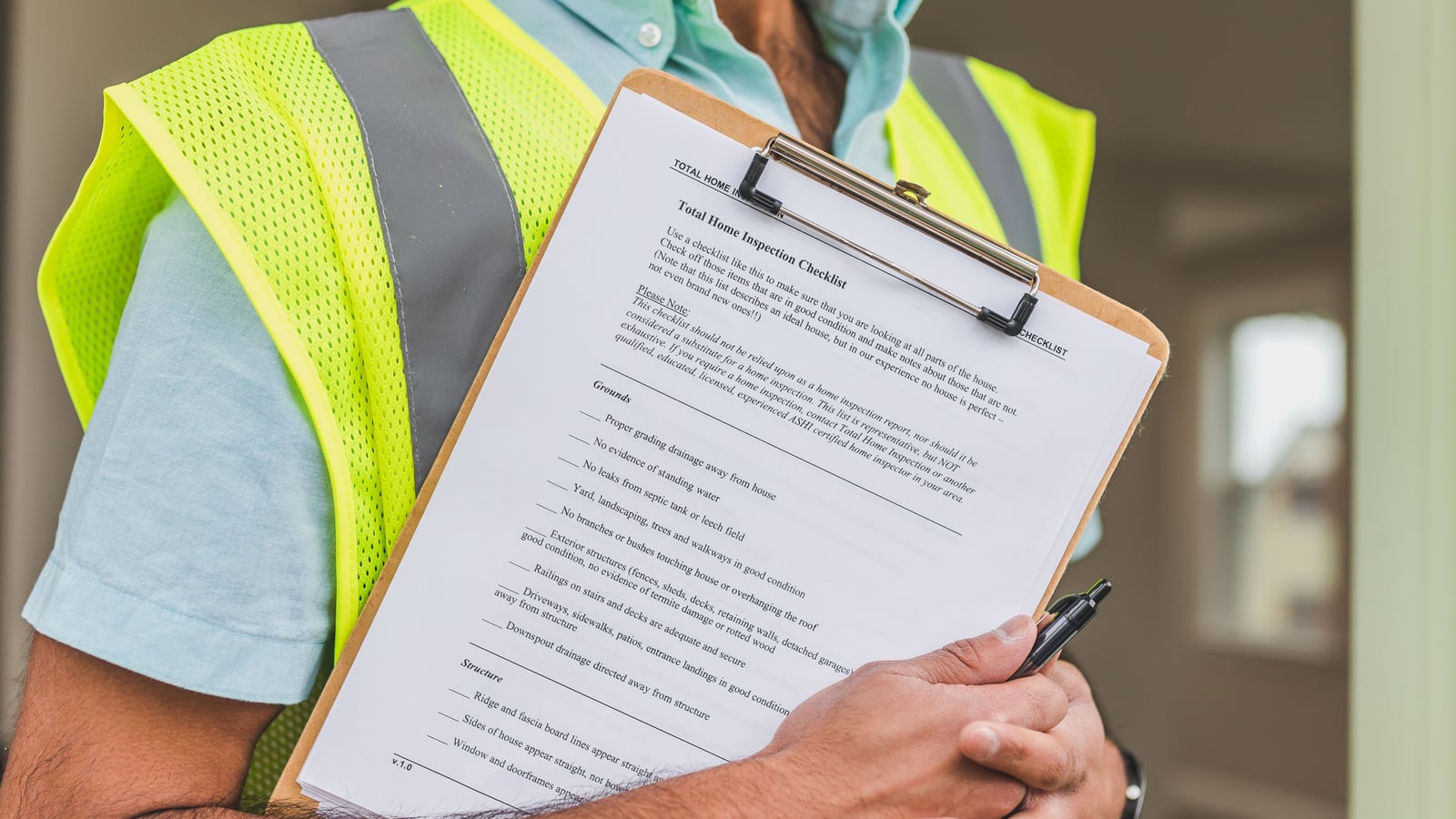
Licensed Pexels stock photograph by RDNE Stock project showing a home inspector with a written checklist. It is not a Houston property, Joyce client or actual claim inspection; it illustrates why buyers need written findings and repair records, not only a verbal summary.
Look for gaps between the estimate and the final work. If the claim allowed for drywall, insulation and flooring but the file only contains a flooring invoice, ask what happened to the rest. If the seller completed some work personally, ask for material receipts, photographs and any required inspection records.
4. Inspect the areas that finishes can hide
A standard home inspection should review visible conditions throughout the property, but prior water damage often justifies focused specialist work. Depending on the event, that may include a plumber, electrician, HVAC contractor, roofer, structural engineer, drainage professional or qualified mold assessor. The goal is not to order every possible test; it is to match the specialist to the known loss and current warning signs.
Check wall bases, cabinet interiors, flooring transitions, attic and roof penetrations, electrical components, HVAC equipment and ducts, insulation, framing, slab edges, exterior grading and drainage. Musty odor, staining, swelling, corrosion, fresh patches limited to one area or inconsistent moisture readings are questions to investigate—not diagnoses by themselves.
5. Separate repaired damage from recurring cause
Replacing damaged drywall does not fix the reason water entered. Confirm what was done to the source: Was the failed pipe replaced? Was the roof opening repaired? Was drainage redirected? Was a sewer problem corrected? Was flood-damaged equipment replaced or merely cleaned? Ask for evidence that the cause, not only the visible damage, was addressed.
For a renovated home, compare the loss repair with the broader renovation story. The Houston Renovated and Flipped Home Buyer Guide explains how to reconcile permits, contractor records, hidden systems and workmanship before paying a renovation premium.
6. Re-evaluate future flood and drainage risk from the address
A prior flood is important evidence, but one event does not answer every future-risk question. Review the current flood map, local drainage and watershed information, elevation data when available, nearby channels or detention features, street and yard drainage, reservoir or flood-pool questions, and the seller’s account of the event. Ask whether roads and access were also affected.
A home outside a mapped high-risk zone can still experience flooding, and a repaired home inside a mapped zone is not automatically unbuyable. Use the Houston Flood Risk Guide Beyond FEMA Zones to work through the address-level layers rather than relying on one map label.
7. Get insurance answers before the option period ends
Obtain a property-specific homeowners quote early and tell the agent about the known loss and repairs. TDI says insurers use underwriting rules that can consider the home’s condition, location, construction, occupancy and claims history. Companies differ, so the seller’s current premium or policy does not guarantee your price, coverage or eligibility.
Also separate homeowners coverage from flood insurance. TDI notes that most home policies do not cover rising floodwater; a separate flood policy may be needed. Ask what the proposed policies cover, exclude and deduct, and whether the insurer wants inspection or repair documentation. The Houston Home Insurance Guide Before Closing gives you a timeline for resolving these questions before closing pressure builds.
8. Price the documentation, resale and contract risk
Good records make a past loss easier to evaluate and explain to a future buyer. Missing records, unclear repair scope or recurring moisture may justify additional inspection, a more conservative offer, a repair request, a credit or a decision not to proceed. A discount is not a substitute for knowing whether the home is safe, insurable and suitable for your plans.
Use your option period to set deadlines for the disclosure, CLUE report, claim file, inspection, specialist access and insurance quote. If important documents arrive late, do not compress the review just to preserve the original closing schedule. Contract rights and remedies depend on the actual documents and facts; legal questions belong with a qualified Texas attorney.
Documents to request before you decide
- Seller’s Disclosure Notice and any attached explanation of water, flood, fire or other prior damage.
- A current CLUE report supplied by the owner, plus an explanation of any claim that does not match the seller’s account.
- Claim date, cause of loss, adjuster estimate, scope of loss, settlement or payment information, and photographs taken before repair.
- Drying, moisture, remediation or environmental reports when they exist and are relevant to the event.
- Contractor invoices, paid receipts, permits, inspection approvals, material records and transferable warranties.
- Current inspection and specialist reports focused on the affected components and the original cause.
- Property-specific homeowners and flood-insurance quotes with coverage, exclusions and deductibles explained.
Frequently asked questions
Does a prior insurance claim mean the house is hard to insure?
Not automatically. Insurers use different underwriting rules and consider more than one factor. Obtain real quotes for the address and disclose the known history accurately instead of relying on the seller’s policy or a general online estimate.
If the seller has receipts, do I still need an inspection?
Yes. Receipts help show what was purchased or paid for, but they do not establish the present condition of inaccessible or repaired components. Use the records to focus the inspection and any specialist review.
Is a clean CLUE report proof that the home never had water damage?
No. CLUE generally covers reported claims over a limited period. It may not include older events, uninsured losses, damage below a deductible or repairs paid directly by an owner. Reconcile it with the disclosure, property condition and other records.
Should I avoid every Houston home that flooded during Harvey?
No blanket answer is responsible. Compare the event, water depth and duration, repair documentation, present condition, current flood and drainage risk, insurance terms, price and resale implications. Two homes that both “flooded” can present very different risks.
Joyce's Featured Listings

AI-generated navigation illustration representing Greater Houston housing choices; it is not a real or currently available listing.
After you know how to review prior damage and repair records, browse Joyce’s Featured Listings to see what current Greater Houston budgets can buy. Every property’s loss history, flood risk and insurance still require address-specific review.
View Joyce's Featured Listings →
Considering a Houston home with prior water damage or an insurance claim?
Send me the address, year built, what the disclosure says, the claim or repair documents you have received, your financing type and your option deadline. I can help organize the real-estate due diligence and offer sequence; legal, engineering, inspection, environmental, insurance, floodplain and tax conclusions stay with qualified professionals in those fields.
About Joyce Tang

Joyce Tang is a Greater Houston real estate agent and investor, co-founder of the North American Real Estate Association, founder of JoyHome and JoyNest, and co-leader of the Dr. Wang Real Estate Team.
She has helped more than 200 families buy or sell homes and has participated in more than 40 renovation projects. Her approach examines not only price, but also location, carrying cost, cash flow, risk and future exit options.
Sources and disclaimer
Sources checked October 31, 2026: TREC Seller's Disclosure Notice guidance and Form 55-1; Texas Department of Insurance guidance on CLUE reports, questions to ask before buying and insuring, home-insurance underwriting and the home insurance guide.
This article provides general real-estate education, not legal, engineering, inspection, environmental, mold, insurance, floodplain, lending or tax advice. Disclosure duties, records, property conditions, policy terms and underwriting vary by transaction and change over time. No repair quality, absence of concealed damage, future flood result, insurability, premium, coverage, value or resale outcome is guaranteed.
Cover photograph by J.T. Blatty/FEMA, public domain in the United States; original and rights page. It shows a flood-damaged home in Acy, Louisiana, not Houston. Inline photograph by RDNE Stock project via Pexels; original page and Pexels License. Both images were cropped and resized to 1600×900. Neither image shows a Joyce client, listing or actual inspection for this article.