

No termite note in a standard home inspection does not mean the home is termite-free. Texas minimum standards do not require a general inspector to determine whether termites or other wood-destroying organisms are present. When a property shows warning signs, prior treatment, or conducive conditions, a buyer should consider a separate inspection by a properly licensed professional.
The first question is not “Did the report say termite?” It is “Was a separate wood-destroying insect inspection actually performed, and what did it cover?”
A home inspection and a WDI inspection answer different questions
A general inspection addresses visible building conditions and required systems. TREC standards expressly say that a general inspector is not required to determine the presence or absence of pests, termites, or other wood-destroying organisms. The inspector may still note damaged wood, moisture, or a suspicious condition, but that is not the same as a pest determination.
For a Texas real-estate transaction, the official Wood Destroying Insect report must be completed by a certified applicator or technician licensed in the applicable category. It records visible active infestation, prior infestation, prior treatment, conducive conditions, and areas that were obstructed or inaccessible.
Six clues that make a separate inspection worth serious consideration
1. Mud tubes along the slab edge, joints, or utility penetrations
Subterranean termites use earthen tubes to travel between soil and wood. A narrow mud line along the foundation, a garage expansion joint, or a utility entry deserves documentation and qualified review. Do not diagnose the property from a photo alone; similar-looking material can have another source.
2. A sudden pile of discarded wings near windows, doors, or lights
Termite swarmers can leave wings behind, but flying ants are often mistaken for termites. Save the insect or clear photos so a professional can identify it. Cleaning the evidence before anyone documents it can make the next step harder.
3. Soft, hollow-sounding, or distorted trim and wood
Damage can sit behind an intact-looking surface, but leaks, decay, and construction defects can create similar symptoms. Keep two questions separate: Is an insect active, and how much structural capacity remains? A WDI report is not a structural-damage report.
4. Wood, mulch, soil, fencing, or raised planters against the structure
A fence tied directly into the wall, firewood beside the slab, high soil, wood-to-ground contact, or dense planting can hide the foundation edge and create conducive conditions. The official Texas report specifically calls out wood-to-ground contact, high soil, moisture, debris, wood rot, heavy foliage, and similar conditions.
5. Persistent moisture near plumbing rooms, eaves, or exterior walls
Moisture does not prove infestation, but a recurring leak, wood rot, or poor drainage deserves more attention. Fresh paint over a formerly wet area should lead to questions about the source, repair scope, and whether concealed wood was evaluated.
6. The disclosure or property shows signs of prior treatment
Drill holes, treatment stickers, bait stations, trenches, or an old contract may show that the property was treated. That history is not an automatic reason to walk away—and it is not proof that treatment was complete or successful. Texas instructions specifically distinguish visible evidence of prior treatment from confirmation that the work solved the problem.
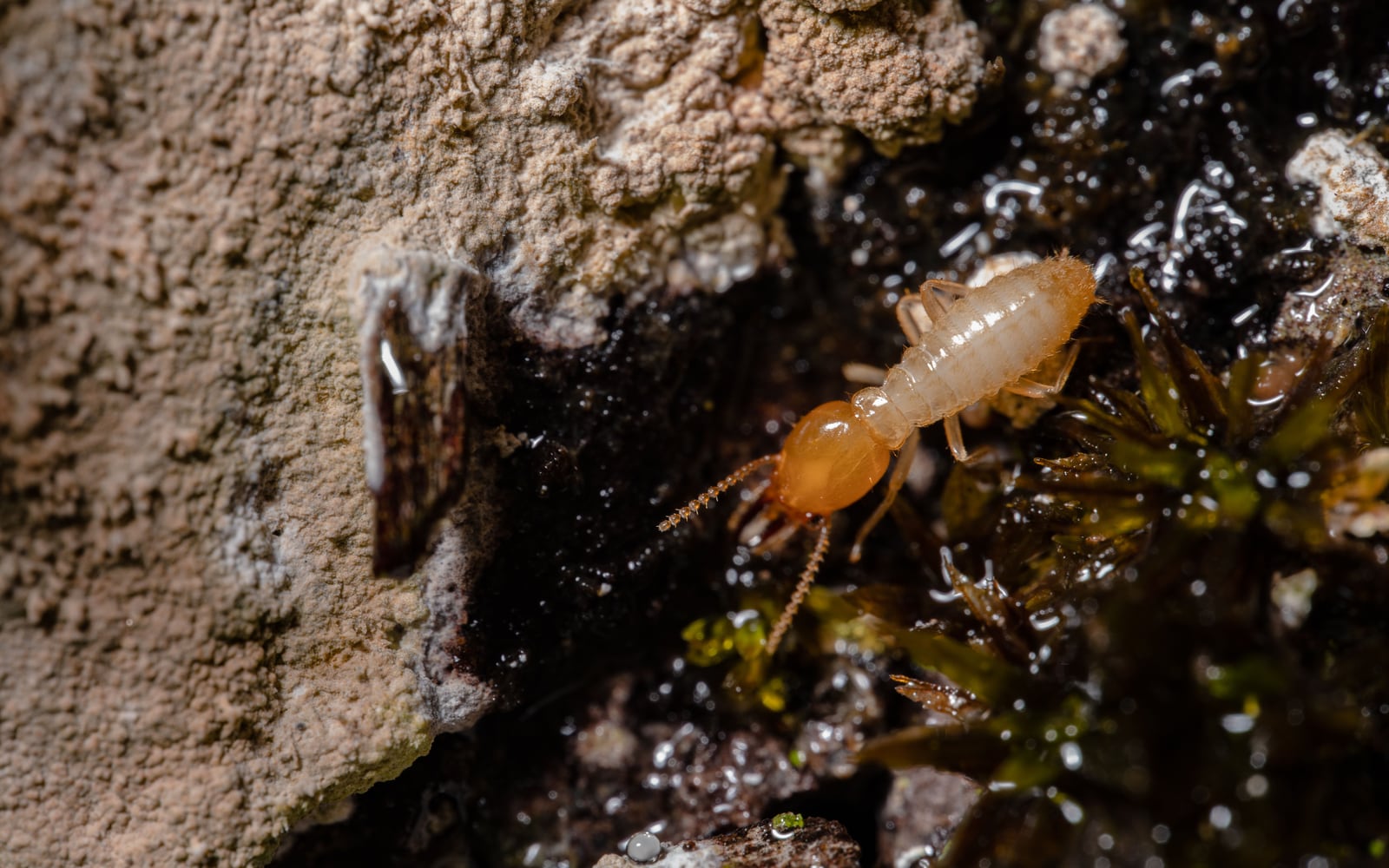
Real macro photograph of a termite. Buyers do not need to identify the species themselves; preserve insects, wings, mud tubes, and location photos for a licensed professional.
Read beyond the report’s yes-or-no boxes
The most useful part of a WDI report is often the detail around the result. Check:
- whether only the main dwelling was inspected or detached garages, sheds, decks, and fences were included;
- where active infestation, prior infestation, or prior treatment evidence was found;
- which attic, plumbing, slab-joint, crawl-space, eave, or concealed areas were inaccessible;
- which conducive conditions were identified and where they occur;
- whether the recommendation addresses active infestation or correction of moisture, contact, grading, or ventilation conditions;
- whether the company and inspector license information and the required structure diagram are complete.
Texas guidance explains that the inspection is limited to visible and readily accessible areas. Inspectors do not dismantle the building or remove concealed materials. “No visible evidence found” is therefore not a warranty that no wood-destroying insects exist. The list of inaccessible areas matters as much as the conclusion.
Should prior termite treatment kill the deal?
Not automatically. A documented treatment history can be easier to evaluate than a vague statement that a home “never had termites.” Ask when the issue appeared, where it was found, which method was used, what damage was repaired, and whether a current service contract or warranty remains.
Read the warranty itself: whole-structure or limited coverage, transferability, renewal cost, retreatment versus damage repair, and owner actions that can void coverage. A verbal “lifetime warranty” is not enough.
If the report shows infestation and damaged wood, obtain both a pest-control plan and a separate repair evaluation. Treating the insects and determining whether wood or structural components require repair are different jobs.
Use this option-period sequence
- Ask whether the general inspection includes an official WDI report, who will perform it, and what license they hold.
- Compare the current seller disclosure with any active infestation, prior damage, prior treatment, or wood-rot entries.
- Request prior reports, treatment diagrams, invoices, repair records, renewal history, and transferable warranty terms.
- Photograph and label mud tubes, wings, moisture, decay, and treatment evidence before the site changes.
- Require the report to identify every obstructed or inaccessible area; do not translate “not seen” into “not present.”
- When treatment or repair is recommended, obtain separate pest-control and wood or structural scopes before negotiating repair, credit, price, or further evaluation.
- Complete decisions and notices within the contract’s option period and other deadlines.
To prioritize the larger inspection picture, start with Five Big-Ticket Problems Houston Buyers Should Watch During a Home Inspection. Then use What Should a Buyer Ask the Seller to Fix? to organize negotiation requests. If the property also has foundation-repair history, continue with Buying a Houston Home With Foundation Repairs.
Frequently asked questions
The seller disclosure says no termites. Is an inspection still useful?
The disclosure reflects the seller’s knowledge as of the signing date. It is not an inspection or warranty. Property clues, moisture conditions, and missing records may still justify a separate inspection.
Can a new home need a WDI inspection?
Age is not the only factor. Wood-to-ground contact, drainage, construction debris, moisture, and inaccessible areas can matter. Evaluate the specific property and contract requirements.
Does a clean report guarantee there are no termites?
No. It reports visible evidence in areas that were accessible on the inspection date. Concealed and inaccessible locations remain outside that conclusion.
Will prior treatment affect financing or insurance?
There is no single answer. Lenders, appraisers, insurers, and contracts may require different information. Assemble the current report, treatment documents, and repair records, then confirm requirements with the applicable professionals.
Joyce's Featured Listings

AI-generated illustration: a Greater Houston housing scene, not a real or currently available listing.
Look beyond fresh finishes and note the slab edge, moisture, and wood contact at each property. Browse Joyce’s Featured Listings, then tailor the inspection plan to the specific address.
View Joyce's Featured Listings →
Considering a home and unsure whether to add a WDI inspection?
Send me the address, seller disclosure, general inspection summary, and photos of the areas that concern you. I can help organize the records, option-period sequence, and negotiation priorities. Insect identification, treatment, damage extent, and structural safety should be confirmed by the appropriate licensed or qualified professionals.
About Joyce Tang

Joyce Tang is a Greater Houston real estate agent and investor, co-founder of the North American Real Estate Association, founder of JoyHome and JoyNest, and co-leader of the Dr. Wang Real Estate Team.
She has helped more than 200 families buy or sell homes and has participated in more than 40 renovation projects. Her approach examines not only price, but also location, carrying cost, cash flow, risk and future exit options.
Sources and disclaimer
Sources checked October 20, 2026: TREC home-inspection standards, the Texas Department of Agriculture official WDI report and instructions, TDA termite FAQs, the TREC seller-disclosure resource, and EPA termite identification and control guidance.
This article provides a general real-estate and inspection checklist. It is not pest-control, structural, construction, lending, insurance, legal, or contract advice. Inspection need and scope, pest determination, treatment, repair responsibility, and contract rights depend on the property, reports, and transaction documents. Confirm them with the appropriate licensed or qualified professionals.
Cover home-inspection photo from Pexels by RDNE Stock project. Termite macro photo from Pexels by Jimmy Chan. Both are used under the Pexels License. The cover model is not represented as a Texas-licensed termite inspector, and neither image depicts a specific property or transaction.