

A light dusty odor that clearly fades within about 10 to 15 minutes can happen when heat runs for the first time after months of sitting idle. That does not make every burning smell normal: melting-plastic or electrical odor, smoke, repeated breaker trips, rotten-egg odor, or a carbon monoxide alarm calls for a different response.
Use four clues together: what the odor resembles, whether it is fading, whether the equipment is making unusual sounds or tripping a breaker, and whether an alarm or physical symptoms are present.
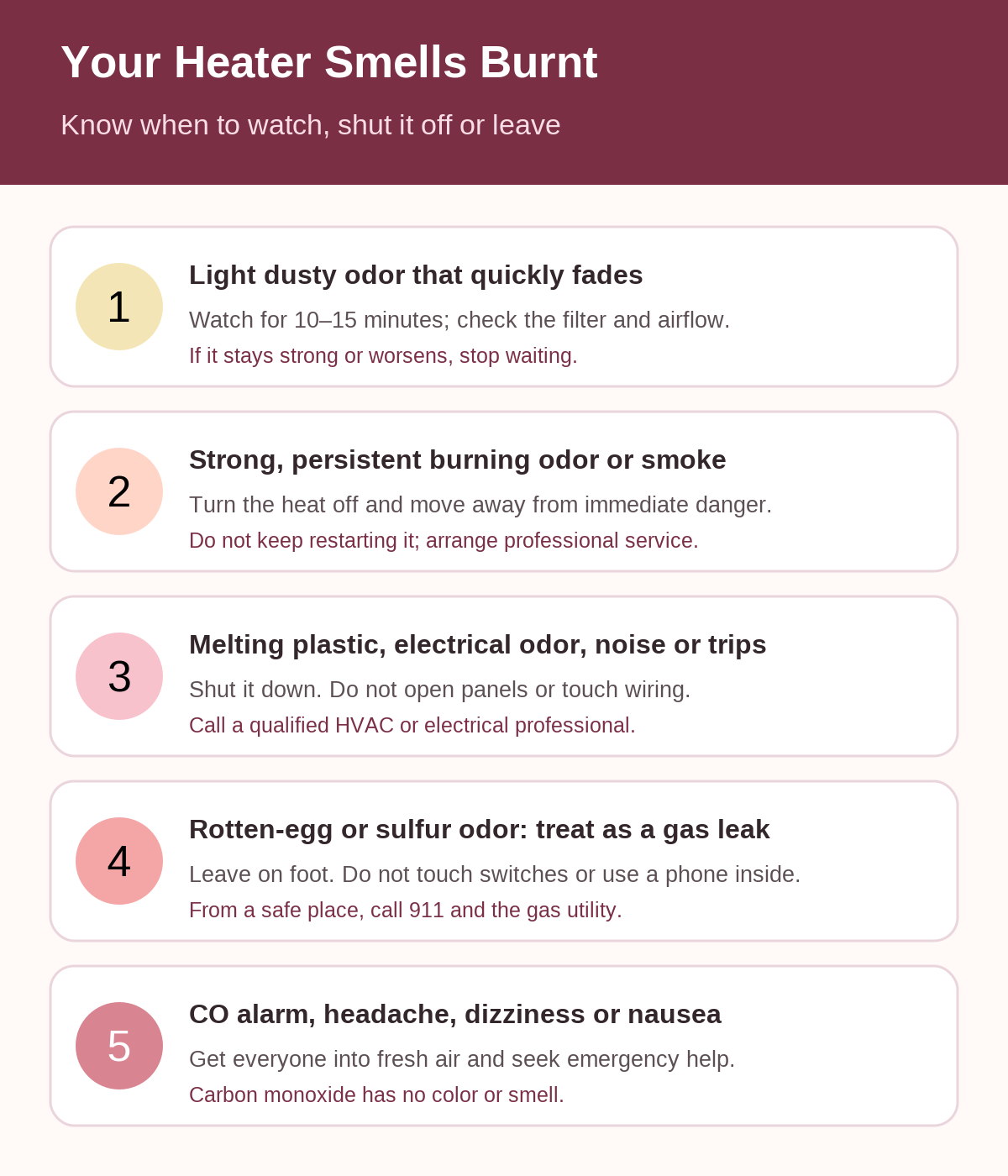
1. Light dusty odor that quickly fades
Dust can settle on equipment and in ductwork while heat is unused. Trane describes a brief dusty odor at the first seasonal startup as common and says it should clear in roughly 10 to 15 minutes. The important words are light and fading.
Set a 10-minute timer while watching airflow, sound and alarms. If the smell is noticeably weaker and there is no smoke, spark, breaker trip or unusual noise, continue to monitor. If it stays strong or worsens, do not keep running the system simply because seasonal dust is possible.
2. Strong, persistent burning odor or visible smoke
This is no longer a wait-for-the-dust situation. Shut the heat off if it is safe to do so. If you see smoke or flame, or cannot tell whether a fire is developing, leave the danger area and call 911. Do not keep restarting the equipment to confirm the problem.
The U.S. Fire Administration recommends professional cleaning and inspection of heating equipment, keeping anything combustible at least three feet from heat sources, and never using an oven to heat the home.
3. Melting-plastic or electrical odor, unusual noise, or a breaker trip
A melting-plastic or obvious electrical odor can point to overheated wiring, a motor or another electrical component. Shut the system down, do not open equipment panels or touch wiring, and do not repeatedly reset a tripped breaker. Arrange evaluation by a qualified HVAC or electrical professional.
ENERGY STAR lists electrical connections, startup cycles, fuel connections, burner combustion and heat exchangers among professional maintenance items. Replacing an accessible filter is a homeowner task; combustion and electrical diagnosis are not.
4. Rotten-egg or sulfur odor: do not look for the leak first
CenterPoint Energy says to leave immediately on foot if you smell the rotten-egg or sulfur odor added to natural gas. Do not operate light switches, use a phone inside, start a vehicle or operate anything that may spark. Once you are safely away, call 911 and CenterPoint Energy.
Do not pause to adjust the thermostat or open windows. The odor comes from an added odorant—natural gas itself is colorless and odorless—and smell can be masked or become less noticeable.
5. A carbon monoxide alarm or several people with headache, dizziness or nausea
Carbon monoxide has no color or smell, so the absence of an odor proves nothing. CPSC and CDC list headache, dizziness, weakness, nausea, vomiting, chest pain and confusion among common symptoms. If an alarm sounds or several occupants develop symptoms, get everyone into fresh outdoor air and seek emergency help.
Do not search the house for a cause and do not wait for symptoms to pass. Do not reuse suspect fuel-burning equipment until a qualified professional says it is safe.
A practical first-start sequence
Test smoke and carbon monoxide alarms first, following the manufacturer’s instructions for batteries and end-of-life signals.
Check whether the filter is visibly dirty; use the correct size and airflow direction if it needs replacement.
Clear boxes, fabric, cleaners and other combustibles away from heating equipment and supply registers.
Switch the thermostat to heat and raise it only a few degrees. Do the first test while awake and at home—not for the first time at bedtime.
Listen from a safe position, confirm airflow, and give only a light dusty odor a 10-to-15-minute observation window.
If odor persists, smoke appears, a breaker trips, gas is suspected, an alarm sounds or anyone feels ill, shut down or leave according to the warning above.
During a home inspection, “the heat turned on” is not the whole answer
Texas inspection standards require inspectors to report the heating-system type and energy source and evaluate operation, thermostats, heat-pump performance, burners, venting and other visible conditions. The inspection is still a snapshot under accessible conditions, not a guarantee of remaining life or hidden components.
When a report mentions abnormal odor, combustion, venting, electrical or carbon monoxide concerns, I treat that as a specialist follow-up item—not simply a repair-credit number. Define the safety issue and scope first, then decide whether to request repair, negotiate a credit or reconsider the property.
Frequently asked questions
How long is a first-use burning smell normal?
No time limit guarantees that every system is safe. Manufacturer guidance commonly uses about 10 to 15 minutes for a light dusty odor, but the key is that it should clearly fade—not persist, intensify or arrive with smoke or unusual noise. When uncertain, turn the system off and have it evaluated.
Does carbon monoxide have a smell?
No. Carbon monoxide is colorless and odorless. A rotten-egg natural gas odor and carbon monoxide are different hazards, and both require serious action.
My alarm only chirped once. Do I need to leave?
A single chirp may signal a low battery or end of life, but patterns vary by manufacturer. Check the label and instructions immediately. If you cannot identify the signal, a full alarm sounds, or anyone has symptoms, get outside and treat it as an emergency.
Can I open windows and keep testing the heater?
Opening windows does not diagnose or repair the system. If you smell natural gas, do not stay inside to ventilate or operate switches—follow CenterPoint Energy’s instruction to leave immediately.
Related guides
If you are buying or planning annual maintenance, continue with what a Houston HVAC inspection should answer and how to check smoke and carbon monoxide alarms.
Sources and image note
Safety guidance was checked against CenterPoint Energy natural-gas leak instructions, the CPSC carbon monoxide fact sheet, CDC carbon monoxide guidance, U.S. Fire Administration heating-fire guidance, the ENERGY STAR HVAC maintenance checklist, Texas Real Estate Commission inspection standards and Trane seasonal-start odor guidance. Sources checked November 18, 2026.
The cover reuses a verified real residential smoke/CO and smart-home-device photograph by Jakub Zerdzicki from the Pexels source page under the Pexels License. The action graphic is an original JoyHome safety explainer based on the sources above and contains no generative imagery.
Joyce's Featured Listings

Heating-system type, age and maintenance history all affect the cost and risk of owning a home. Browse Joyce's Featured Listings, then share the address and equipment details of a home you like so we can organize the right option-period questions.
View Joyce's Featured Listings
Concerned about the heating system in a home you are considering?
Share the address, construction year, heating type and relevant inspection-report pages, with personal information redacted. I can help organize the property and negotiation questions to take back to the inspector, HVAC professional or seller.
About Joyce Tang

Joyce Tang is a Greater Houston real estate agent and investor, co-founder of the North American Real Estate Association, founder of JoyHome and JoyNest, and co-leader of the Dr. Wang Real Estate Team.
She has helped more than 200 families buy or sell homes and has participated in more than 40 renovation projects. Her approach examines not only price, but also location, carrying cost, cash flow, risk and future exit options.
Important notice
This article provides general home-heating and home-inspection information. It is not fire, utility, medical, electrical or HVAC diagnosis, and Joyce is not presented as a licensed professional in those fields. If you smell natural gas, see smoke or flame, hear a carbon monoxide alarm or experience possible poisoning symptoms, leave the danger area first and follow local emergency, utility and manufacturer instructions. A qualified professional must determine whether specific equipment is safe.