
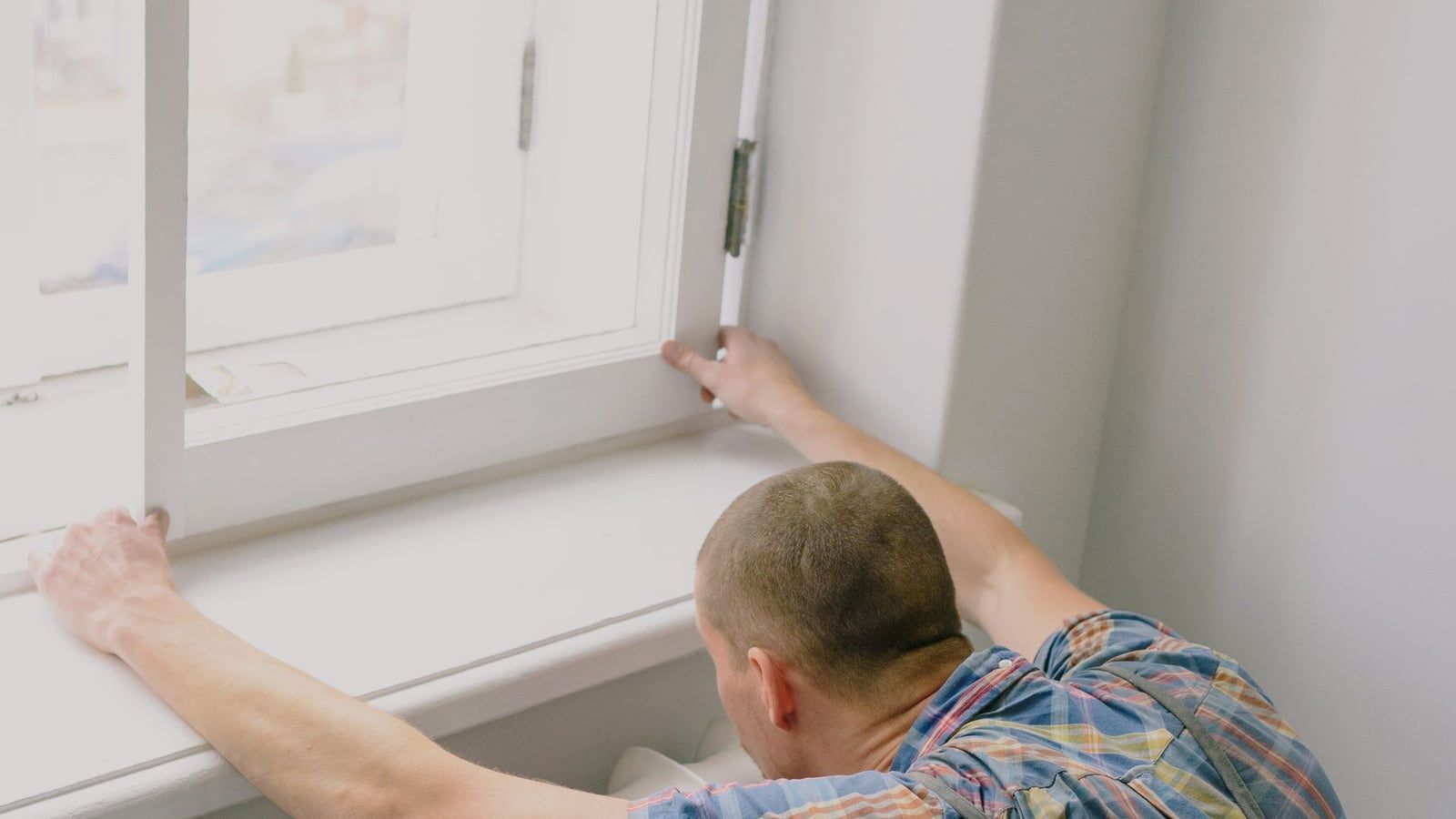
A foggy window does not automatically mean every window in the house needs replacement. Moisture that wipes from the room side or exterior is usually surface condensation. Haze or droplets trapped between insulated panes—and impossible to wipe away—are more consistent with a failed glass seal. Buyers should identify where the moisture is, how many units are affected, and whether the surrounding frame shows water damage.
One fogged pane does not mean a whole-house replacement. Water staining around a window may also be a different problem from failed glass.
Start with one question: which surface holds the moisture?
- Exterior surface: dew or rain that changes with weather and can be wiped from outside.
- Interior surface: condensation associated with indoor humidity and cooler glass.
- Between the panes: persistent haze, droplets, or mineral marks that cannot be reached.
- Around the frame or sill: staining, soft material, peeling paint, or swelling that calls for a water-entry investigation.
What can a standard Texas inspection tell you?
TREC standards call for inspectors to examine visible, accessible windows and glazing and report insulated windows that are obviously fogged or show evidence of broken seals. Operation, weather stripping, glazing materials, and visible water penetration are also within the inspection scope.
The inspection is not an exhaustive test of every insulated window, nor must the inspector identify every failed location. Weather, sunlight, curtains, dirt, and humidity can change what is visible that day. A report without a fogged-window note is not proof that every seal is intact.
Five common situations buyers should separate
1. Morning droplets on the exterior
Houston humidity makes exterior dew common. Check whether it wipes from outside, disappears as conditions change, and appears on several windows with a similar exposure. That alone does not establish a failed seal.
2. Condensation on the room side
Cooking, showers, indoor drying, weak exhaust, or HVAC conditions can raise indoor moisture. EPA recommends keeping relative humidity below 60%, ideally about 30% to 50%. If several windows condense on the room side, investigate ventilation, HVAC, and humidity before assuming the glass must be replaced.
3. Haze trapped between panes
When an insulated-glass edge seal fails, moisture can enter the space between panes and leave haze, droplets, or mineral marks. Record each affected glass unit instead of labeling all windows “old.” Only one unit within a larger window assembly may be affected.
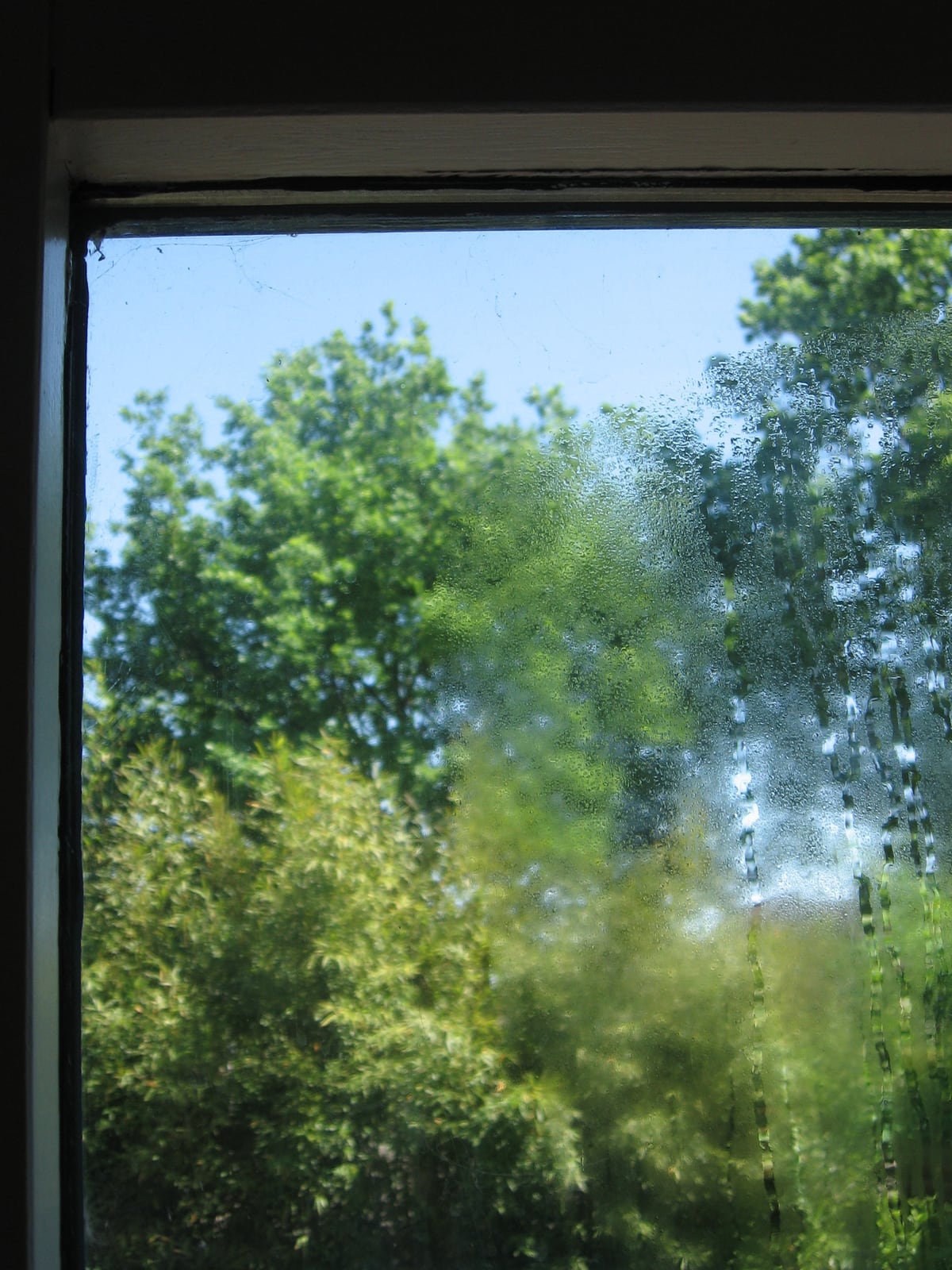
Real condensation trapped inside double glazing. The droplets are in an inaccessible layer, a pattern more consistent with seal failure; the repair scope still requires an on-site evaluation. Photo: M.M.Minderhoud / Wikimedia Commons, CC BY-SA 3.0; cropped, resized, and compressed.
4. Staining, soft trim, or peeling paint around the frame
Water damage around a window may involve exterior sealant, flashing, drainage openings, wall cracks, roof runoff, or another pathway. Replacing the insulated glass alone may not stop the source. If materials are soft, walls are swollen, or odor persists, investigate the building envelope and moisture conditions. Appearance alone is not a mold diagnosis.
5. Difficult operation, poor closure, or cracked glass
Binding, warped sashes, failed locks, movement, or cracked glass can affect use, safety, and scope. Bedroom egress and safety-glazing locations may also matter. Separate hardware, sash, glass, frame, and opening problems before selecting a repair.
Glass unit, sash, or full window?
- If only one insulated-glass unit failed and the sash, frame, and operation are sound, request a glass-unit or sash replacement quote.
- If the frame is deteriorated, warped, repeatedly leaking, or difficult to operate, compare full-window and opening repairs.
- For several affected windows, number, measure, and prioritize each unit instead of multiplying an online average by the whole house.
- For a claimed warranty, verify manufacturer, original order, transferability, labor coverage, and deadlines.
- For a “defogging” service, ask whether it only improves appearance or replaces the sealed glass, and obtain the expected result and warranty in writing.
Use this seven-step option-period checklist
- Photograph the window from inside and outside; label the room, exposure, and exact sash.
- When safely accessible, determine whether moisture wipes from a surface. Do not disassemble the window.
- If possible, revisit at another time or light angle.
- Record fogging, water stains, operation, and cracked glass as separate issues.
- Review disclosures, invoices, repair history, and transferable warranties.
- Request itemized quotes for glass, sash, full window, exterior sealing, and interior repair.
- After scope and cost are clearer, decide whether to request repair, credit, price adjustment, or staged work after closing.
For the broader inspection budget, read Five Big-Ticket Problems Houston Buyers Should Watch During a Home Inspection. If the frame shows water damage, add Houston Roof Inspection: 6 Warning Signs Buyers Should Not Ignore to the exterior-water review. Before negotiating, use What Should a Buyer Ask the Seller to Fix?.
Frequently asked questions
Will one foggy window affect financing or insurance?
There is no universal answer. Cosmetic seal failure, active water intrusion, cracked glass, and an inoperable egress window are different conditions. The property, defect, lender, and carrier requirements control.
If the glass is clear, is the seal definitely good?
No. A failed seal may not be visible in every condition, and a general inspection is not a laboratory test of every unit. History, symptoms, and targeted evaluation matter.
If the seller replaces the glass, what should the buyer verify?
Confirm the exact unit, product specification, installer, warranty, and whether surrounding water-entry or operation issues are addressed separately. Keep invoices and warranty documents.
Do dark spots around the window prove mold?
Appearance alone is not a diagnosis. Correct the moisture source and use a qualified indoor-environmental, building-envelope, or remediation professional when appropriate.
Joyce's Featured Listings

AI-generated illustration: a Greater Houston housing scene, not a real or currently available listing.
Evaluate window seals, operation, and water evidence together to build a realistic repair budget. Browse Joyce’s Featured Listings, then tailor the inspection plan to the address.
View Joyce's Featured Listings →
Considering a home with foggy windows or unclear water staining?
Send me the address, relevant inspection pages, close-up photos, and room locations. I can help organize the issue into surface condensation, glass seal, operation, and water-entry questions, then plan the right estimates during the option period. Diagnosis and repair scope remain with the appropriate professionals.
About Joyce Tang

Joyce Tang is a Greater Houston real estate agent and investor, co-founder of the North American Real Estate Association, founder of JoyHome and JoyNest, and co-leader of the Dr. Wang Real Estate Team.
She has helped more than 200 families buy or sell homes and has participated in more than 40 renovation projects. Her approach examines not only price, but also location, carrying cost, cash flow, risk and future exit options.
Sources and disclaimer
Sources checked October 20, 2026: Texas Real Estate Commission Standards of Practice, EPA home moisture-control guidance, and the EPA mold and moisture guide.
This article provides a general real-estate and inspection framework, not glazing, window, building-envelope, engineering, mold, insurance, legal, or contract advice. Confirm causes, repair scope, safety, permits, and transaction rights with the appropriate licensed or qualified professionals.
Cover photo from Pexels by Ksenia Chernaya, used under the Pexels License and cropped/compressed. Inline photo from Wikimedia Commons by M.M.Minderhoud / Michiel1972, used under CC BY-SA 3.0 and cropped/resized/compressed. The inline adaptation remains under a compatible license; depicted people and source organizations do not endorse Joyce.