
The short answer: what stays after a Texas home sale is controlled by the contract—not the listing photos and not whether the seller can unplug or carry an item. Attached improvements and listed accessories generally transfer with the home; seller-retained items need written exclusions, and separately conveyed personal property needs its own written treatment.
I would not wait for the final walkthrough to sort this out. A room-by-room list before the contract is signed is usually the simplest way to prevent a closing-day dispute.
Start with four contract buckets
1. Improvements: attached or built into the home
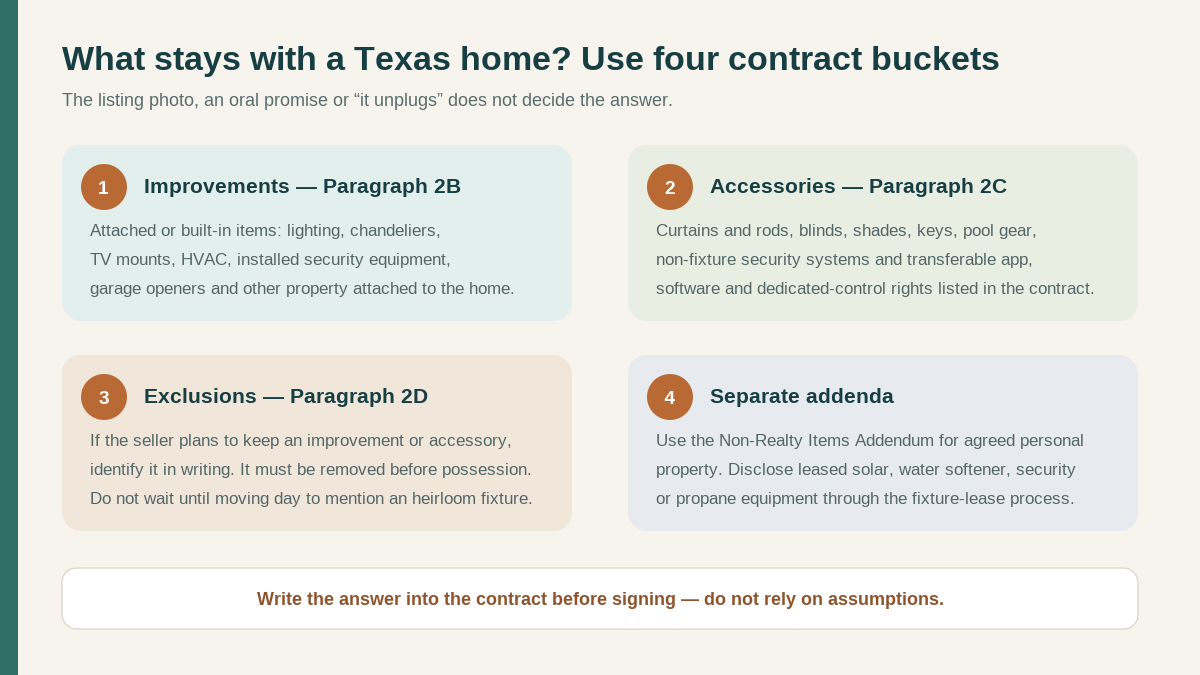
The TREC 20-19 resale contract effective July 1, 2026 lists the house, garage and fixtures or improvements attached to the real property in Paragraph 2B. Examples include lighting fixtures, chandeliers, mirrors, ceiling fans, HVAC, installed security and fire equipment, TV and speaker mounts, garage door openers, water softener systems, kitchen equipment, landscaping, outdoor cooking equipment and generators.
The practical question is not simply whether an item has a plug. Installation, attachment and whether it is built in can change the analysis.
2. Accessories: items the contract specifically includes
Paragraph 2C separately lists window air conditioners, stoves, fireplace screens, curtains and rods, blinds, shades, keys, above-ground pools and pool equipment, non-fixture security systems, plus controls for garage doors, entry gates and other improvements. The 2026 language says “controls” includes transferable rights to software and applications as well as dedicated control hardware.
That means removable curtains are not automatically free for the seller to take, and leaving smart-home hardware without addressing transferable control rights may not complete the handoff.
3. Exclusions: improvements or accessories the seller keeps
If the seller plans to keep an heirloom chandelier, a custom mirror, a TV bracket or permanently installed outdoor equipment, the safest approach is to identify it in Paragraph 2D before the contract is signed. The contract says excluded improvements and accessories must be removed before possession is delivered.
A note in the seller’s disclosure, MLS remarks, a photo caption or a text message should not be treated as a substitute for the purchase contract.
4. Personal property and leased fixtures: use the right addendum
Personal property that the parties agree will remain, but that is not already covered by Paragraph 2B or 2C, can be addressed through TREC Form 57-0, the Non-Realty Items Addendum. The form asks the parties to identify each item carefully, including description, model and serial numbers, location and other identifying information. It also states that the seller owns the property free of encumbrances but does not guarantee its condition or future performance.
Leased solar panels, propane tanks, water softeners or security systems require a separate fixture-lease review. TREC Form 52-1 addresses whether the buyer assumes the lease, whether the seller removes the equipment, allocation of assignment costs and delivery of the lease documents.
Does the refrigerator stay? Do not rely on “all appliances included”
This is one of the most common gray areas. Paragraph 2B refers to equipment, appliances and kitchen equipment, but it does not name a refrigerator, and the paragraph is framed around attached, permanently installed and built-in items. A freestanding refrigerator and a built-in refrigerator may not be treated the same way.
My practical rule is simple: if the buyer wants the refrigerator, identify it in writing. If the seller must take it, identify that too. Use the same approach for washers, dryers, wine refrigerators and outdoor refrigerators rather than letting each party apply a different meaning to “appliances.”
The TV may leave, but the wall mount may not
Paragraph 2B expressly lists mounts and brackets for televisions and speakers. The television itself is generally personal property, while its wall-mounted bracket is specifically named in the contract. If the seller removes the TV, the parties should also address wiring, wall condition, mounting holes and whether the bracket remains.
If the buyer wants the television too, the Non-Realty Items Addendum should identify its brand, model, size and room. A television appearing in listing photos does not put it into the sale.
Curtains, blinds and rods: “the fabric comes down” is not the test
Paragraph 2C lists curtains and rods, blinds, window shades, draperies and rods. A seller keeping a particular set should describe the room and the exact treatment in the exclusions instead of using vague language such as “some curtains excluded.”
When window treatments have sentimental value, I prefer replacing them before photos and showings with something the seller is willing to leave. The buyer then sees the property in the condition the seller actually plans to convey.
Cameras, doorbells and smart-home devices require a hardware and account plan
Security equipment can fall into several categories: installed security equipment under Paragraph 2B, non-fixture security systems under Paragraph 2C, and leased systems under the Fixture Leases Addendum. Smart doorbells, thermostats, locks and garage controls still need a fact-specific review based on installation and the contract wording.
Before closing, the seller should unlink personal accounts, remove recordings and user data, reset equipment when appropriate and transfer any agreed transferable app or software rights. The buyer should confirm that a new account can be established, and the seller should confirm the old account no longer has access.
My pre-listing “stay or go” checklist
- Photograph each room and exterior area, then list equipment, fixtures, window treatments and controls that could create a disagreement.
- Mark each item as included by the contract, seller exclusion, separately negotiated personal property, leased equipment or still needing clarification.
- Record brand, model, serial number, size and location for personal property.
- Confirm whether solar, water softener, security and propane equipment is owned, financed or leased.
- Complete exclusions and addenda before signing instead of relying on an oral promise.
- At the final walkthrough, check the list again and complete the handoff of keys, remotes, apps and accounts.
For the broader sale process, see the Houston home selling guide. If solar equipment is involved, read how to handle solar loans and leases when selling. If property condition or missing items become an issue near closing, see what to do when a final walkthrough reveals a problem.
FAQ
Does furniture shown in listing photos automatically stay?
No. Photos market the property; they do not automatically convert sofas, dining tables, televisions or décor into contract property. Personal property the buyer wants should be identified in writing.
Can the seller take the TV and leave the wall bracket?
TREC Paragraph 2B specifically lists TV mounts and brackets among the improvements. The television and the bracket should be analyzed separately, and wall repair or wiring should be addressed before signing.
Can the seller take a Ring doorbell or security camera?
It depends on attachment, ownership or lease status and any written exclusion. Hardware is only part of the issue—the parties also need to address accounts, recordings, subscriptions and transferable control rights.
What if an item was omitted from the contract?
Do not remove it unilaterally or treat a text message as the final answer. Ask the agents to discuss a written amendment promptly. If the parties disagree about contract rights, consult a Texas real estate attorney.
Sources and image note
Primary contract sources: TREC One to Four Family Residential Contract (Resale) page, TREC Form 20-19, TREC Non-Realty Items Addendum page, TREC Form 57-0, TREC Fixture Leases Addendum page, and TREC Form 52-1. Sources checked October 23, 2026.
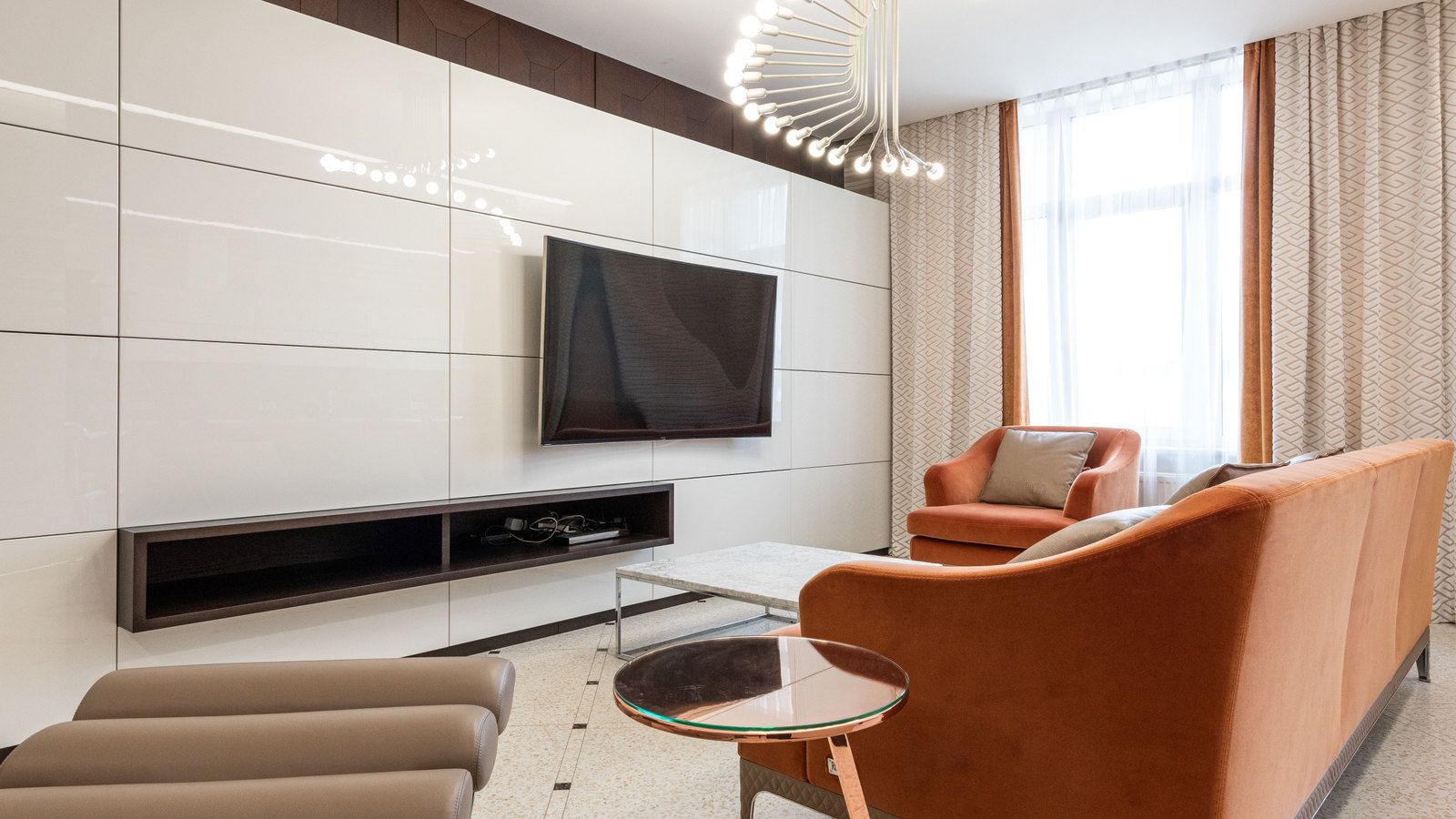
The cover is a real staged-living-room photograph by Max Vakhtbovych from the Pexels photo page under the Pexels License. It was cropped to 16:9, resized and compressed without generative alteration. The room is not a JoyHome listing or client property.
Joyce's Featured Listings

Separating the real property from personal items in the photos makes it easier to compare actual value. Browse Joyce's Featured Listings, then confirm inclusions and exclusions for any property you are considering.
View Joyce's Featured Listings
Selling soon? Make the disputed-item list before you go live
If you are preparing to sell in Greater Houston, send me the address, target listing date and the equipment or fixtures you definitely want to keep or convey. I can organize the list by contract category before we decide what to replace, exclude or address through an addendum.
About Joyce Tang

Joyce Tang is a Greater Houston real estate agent and investor, co-founder of the North American Real Estate Association, founder of JoyHome and JoyNest, and co-leader of the Dr. Wang Real Estate Team.
She has helped more than 200 families buy or sell homes and has participated in more than 40 renovation projects. Her approach examines not only price, but also location, carrying cost, cash flow, risk and future exit options.
Important notice
This article is a general explanation of the 2026 TREC resale contract and related addenda. It is not legal advice and does not replace the complete contract for a specific transaction. Joyce Tang is not an attorney. Whether an item is an improvement, accessory, personal property or leased fixture depends on installation, ownership, contract wording and the specific facts; disputed situations should be reviewed by a Texas real estate attorney.