

Sugar Land deserves a serious look if you want established neighborhoods, multiple school options, strong access to Asian groceries and dining, and a southwest-Houston location. But the city name is not enough to make a buying decision: two homes with a Sugar Land mailing address can sit in different city limits, school districts, taxing jurisdictions and flood conditions, with very different ages, rental rules and peak commutes. This guide is designed to help you decide whether Sugar Land belongs on your shortlist before narrowing the search to an address.
Bottom line: Sugar Land is a stronger fit for owner-occupants who value mature amenities, school options, Asian daily-life access and southwest-Houston commutes. Rentals can work, but this is a selective, longer-hold market—not an automatic high-cash-flow play.
Four takeaways before the details
Stronger fit: Owner-occupants prioritizing mature amenities, school options, Asian daily-life access and southwest-Houston commutes.
Price anchor: The July 2026 sold median was about $467,450; one citywide average cannot price every home type or community.
Investment view: This is more of a buy-selectively-and-hold market than a citywide high-cash-flow play.
Biggest caution: A Sugar Land label does not guarantee the same schools, taxes or flood context—verify the exact address.
1. Location and commute
Sugar Land is in eastern Fort Bend County, southwest of Houston. The City reports 42.86 square miles within its full-purpose 2026 limits and another 12.97 square miles in its extraterritorial jurisdiction, or ETJ. The 2020 Census population was 111,026, with about 40,305 dwelling units. The city stretches along US-59/I-69, Highway 6 and the Grand Parkway/SH 99 rather than functioning as one compact downtown.
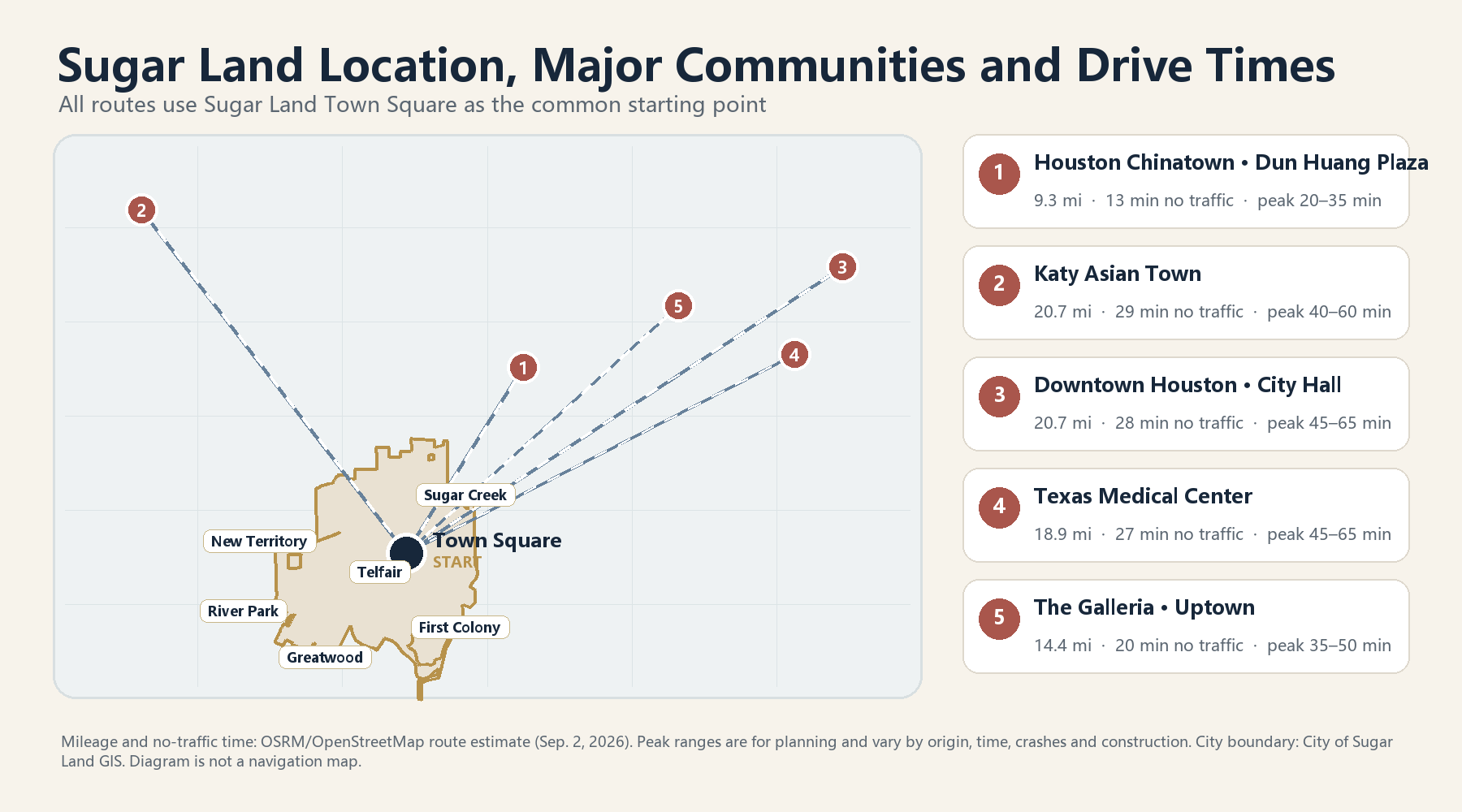
The map uses Sugar Land Town Square as one consistent starting point. OSRM/OpenStreetMap route estimates checked September 2, 2026 show: Houston Chinatown at Dun Huang Plaza, 9.3 miles and about 13 minutes without traffic; Katy Asian Town, 20.7 miles and 29 minutes; Downtown Houston at City Hall, 20.7 miles and 28 minutes; the Texas Medical Center, 18.9 miles and 27 minutes; and the Galleria/Uptown, 14.4 miles and 20 minutes. Practical peak planning ranges are about 20–35, 40–60, 45–65, 45–65 and 35–50 minutes respectively. Those peak ranges are planning allowances, not live-navigation promises.
A Sugar Land mailing address does not necessarily mean the property is inside the city, and a large community name such as Riverstone should not be treated as one jurisdiction. Check the address first with the City My Neighborhood tool, then verify school district, taxing units and HOA separately.
2. Choosing among the main communities
There is no single official number that every source uses. The City council-district list separates phases, sections and subdivisions into more than 200 named entries across the city and ETJ, while real-estate guides commonly consolidate them into roughly a dozen-plus master-planned communities. Buyers are better served by understanding the major lifestyle areas below and then checking the exact section and address.
First Colony: the largest and most established network: The First Colony association reports more than 70 residential neighborhoods and about 10,025 single-family homes and townhomes. It is close to Town Square, First Colony Mall, Highway 6 and US-59. The range of home ages and renovation quality is wide, so roof, HVAC, plumbing, foundation indicators, HOA rules and the assigned schools matter more than the community name alone.
Telfair: newer planning and a central west-side location: Telfair sits west of Town Square near University Boulevard, Smart Financial Centre and the University of Houston at Sugar Land. It generally offers newer housing and a more consistent planned-community feel, often with a higher entry price and HOA cost. Buyers who value the Highway 6 Asian-amenity corridor and US-59 access often include it in the first comparison.
New Territory: a large west-side community with many sections: New Territory lies west of central Sugar Land near the Grand Parkway and Highway 90A. Its size produces a meaningful range of price points, home ages and sections. It can be practical for Grand Parkway or Katy-oriented travel, while Downtown and Medical Center commutes need a real peak-hour test.
Greatwood: established south-side living with a district caveat: Greatwood, south of US-59, was annexed into Sugar Land in 2017. Some addresses are zoned to Lamar CISD rather than Fort Bend ISD. Proximity to the Brazos River also makes elevation, levee and drainage review part of the address-level due diligence.
Sugar Creek and Sugar Lakes: older homes with stronger Houston access: These mature east-side areas provide more direct access toward the Galleria, Downtown and southwest Houston. Older housing means renovation quality, cast-iron drainage lines, roof, windows, pool condition and insurance eligibility can matter more than fresh finishes.
River Park and the Riverstone area: verify boundaries before using the brand name: River Park sits to the southwest and can involve Lamar CISD, Brazos River and drainage considerations. Riverstone covers a broader mailing and market identity, with many homes actually in Missouri City or outside Sugar Land proper. Community branding never replaces city, district, tax and flood verification.
For buyers prioritizing Chinese and other Asian groceries, dining and Highway 6 services, First Colony, Telfair and New Territory are usually the most practical areas to route-test first. That is an amenities-and-access comparison, not a statement about who should live in any neighborhood.
3. Schools and attendance boundaries
Most Sugar Land addresses are served by Fort Bend ISD, while portions of the south side may be in Lamar CISD. Under the official 2026 TEA A–F accountability system, Fort Bend ISD received 82/B. Clements High School received 92/A, including 92/A for Student Achievement, 89/B for School Progress and 93/A for Closing the Gaps. Ratings can change annually and do not replace a family review of programs, commute and student needs.
In the current HAR search for schools with a Sugar Land mailing address, 34 public or charter campuses appear: 17 rated A, 12 rated B, two rated C and three not rated or without a current score. That does not mean one home is zoned to 17 A-rated schools. The search can extend beyond strict city limits and includes charter campuses; eligibility still depends on the exact address, current attendance boundary and program rules.
Frequently compared A-rated campuses include Clements High; Dulles, First Colony, Fort Settlement, Sartartia and Macario Garcia middle schools; and Colony Meadows, Commonwealth, Cornerstone, Settlers Way, Sugar Mill, Sullivan, Dickinson and Walker Station elementary schools. Treat the list as a screening tool, then verify the address with the district before contracting.
Use one consistent method: review the official TEA A–F rating and domain scores on TXschools.gov, then confirm the address assignment with the applicable district. Do not mix the TEA 100-point/A–F system with a third-party 10-point score.
4. Safety and everyday risk
The 2025 Sugar Land Police Department annual report shows 24.35 Group A offenses per 1,000 residents, down from 26.59 in 2024. Property crimes accounted for 72% and crimes against persons for 28%. This is useful citywide context, not a safety guarantee for a block or home. Review local incident data, lighting, access points, parking and the routes you will actually use.
5. Parks, culture and daily amenities
Sugar Land is more than schools and subdivisions. The city maintains 27 parks, 1,174 acres of developed parkland and more than 35 miles of walking and biking trails. Brazos River Park, Sugar Land Memorial Park and Cullinan Park are regional outdoor destinations, while City Park, Eldridge Park, First Colony Park and Imperial Park serve more routine sports and family use.

Cullinan Park (photo by Shiva Shenoy, CC BY 2.0). The 754-acre nature park includes wetlands, birding areas, trails and a loop around White Lake—a different experience from a neighborhood pocket park.
Culture and recreation without driving into central Houston
Local destinations include the Houston Museum of Natural Science at Sugar Land, Fort Bend Children's Discovery Center, Sugar Land Heritage Museum, Smart Financial Centre and Constellation Field. Smart Financial Centre is a flexible 6,400-seat indoor venue, and Constellation Field is home to the Sugar Land Space Cowboys. Town Square and Crown Festival Park also host festivals, music and community events.
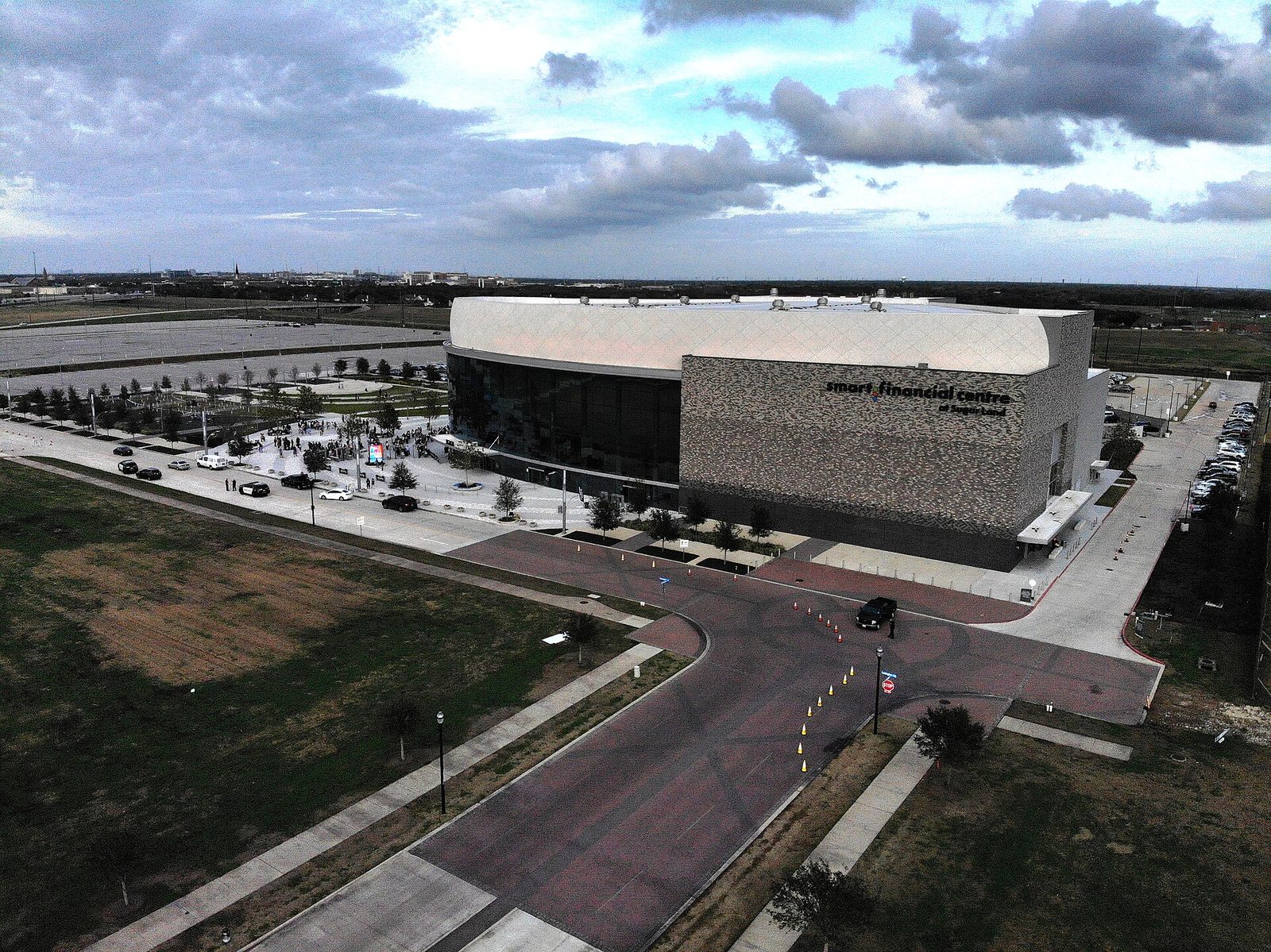
Smart Financial Centre (photo by Ed Uthman, CC BY 2.0). Large performances, baseball, children's exhibits and a natural-science museum help make Sugar Land more than a bedroom suburb.
Shopping, dining and Asian groceries
First Colony Mall, Sugar Land Town Square and the Highway 6 corridor form the main shopping and dining belt. For Asian groceries, 99 Ranch Market, Jusgo, Welfresh/Inside Supermarket and nearby Chinese restaurants, hot pot, bakeries and services create a workable local routine. Bellaire Chinatown still offers greater density, but not every weekly errand requires that drive. Mainstream options include H-E-B, Whole Foods, Costco and Trader Joe's.
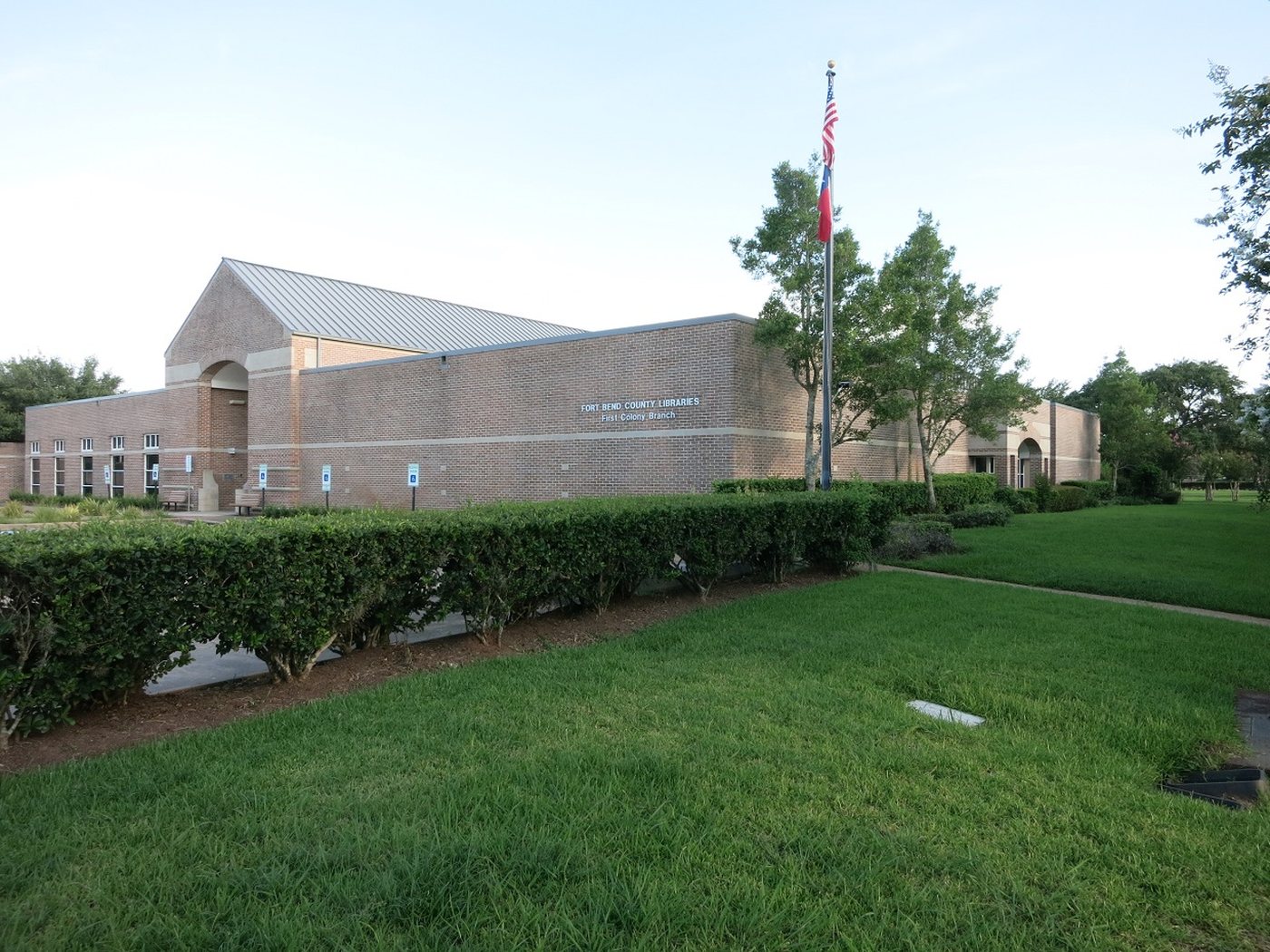
First Colony Library (photo by Djmaschek, CC BY-SA 4.0). Libraries, community centers, fields, parks and after-school routes often shape daily time more directly than the statement that a mall is nearby.
I do not judge amenities by counting pins on a map. From a candidate address, I test a weekday evening grocery run, a weekend park trip and the drive home after children's activities. A city can have an amenity without it being convenient from every side of town.
6. Price range and recent sales
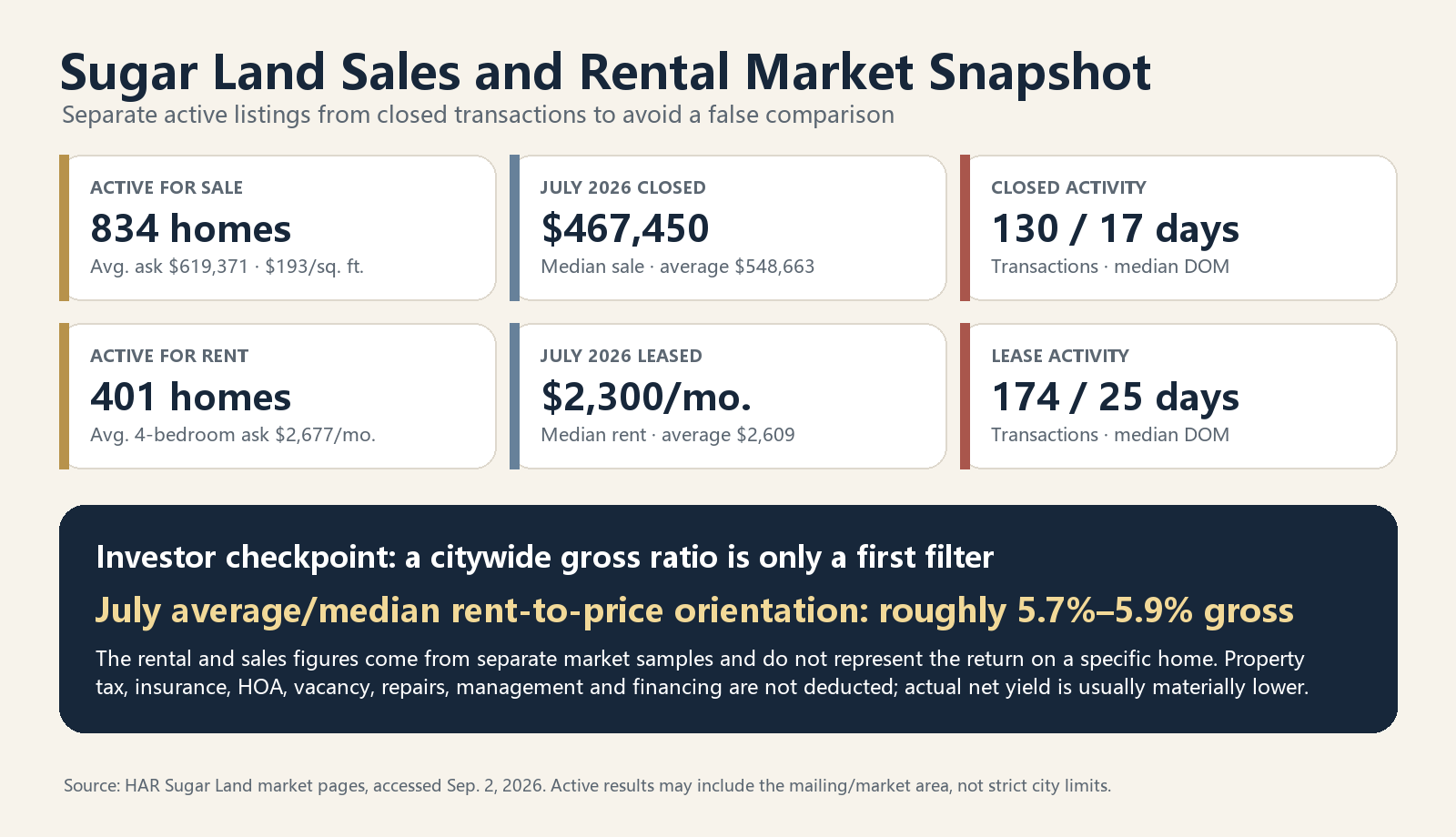
On September 2, 2026, HAR's Sugar Land search showed about 834 homes for sale, an average asking price near $619,371 and roughly $193 per square foot. It also showed about 401 rentals, with four-bedroom asking rent averaging about $2,677 per month. Inventory moves continuously, and a luxury tail can pull the average asking price upward.
A same-day HAR price sort showed the lowest overall result near $85,000 as land; visible entry examples included a single-family home near $185,000 and a condo near $189,000. The top visible single-family listing approached $6,998,800. That does not make the “normal range” nearly $7 million wide. It means land, condos, small older homes, standard detached homes and custom estates should never be blended into one average. HAR city/mailing-area results are not a strict municipal-boundary test.
A more useful price ladder
Below $250,000: scarce supply, often land, condos, smaller homes or properties with meaningful condition issues; verify HOA, insurance, structural risk and resale liquidity.
$300,000–$500,000: many three- and four-bedroom choices in mature areas enter this band; age, renovation quality, tax rate and school assignment create large value differences.
$500,000–$800,000: more size, updates, pools or sought-after sections may become available, but a neighborhood name alone does not establish value.
$800,000–$1.5 million: larger lots, custom homes and upper-tier products become more common, along with higher roof, pool, maintenance and insurance exposure.
$1.5 million and above: luxury and special-purpose homes; current outliers approach $7 million and follow a different marketing and absorption cycle from ordinary housing.
Closed sales are the better grounding point. HAR recorded 130 sales in July 2026, with a $467,450 median, $548,663 average and 17-day median DOM. The July 2025 median was $500,000, making the latest year-over-year median about 6.5% lower. A mature, highly rated suburb can still correct; rankings do not replace comparable-sale analysis.
7. Rental and investment math
Using the separate July 2026 citywide sale and lease averages or medians as a first filter produces a gross annual rent-to-price orientation of roughly 5.7%–5.9%. These are not matched-property samples and do not represent the return on any one home. Property tax, insurance, HOA, vacancy, repairs, management and financing can reduce the actual net yield materially.
At broad averages, Sugar Land is not usually an easy high-cash-flow market. A more defensible thesis is to buy at the right basis, protect against major capital repairs, choose a location with durable commute and school-route demand, confirm leasing rules, and preserve resale appeal to owner-occupants. Appreciation is never guaranteed, and short holding periods can allow transaction costs to erase gains.
Potential long-term rental demand can come from local healthcare, engineering, energy and professional-service jobs, plus commuters to the Medical Center, Galleria, southwest Houston and other Fort Bend employment nodes, corporate relocations and households seeking stable long-term housing. Rental marketing and tenant selection must follow fair-housing requirements and should never target or exclude protected classes.
Use actual comparable leases for the target home, not the citywide average rent.
Model property tax, insurance, HOA, at least a vacancy allowance, repair reserves and management before calling the deal cash-flow positive.
Check HOA rental caps, minimum lease terms and approval requirements.
Rental homes inside Sugar Land require a City Rental License and inspections; a Sugar Land mailing address outside the city can follow different rules.
Short-term rentals are allowed only in specific zoning districts with a Conditional Use Permit. Do not buy first and assume Airbnb use later.
Underwrite the exit price for both owner-occupant and investor demand without treating future appreciation as certain.
8. Flood, taxes, insurance and home age
Flood due diligence should go beyond a single map letter or a seller saying the home never flooded. Review FEMA and City flood maps, Atlas 14, site elevation, drainage path, levee or LID information, seller disclosures, claim history and a flood-insurance quote. Zone X is not zero risk, and intense rainfall can still produce street ponding or drainage problems.
The City 2025–2026 municipal property-tax rate is $0.358827 per $100 of value, but the total bill can also include Fort Bend County, the school district, drainage and LID or other units. Do not treat the City rate as the total rate or simply copy the seller exemption-adjusted bill.
Mature neighborhoods can offer established trees, lots and locations, but roofs, HVAC, plumbing, windows, pools, foundations and insurance eligibility require closer review. Newer areas can carry higher HOA costs, special-district taxes or smaller lots. Purchase price is only one part of the first-year budget.
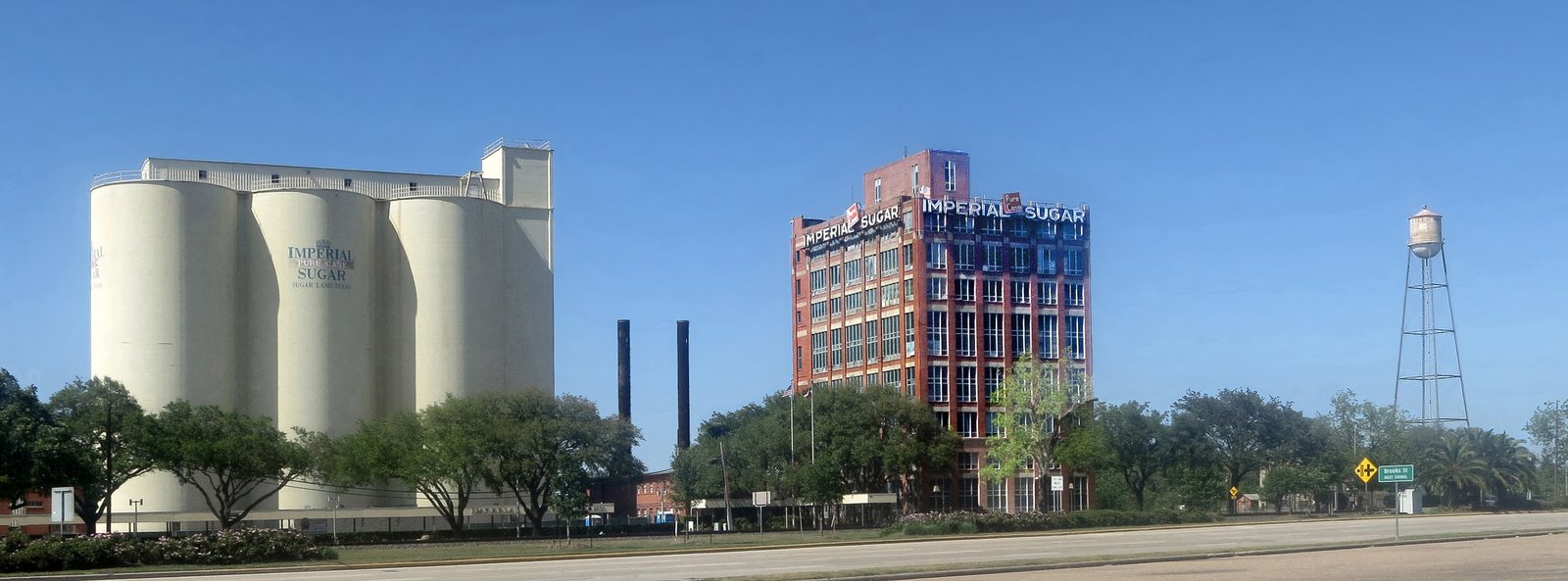
The historic Imperial Sugar refinery area (photo: Jim Evans, CC BY-SA 4.0). The Sugar Land story includes mature neighborhoods, industrial-site redevelopment and newer commercial growth, each with different effects on traffic, views and long-term use.
9. Income, work and resident profile
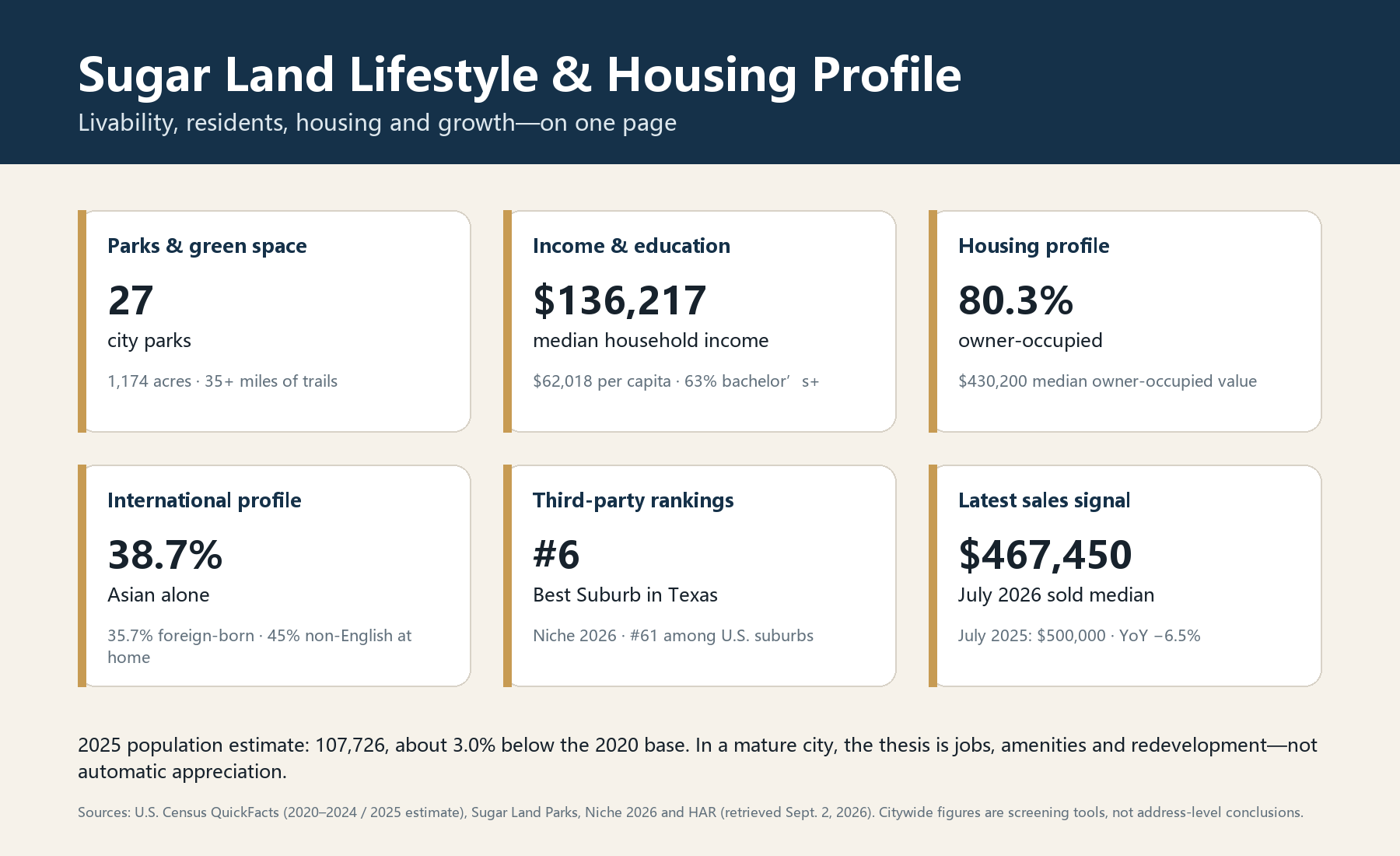
U.S. Census QuickFacts for 2020–2024, in 2024 dollars, reports a $136,217 median household income, $62,018 per-capita income, a 63.0% bachelor's-or-higher rate among adults 25+, 80.3% owner occupancy and a 28.9-minute mean commute. City economic-development materials put median age near 42.
The occupation mix is strongly professional. The 2024 ACS estimates about 60.8% of employed residents work in management, business, science and arts occupations. Local and regional demand includes healthcare, professional and technical services, engineering, energy, education, manufacturing, sales and finance. These citywide facts describe an employment base; they should never be used to assume the characteristics of a household or neighborhood.
Sugar Land is also highly international: 38.7% of residents identify as Asian alone, 35.7% are foreign-born and 45.0% speak a language other than English at home. That helps explain mature Asian groceries, dining and multilingual services. It does not tell a buyer where they should live.
10. Livability and growth potential
Niche's 2026 rankings place Sugar Land #6 among Texas suburbs and #61 among U.S. suburbs. Rankings can help with an initial screen, but they combine public data and user reviews. The same page gives Sugar Land a much less favorable cost-of-living rank, so “highly ranked” should not be read as “affordable” or “guaranteed to appreciate.”
The population trend also deserves an honest reading. Census estimates 107,726 residents in 2025, about 3.0% below the April 2020 base. Sugar Land is a mature city. Its forward case rests more on high-income employment, healthcare and life sciences, US-59/Highway 6 access, redevelopment around Imperial and established commercial and entertainment demand—not a greenfield population boom.
Track development in four stages: proposed, approved, under construction and delivered. For an owner-occupant, ask whether it improves daily services or adds traffic. For an investor, ask whether jobs are actually being added, whether tenants pay for the location and whether new supply will cap rent. Development potential is not an appreciation promise.
11. Why choose it—and why not?
Common reasons to choose it
Established daily life: schools, healthcare, libraries, parks, shopping, dining and entertainment already exist.
Balanced southwest location: usable routes to Bellaire Chinatown, southwest Houston, the Galleria and Texas Medical Center, plus meaningful local employment.
A wide housing spectrum: condos and older homes through newer master-planned sections, custom homes and estates.
An international routine: Asian groceries, multilingual services and diverse dining within a conventional Houston-suburban setting.
Tradeoffs to accept
It is not a low-cost market; price, property tax, insurance, HOA, pools and older-home repairs combine into the carrying cost.
Most trips still depend on a car, and peak conditions on US-59, Highway 6 and University Boulevard vary sharply.
Mature neighborhoods require careful review of plumbing, roof, HVAC, foundation and insurability—not just finishes.
City limits, mailing address, school district and community branding often do not align; two “Sugar Land” listings can carry different schools, taxes and flood context.
This is a mature city, not a low-base growth frontier, and the latest sold median showed a year-over-year pullback.
12. A Chinese-language buyer perspective
For many buyers who value Chinese-language access and Asian food and grocery options, the advantage is not a label such as “Chinese enclave.” It is a fairly complete routine: groceries, dining and multilingual services in town; a short drive to the greater density of Bellaire Chinatown; and access to Fort Bend schools, healthcare, parks and suburban housing.
I would not use that fact to identify a neighborhood for a particular ethnicity. The useful comparison is the time from an address to work, assigned schools, groceries, parents' medical appointments and weekend activities, plus taxes, insurance and repair exposure. Daily routines belong in the analysis; protected characteristics do not belong in housing steering.
13. Who is Sugar Land right for?
Stronger fit: owner-occupants who value mature amenities and parks, want access to Asian daily-life options, commute toward Sugar Land/southwest Houston/the Galleria/Medical Center, and can evaluate older homes and total carrying cost.
Address-by-address fit: investors, buyers prioritizing high cash flow, tight budgets tied to a particular school path, or fixed peak commutes to north or east Houston.
Potentially lower priority: buyers who only want brand-new homes on large lots, depend on walkability and transit, or need the investment story to rely on rapid population inflow.
If you share your budget, work location, children's grades, acceptable home age, owner-occupancy or rental plan and two or three candidate addresses, I can compare them on one sheet: peak route, assigned schools, total tax rate, flood and drainage, insurance, HOA, recent sales, achievable rent and likely resale pool.
For a complete ownership budget, continue with Houston homebuying costs beyond the mortgage payment.
Frequently asked questions
How far is Sugar Land from Houston Chinatown?
Using Town Square to Dun Huang Plaza as a consistent reference, the route is about 9.3 miles and 13 minutes without traffic; allow roughly 20–35 minutes at peak. Sugar Creek, Telfair and New Territory will each produce different results, so rerun the route from the actual home.
How many A-rated schools are in Sugar Land?
The current HAR Sugar Land mailing-address search shows 34 public or charter campuses: 17 A, 12 B, two C and three not rated or without a current score. That is not a zoned-school list for any one home. Confirm the exact address and current boundary with the district.
What is the typical Sugar Land home price now?
HAR's July 2026 sold median was about $467,450 and average about $548,663. On September 2, active results ranged from land near $85,000 and a visible single-family example near $185,000 to a luxury outlier approaching $7 million. Most buyers should compare separate product bands—below $250,000, $300,000–$500,000, $500,000–$800,000, $800,000–$1.5 million and above $1.5 million—instead of relying on one citywide average.
Is Sugar Land a good rental-property market?
It can be, but every property needs its own underwriting. The citywide gross rent-to-price orientation is roughly 5.7%–5.9% before taxes, insurance, HOA, vacancy and repairs. City licensing, HOA leasing rules and short-term-rental zoning also matter.
About Joyce Tang

Joyce Tang is a Greater Houston real estate agent and investor, co-founder of the North American Real Estate Association, founder of JoyHome & JoyNest, and co-leader of the Dr. Wang Real Estate Team, brokered by eXp Realty LLC.
She has helped more than 200 families buy or sell homes and has participated in more than 40 renovation projects. Her approach examines not only price, but also location, carrying cost, cash flow, risk and future exit options.
Sources and disclaimer
Population, income, housing, education and commute: U.S. Census Bureau QuickFacts—Sugar Land (2020–2024 ACS and 2025 population estimate).
Occupation structure: U.S. Census Bureau 2024 ACS S2401; employment and industry context from Sugar Land Economic Development.
Parks and facilities: City of Sugar Land Parks & Recreation; cultural, shopping and recreation destinations from Visit Sugar Land.
Livability rankings: Niche 2026 Sugar Land rankings. This is a third-party ranking, not government certification or an investment forecast.
Listings, sales, rentals and price range: HAR Sugar Land market search and price-trend pages, retrieved September 2, 2026. Live inventory, prices and school information change.
This article provides general real-estate and area information, not investment, tax, insurance, legal or school-admission advice. Citywide averages do not replace address-level due diligence. Confirm boundaries, school assignment, taxing entities, flood and drainage, insurance, HOA, property condition and rental rules with the relevant current sources and professionals.