
My answer is yes—but the easy version of the trade is over. Houston still has real industrial demand, and the latest leasing numbers are strong. That does not mean every warehouse is a good investment. The opportunity has shifted from “buy industrial and wait” to choosing the right building, tenant, corridor and exit plan.
The report behind this article covers bulk distribution buildings of at least 200,000 square feet. That definition matters. Its numbers should not be applied to a 20,000-square-foot owner-user building, a small-bay project or a specialized manufacturing facility.
What the national big-box data is actually saying
The U.S. bulk distribution report from CoStar, using data through Q2 2026, showed a 9.6% national vacancy rate, 3.5% year-over-year asking-rent growth, 206 million square feet of trailing-12-month net absorption and 280 million square feet under construction. Supply had exceeded demand from mid-2022 through mid-2025, but absorption began moving ahead of new supply in the second half of 2025.
The market is healing, but it is not fully tight. The median time required to lease vacant big-box space had stretched to 11.7 months, and roughly 11% of big-box availability was being marketed for sublease. For an owner, that means carrying time, tenant-improvement dollars and leasing commissions still need to be underwritten conservatively.
Houston looks better on vacancy—but weaker on rent growth
Within the same 200,000-plus-square-foot category, Houston bulk vacancy was 8.4%, below the 9.6% national level. Houston recorded 14.14 million square feet of net absorption over 12 months, while 15.31 million square feet remained under construction. Asking rent was $7.59 per square foot NNN, and year-over-year rent growth was negative 7.5%.
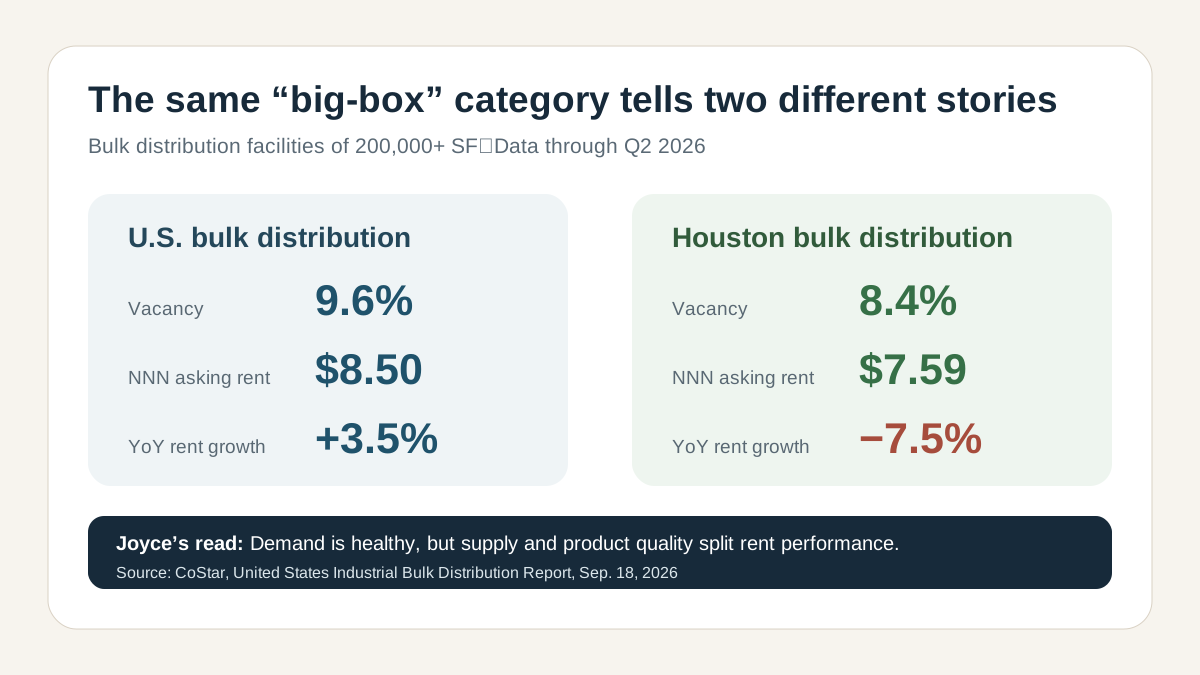
That combination is the most useful part of the report. It tells me Houston can have solid tenant demand and still have weak rent growth when new product gives users more choices. A landlord may fill a building, but the economics can still disappoint if the lease requires heavy concessions, a long downtime or an aggressive starting rent that the market will not support.
The latest quarter looks better
The Q3 2026 Lee & Associates Houston industrial distribution report showed a stronger local balance. Quarterly net absorption reached 10.0 million square feet, year-to-date absorption reached 23.1 million square feet and moved ahead of 21.4 million square feet of deliveries. Direct vacancy declined from 6.4% to 5.2%, while the construction pipeline moderated to about 13.5 million square feet.
I would read this as an improvement, not as permission to ignore risk. The Houston row from CoStar and the market report from Lee use different building universes and methodologies. Their vacancy and rent figures should not be forced into a single trend line. What they do agree on is more important: tenant demand is real, the new-supply wave is being absorbed, and results vary sharply by building type and location.
Why Houston still has a demand base
Port activity remains steady rather than explosive. The August 2026 public-terminal report from Port Houston showed 373,756 TEUs for the month, up 1% from a year earlier. Loaded imports were up 5% year to date, while August steel tonnage increased 49% year over year even though year-to-date steel tonnage remained lower. Energy, petrochemical, construction, consumer-goods and manufacturing flows create several sources of industrial demand instead of relying on one industry.
That diversity helps Houston, but location still decides which demand a building can capture. Southeast Houston benefits from port access and major logistics users. Northwest Houston serves distribution and population growth. Manufacturing users may care more about power, cranes, yard depth and specialized improvements than proximity to a container terminal.
Houston industrial is not one market
This is where headlines can become dangerous. Colliers reported only a 2.3% vacancy rate for Houston manufacturing space in its 2026 manufacturing report, while broader industrial reports showed materially higher vacancy. The difference is not a contradiction; it is a reminder that bulk distribution, manufacturing, small-bay and owner-user buildings serve different tenants.
1. Modern large facilities can win demand—but the tenant pool is narrow
Nationally, buildings completed in the last five years captured nearly all recent big-box absorption, especially properties with clear heights of 36 feet or more. The trade-off is concentration: a very large building may fit a national user well, but there are fewer replacement tenants if that user leaves.
2. The 200,000-to-500,000-square-foot range deserves extra discipline
The national report identified a heavier supply overhang in this size band. I would not assume that a smaller big-box property is automatically safer. I would test how many local users need that exact block size, how much competing space is available and whether the building can be divided efficiently.
3. Older buildings need a real plan, not a vague value-add story
Older facilities can trade at a lower basis, but lower clear height, limited trailer parking, obsolete loading, weak power or aging roofs can shrink the tenant pool. A value-add plan only works when the physical changes, downtime, permits and leasing costs have been priced—not when “renovation” is just a line in a spreadsheet.
Where I see potential—and where I would be careful
Stabilized modern distribution: attractive when the tenant, lease term and replacement-rent assumptions are strong, but pricing can leave little room for error.
Owner-user property: operational value can matter as much as investment yield, especially when the building solves a business need that leased alternatives cannot.
Small-bay or multi-tenant industrial: a broader tenant pool may reduce single-tenant rollover risk, but management intensity, turnover and deferred maintenance can be higher.
Specialized manufacturing: tighter vacancy can support value, but the improvements may be difficult to reuse and environmental, power or permitting issues require deeper due diligence.
Older bulk warehouse: the discount is meaningful only if the building remains functional or can be repositioned at a cost the market will pay back.
Related: How I evaluate a real estate development when the plan breaks
What I would verify before buying
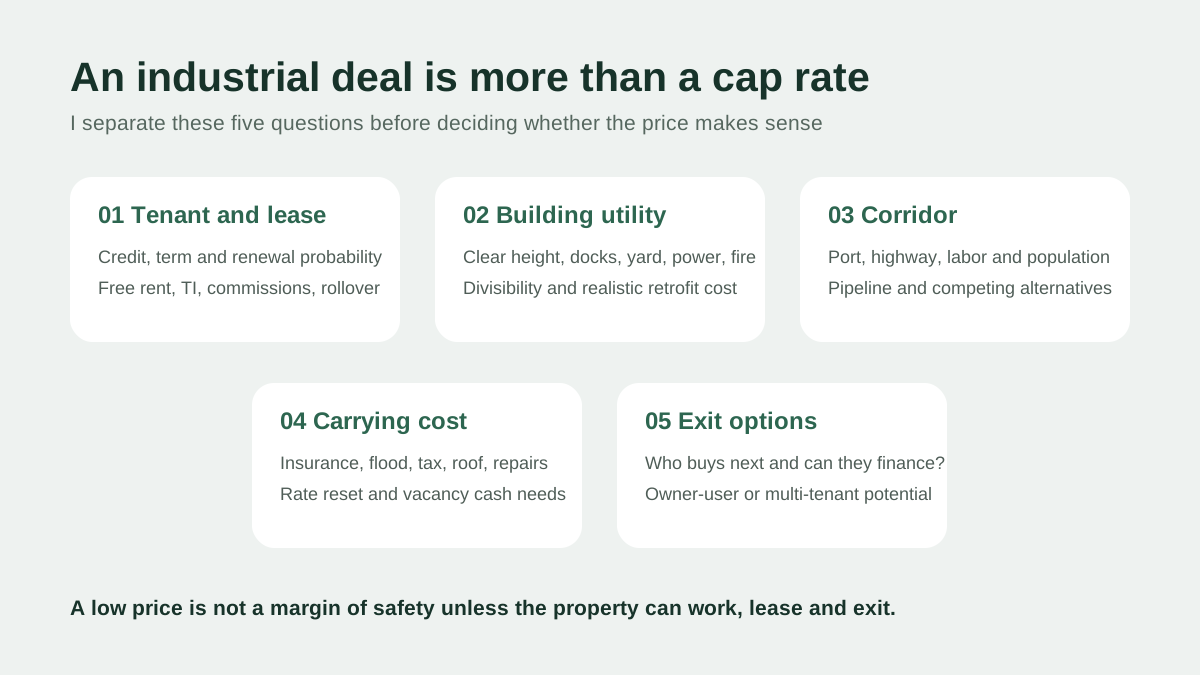
Tenant and lease: credit, remaining term, options, renewal probability, rent steps, free rent, tenant improvements, commissions and rollover concentration.
Building utility: clear height, loading ratio, truck court, trailer parking, power, sprinklers, office percentage, yard rights and whether the space can be divided.
Corridor: port and highway access, labor, nearby population, competing projects, infrastructure constraints and the exact users active in that submarket.
True carrying cost: taxes, insurance, flood exposure, roof and pavement condition, utilities, maintenance, interest-rate reset risk and cash required during vacancy.
Exit: the likely next buyer, lender appetite, owner-user demand, replacement cost and whether the property has more than one realistic use.
I also normalize the rent. Face rent is not economic rent if the landlord gives long free-rent periods, large tenant-improvement allowances or above-market commissions. The cap rate only becomes meaningful after those costs and near-term capital needs are included.
Related: What commercial-property owners should prepare before selling
My takeaway
Houston industrial real estate still offers opportunity, but the citywide story is no longer enough. Demand is absorbing new supply, and the latest quarter is encouraging. At the same time, weak bulk-rent growth and long lease-up periods show why a good market can still produce a bad deal.
I would rather buy a building with clear utility, defensible rent and several exit options than chase the highest advertised cap rate. A low price is not a margin of safety unless the property can work, lease and exit.
FAQ
Does the 8.4% Houston bulk vacancy mean the market is oversupplied?
It means the 200,000-plus-square-foot bulk segment still had meaningful availability in Q2 2026. It does not describe every industrial building in Houston. The latest Q3 distribution data also showed improving vacancy, so a decision should use the current submarket, size and competing inventory for the property.
Is a newer warehouse always a better investment?
No. Newer buildings usually offer better clear height and operating efficiency, but the purchase price, taxes and competing new supply may be higher. The right comparison is total basis, achievable economic rent, tenant demand and exit liquidity.
Should I buy the property with the highest cap rate?
Not without understanding why the cap rate is high. It may reflect a short lease, weak tenant credit, deferred maintenance, specialized improvements, rollover risk or an overstated rent. Rebuild the income and capital-cost assumptions before comparing deals.
Sources and scope
Primary source: CoStar, United States Industrial Bulk Distribution Report, dated September 18, 2026, with data through Q2 2026. Local updates: Lee & Associates Houston Q3 2026 Industrial Distribution Report; Port Houston August 2026 public-terminal performance; and Colliers 2026 Houston Manufacturing Report. Metrics are not directly comparable when building size, property type, geography or rent methodology differs.
Joyce's Featured Listings

If you want to compare current real estate opportunities with your budget and risk tolerance, View Joyce's Featured Listings. The page is a general starting point and does not imply that industrial properties discussed in this article are currently offered there.
Evaluating a Houston industrial property?
Send me the property address, asking price, current rent roll, your intended use and expected holding period. I can help you frame the real-estate questions, compare the submarket and identify the items that need specialist review before you commit.
About Joyce Tang

Joyce Tang is a Greater Houston real estate agent and investor, co-founder of the North American Real Estate Association, founder of JoyHome and JoyNest, and co-leader of the Dr. Wang Real Estate Team.
She has helped more than 200 families buy or sell homes and has participated in more than 40 renovation projects. Her approach examines not only price, but also location, carrying cost, cash flow, risk and future exit options.
Disclaimer: This article is general market commentary, not an appraisal, investment recommendation or guarantee of rent, occupancy, appreciation or return. Industrial property data varies by source and methodology. Commercial buyers should verify leases, zoning, environmental conditions, engineering, insurance, taxes and financing with the appropriate licensed professionals before making a decision.