
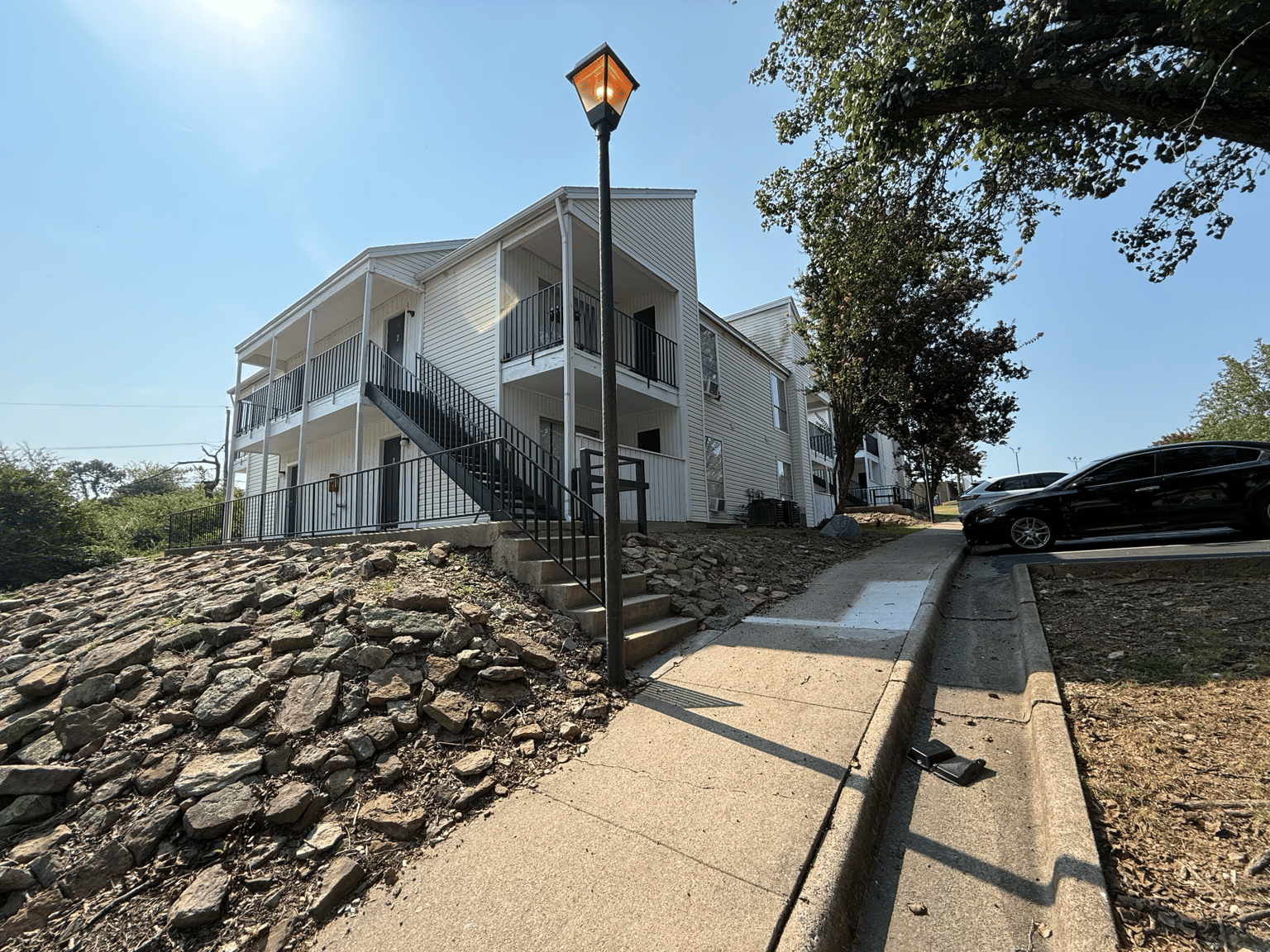
This story now has a complete answer: on October 14, 2026, our team closed on Towne Oaks Apartments, a 216-unit multifamily property in Little Rock, Arkansas. The seller had received a higher offer, but chose ours because we had already toured the property, accounted for visible repair and operating risks, and presented a price that appeared more likely to survive due diligence and reach the closing table.
The acquisition—nearly $10 million—moved from a competitive offer process through property review, due diligence, financing coordination and final closing. Receiving the keys is worth celebrating, but for an operating asset of this size, it also marks the beginning of the next phase.
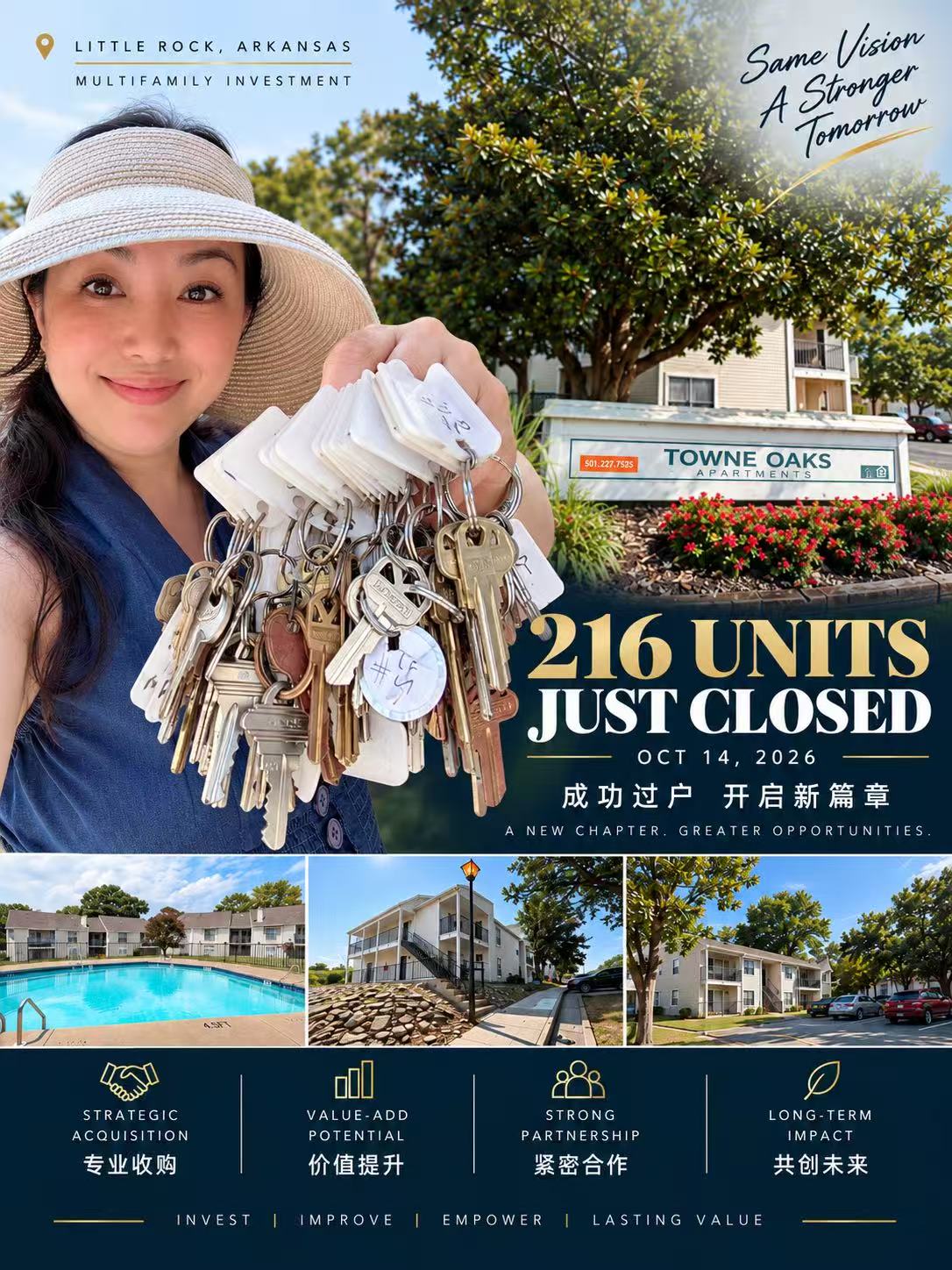
Joyce holding the property keys after the Towne Oaks Apartments closing on October 14, 2026.
Why did the seller choose our lower offer?
Another buyer offered more. If the decision had been based on price alone, we would not have had the advantage. We also did not want to raise our number simply to control the deal.
During our early property visit, we saw both value-add potential and meaningful repair needs. At 216 units, even a few thousand dollars of additional work per unit can become a major capital requirement across the property.
Before submitting our offer, we tried to reflect visible unit conditions, equipment needs, common-area work, future capital expenditures and operating risk in the acquisition model. We also explained a practical concern to the seller: a buyer who offers aggressively before understanding the property may later renegotiate after reviewing roofs, HVAC, plumbing, electrical systems, unit interiors and other repair items—or may fail to close.
The highest offer today is not always the price that reaches the closing table.
Our offer was lower, but it was supported by site work and preliminary underwriting. The seller considered more than price, including financing, contract terms, due-diligence timing and execution. The October 14 closing turned that assessment of closing certainty into a completed result.
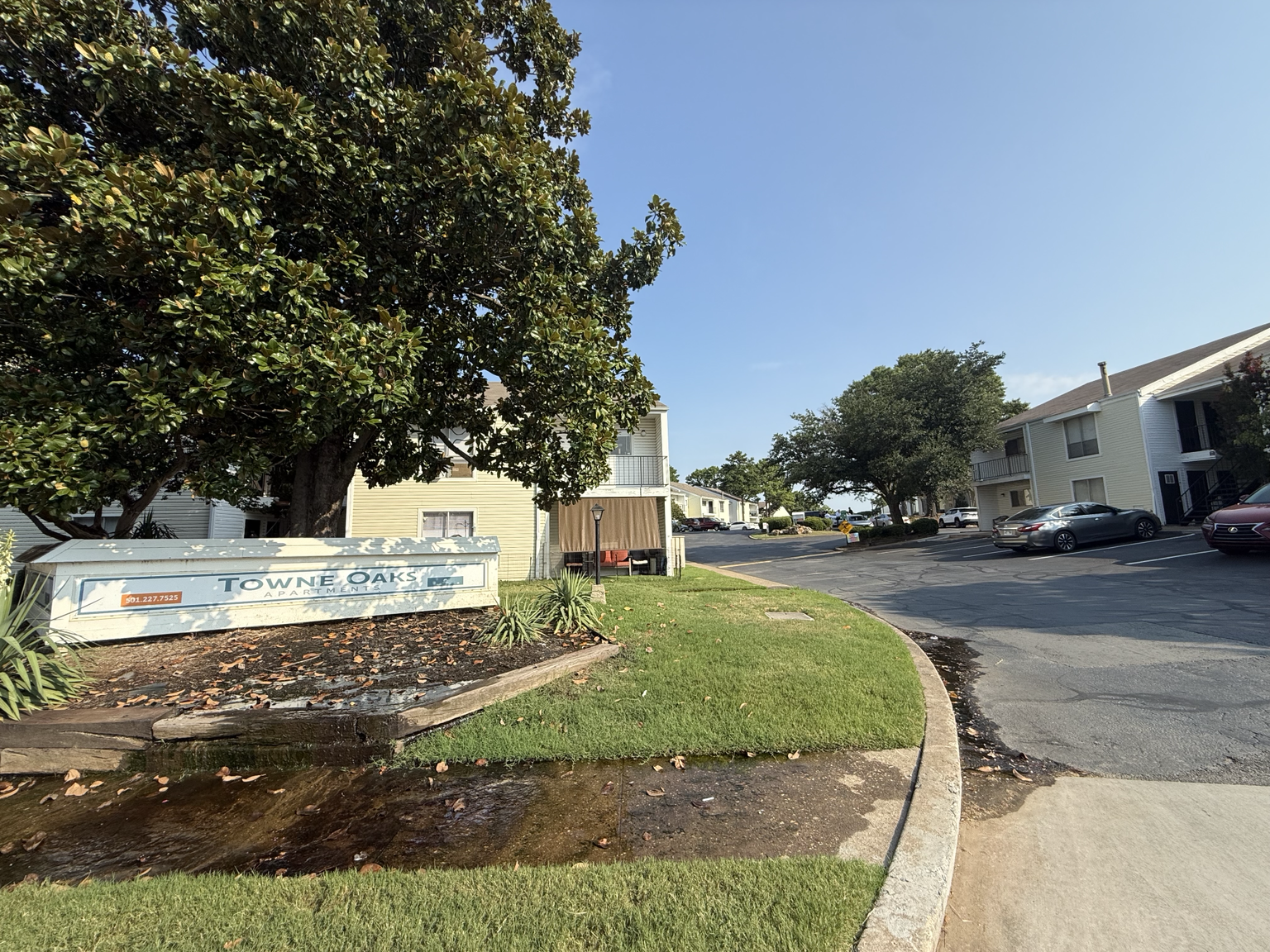
The Towne Oaks Apartments entrance and apartment buildings. For an acquisition of this size, observed property condition directly affects the repair budget and offer strategy.
A 216-unit apartment property is an operating business
Buying 216 units is not simply the same as buying 216 individual rental homes at once. A multifamily property is an operating asset. The buildings matter, but so do the income, expenses, repairs, financing and management systems that have to work together over time.
When I review a property like this, I want to understand several parts of the operating picture together:
- Current occupancy, actual collected rent, concessions and delinquency;
- Property taxes, insurance, payroll, management, utilities, repairs and other operating expenses;
- Near-term work involving roofs, HVAC, plumbing, parking, common areas and unit interiors;
- How loan terms, interest cost, cash flow and future capital needs affect the property's ability to perform;
- Whether local employment, income, rental demand and competing properties support the operating plan.
A low price per unit does not automatically make a property a good investment. The question is whether the asset still makes sense after realistic repair, financing, operating and capital costs are included.
Value-add is more than raising future rents in a spreadsheet
Towne Oaks fits a value-add multifamily strategy: the property has an operating base, but there may be room to improve physical condition, management efficiency or operating performance through disciplined repairs, renovations and management.
One common measure is NOI, or net operating income—the property's operating revenue minus normal operating expenses, before debt service, income taxes and capital expenditures. Commercial real estate value is often closely related to NOI and the capitalization rate.
Here is a simplified illustration only: if operating improvements increased annual NOI by $100,000 and the market capitalization rate were 6%, that income could theoretically correspond to about $1.67 million in value, assuming other conditions remained unchanged. Those numbers are not Towne Oaks operating results or a forecast.
Real value-add work is more demanding. Which units should be renovated first? Will actual renter demand support the improvement cost? Which expenses can realistically be reduced? Are the occupancy and rent assumptions defensible? The model is only the starting point; operations have to prove it.
Closing starts the operating phase
Before closing, the work focused on finding the opportunity, analyzing the asset, identifying risk, setting the price and moving the transaction forward. After closing, the priorities shift to repair sequencing, capital budgeting, resident experience, occupancy, revenue and operating expenses.
A 216-unit property does not become more valuable simply because ownership changed. Every improvement requires capital, management and execution. I view real estate investing as two separate abilities: buying the right asset and operating it well. The first sets the starting point; the second shapes the long-term result.
I have previously participated in 114-unit and 124-unit multifamily projects, in addition to renovation work and residential and commercial transactions. The Towne Oaks acquisition is a larger operating challenge and another reminder that projects of this scale depend on a team across market analysis, negotiation, due diligence, financing, legal work, title, closing and property management.
I plan to continue documenting what happens after acquisition: which improvements work, which tasks prove harder than expected, and how actual operations compare with the original underwriting. Those results will be more useful than a polished acquisition story alone.
Frequently asked questions
Does a commercial real estate seller always choose the highest offer?
No. Price matters, but sellers may also consider financing, contract terms, due-diligence periods, closing timing and the buyer's ability to execute. A high offer that is repeatedly renegotiated may be less dependable than a price supported by early property work.
Can a 216-unit property be analyzed like 216 rental houses?
Not by unit count alone. A large multifamily property must be evaluated as an operating asset, including occupancy, collected income, expenses, physical condition, capital needs, financing and local rental demand.
Does closing mean the investment is already successful?
No. Closing completes the acquisition stage. Repairs, management, leasing, insurance, financing and market conditions will continue to affect performance and require ongoing execution.
Joyce's Featured Listings

AI-generated illustration of Greater Houston homes and skyline; it does not depict a specific real or currently available listing.
After reading how a large multifamily acquisition was evaluated, you can also explore Joyce's Featured Listings to see the range of residential opportunities currently presented across Greater Houston. Availability and pricing change, so rely on the latest information shown on the listings page.
View Joyce's Featured Listings →
Are you evaluating a multifamily or commercial property?
Send me the property type, city, approximate size, budget range and the questions you most need to verify. I can discuss the screening, site review, repair budget, operating model and due-diligence issues that typically matter before a decision.
Contact Joyce about the property →
About Joyce Tang

Joyce Tang is a Greater Houston real estate agent and investor, co-founder of the North American Real Estate Association, founder of JoyHome and JoyNest, and co-leader of the Dr. Wang Real Estate Team.
She has helped more than 200 families buy or sell homes and has participated in more than 40 renovation projects. Her approach examines not only price, but also location, carrying cost, cash flow, risk and future exit options.
Written by Joyce Tang based on her experience with the Towne Oaks Apartments acquisition and closing.
Disclaimer
This article shares the experience of the Towne Oaks Apartments acquisition, which closed on October 14, 2026, and provides general real estate information. The NOI and capitalization-rate example is for explaining a valuation concept only; it is not actual project data or a forecast. This article is not investment advice, a return promise, an offer to sell securities or a solicitation to invest. Multifamily investments involve market, financing, insurance, repair, operating and liquidity risks. Consult appropriately qualified professionals for investment, securities, legal, tax and lending questions.