

There is no single right order for every household. Selling first is usually safer when the down payment and closing funds depend on the current home’s net proceeds. Buying first can create a smoother search and move only when the lender confirms qualification with the existing home still owned and the household has enough cash to absorb an overlap.
The real choice is which risk you can carry: temporary housing, two homes at once, or a less competitive purchase offer because it depends on selling another property. Decide before the current home is listed and before an offer is written on the next one—not after two contract clocks are already running.
A common move-up scenario
A family finds the next home before the current one is ready to list. The early preapproval assumed sale proceeds for the down payment, while the new-home seller wants an offer without a home-sale contingency. The current home still needs preparation, photography and repairs.
If the family simply tries to secure the new home first, it may learn that the down payment is not available yet or that the existing mortgage remains in underwriting calculations. If the family rushes to sell first without a housing plan, it may feel forced to buy whatever is available before possession is due.
Run three stress tests before choosing the order
1. Can the new loan close before the current home sells?
Ask the lender to evaluate two scenarios: the current mortgage remains, and the current home is pending or sold. Do not rely only on the maximum price in an early preapproval. Confirm how the existing mortgage, property taxes, HOA, insurance, other debts and projected new payment enter the analysis.
Freddie Mac’s Uniform Residential Loan Application instructions classify existing real estate as Sold, Pending Sale or Retained and call for related mortgage information. The lender, loan program and underwriter determine how the file will be treated and what evidence is required. See the Freddie Mac URLA instructions.
2. Where will the down payment and closing cash come from?
Separate conservative sale proceeds, cash already available, emergency funds that should remain untouched, moving cost and temporary housing. The list price is not cash available for the next closing. Mortgage payoff, selling expenses, prorations, repairs and buyer concessions change the result. Build low, middle and high estimates with the Houston selling-cost and net-proceeds guide.
3. How long can the plan survive if one closing moves?
Coordinated closings look efficient, but buyer financing, appraisal, title, repair, insurance and document issues can move a date. Decide how cash, lodging, storage and movers will work if the current sale funds late or the next seller will not extend. A same-day plan without a Plan B is only a hope.
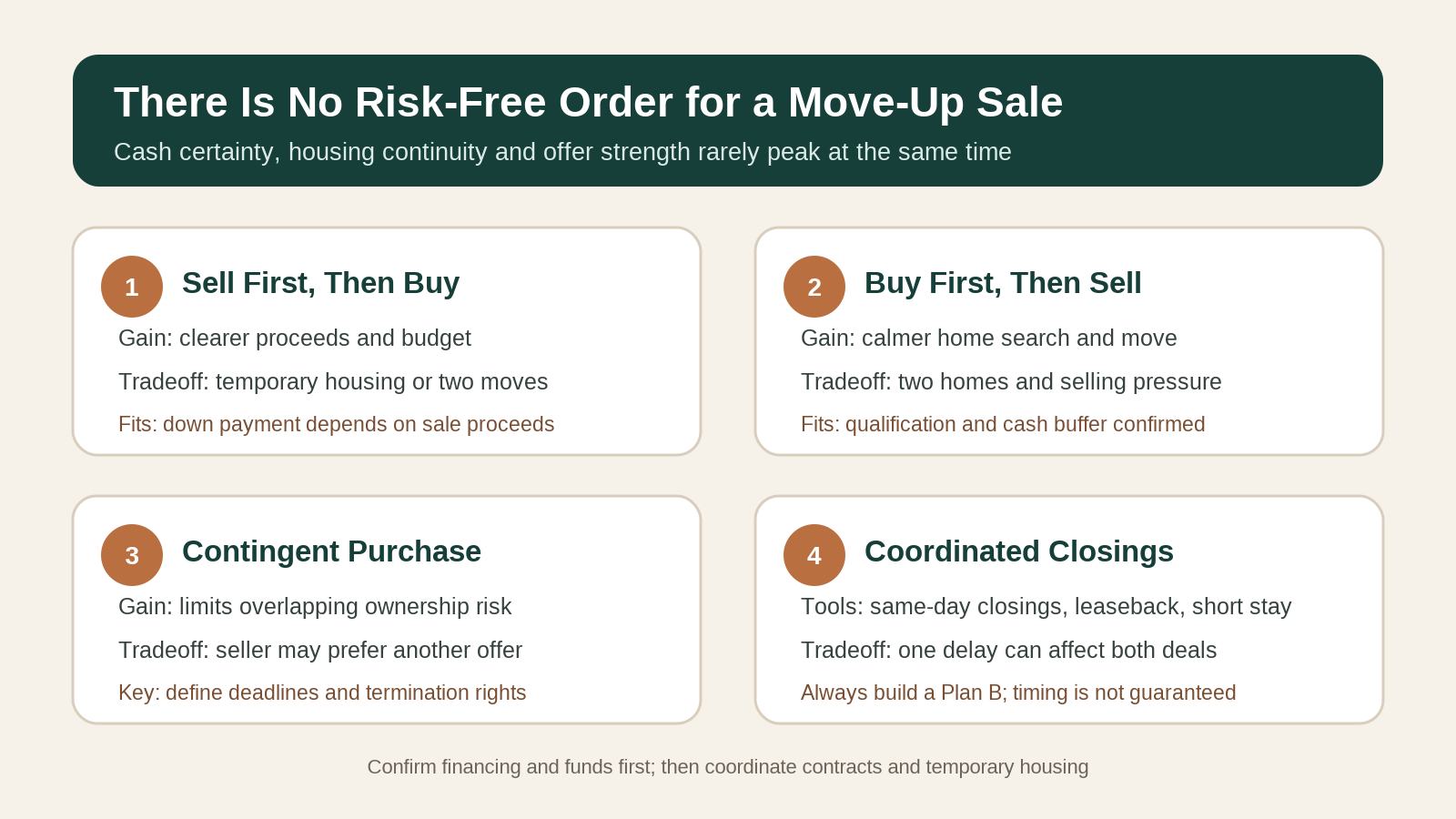
Four ways to coordinate the move
Path 1: sell the current home, then buy
This creates the clearest financial position. After the sale closes and funds, the seller knows the actual net proceeds and no longer needs to explain when the old mortgage will disappear. In a competitive purchase market, an offer without a home-sale contingency is also easier for the other seller to evaluate.
The tradeoff is housing continuity. The family may need a short-term rental, family stay, storage or a seller leaseback. After closing, a seller who remains is a short-term tenant of the new owner—not simply an owner who has not finished moving. The current Texas Seller’s Temporary Residential Lease form is for occupancy of no more than 90 days after closing. See the official TREC Seller’s Temporary Residential Lease page and the seller leaseback guide.
This path tends to fit when the next down payment comes mainly from sale proceeds, qualification requires the old debt to be resolved, the household can tolerate temporary housing, or the next-home search has flexibility.
Path 2: buy the next home, then sell
The main benefit is time. The family can purchase, prepare the new home, move and then present the old home without living through showings. That may work better around school, work, renovation or caregiving needs.
The risk is equally clear: mortgage, tax, insurance, HOA, utilities and maintenance may overlap. If the old home receives weak market feedback, carrying cost can pressure the seller into a faster reduction. Confirm how insurance changes when the former home becomes vacant or is no longer the primary residence.
This path fits only when the lender has evaluated the file with the current home unsold, cash for down payment and closing does not require immediate sale proceeds, and the household can withstand a slower or lower sale than expected.
Path 3: make the purchase contingent on selling the current home
This connects the purchase to the sale and can reduce prolonged overlap. For the seller of the next home, however, the offer adds a condition the seller cannot fully control. Whether the current home is merely listed or already under contract, the allowed timeline and any waiver mechanism will affect offer strength.
TREC publishes an Addendum for Sale of Other Property by Buyer to address this contingency. It includes deadlines and a possible waiver structure; this should not be reduced to a casual sentence saying “subject to selling my home.” See the official TREC form page. The license holder should use the applicable form, and custom rights or complex language belong with a Texas attorney.
To understand the other seller’s decision, read how a Houston seller evaluates a home-sale contingency offer.
Path 4: coordinate closings and use a short transition tool
The ideal sequence may be for the current home to fund first and the next purchase to close later that day. It may instead require several days plus a seller leaseback, short rental or moving-company storage. This can reduce overlap and repeat moves, but the two transactions become highly dependent.
A “same-day closing” does not mean the title company guarantees money by a specific hour. The current buyer’s loan must fund, and use of sale proceeds for the next closing must satisfy the lender and title company. Keep a backup for lodging, mover changes and extra cash.
A practical decision order
Ask the lender first whether the new loan can close with the current home unsold; do not build a buy-first plan around an uncertain answer
Trace the cash: if the down payment depends on sale proceeds, focus on selling first or a properly documented contingency
Choose the household risk: temporary housing and two moves, or the cost and pressure of owning two homes
Evaluate the next-home market: decide whether a contingent offer is realistic for the target property
Build the timeline last, with buffers for listing preparation, option, financing, title, closing and moving
Six common mistakes when two transactions are connected
Using the current home’s list price as the next down payment without subtracting payoff and sale costs
Relying on a generic preapproval that never evaluated retention of the current mortgage
Treating the estimated closing date as a guarantee
Negotiating only the leaseback length while ignoring rent, deposit, insurance, repairs, condition and default
Accepting the fastest old-home offer without weighing financing, option, appraisal and net proceeds
Using separate teams without one shared timeline for lender, title, agents and movers
Numbers to prepare before listing or writing the next offer
Conservative current-home value, mortgage payoff, estimated sale costs and low/middle/high net proceeds
Next-home down payment, closing costs, moving, short-term housing, storage and immediate repair budget
The number of months the household can carry the old home and the emergency reserve that stays untouched
The lender’s written requirements for property status, sale evidence, source of funds and closing order
The Plan A closing sequence plus at least one housing and cash Plan B
The CFPB recommends updating the projected total monthly payment, down payment, closing costs and interest-rate assumptions as the home search progresses instead of relying on the original budget. See the CFPB home-search guidance.
Frequently asked questions
If my current home is listed, will the lender remove that mortgage from qualification?
Not automatically. Active, pending and fully sold can be treated differently, and the lender may review contract conditions, expected proceeds, loan-program rules and underwriter requirements. Ask the actual lender to evaluate the real documents.
Can both homes close on the same day?
The teams can try to coordinate it, but it is not risk-free. The first sale must meet closing and funding conditions, and transfer of proceeds must meet title and lender requirements. Keep backup lodging, moving and cash plans.
Can a seller stay as long as needed under a leaseback?
No. Term, rent, deposit, insurance, maintenance, condition and default require written agreement. The TREC temporary form is for no more than 90 days; longer or more complex occupancy needs legal and insurance review.
What if I sell first and cannot find the right next home?
Set target areas, budget, must-haves and acceptable tradeoffs before listing, and prepare temporary housing. Avoid buying a poor long-term fit merely to escape a short-term move.
Joyce's Featured Listings

AI-generated illustration: a Greater Houston housing scene, not a real or currently available listing.
If you are modeling the order of a sale and purchase, browse Joyce's Featured Listings to see what the current Greater Houston budget range may include before estimating the required cash and timeline.
View Joyce's Featured Listings →
Not sure whether to sell first or buy first?
Send me the current property address, mortgage balance, target listing date, next-home budget, down-payment source and latest move date. I can organize a net-proceeds estimate and the four timeline paths; the lender, CPA, insurance professional and Texas attorney should confirm qualification, tax, coverage and contract rights.
About Joyce Tang

Joyce Tang is a Greater Houston real estate agent and investor, co-founder of the North American Real Estate Association, founder of JoyHome and JoyNest, and co-leader of the Dr. Wang Real Estate Team.
She has helped more than 200 families buy or sell homes and has participated in more than 40 renovation projects. Her approach examines not only price, but also location, carrying cost, cash flow, risk and future exit options.
Disclaimer
This article is based on public TREC, CFPB and Freddie Mac materials reviewed through November 1, 2026. It provides general Texas home-sale and move-up planning information, not lending, legal, tax, insurance or investment advice, and it does not guarantee loan approval, sale price or closing date. Loan qualification and fund requirements are determined by the lender and underwriter; contract rights by the signed documents and Texas counsel; tax and insurance questions by a CPA and licensed insurance professional.