
If a Texas home is damaged after it goes under contract, the seller generally still has a contract obligation to restore the property—but the first move is not concealment or a rushed permanent repair. Protect people and property, prevent additional loss, document the condition, report the claim promptly and let the listing agent coordinate the transaction response.
Whether the original closing can still happen depends on the extent of damage, insurance and repair timing, and the casualty-loss language in the signed contract. Significant damage may require a written extension, another agreement or a buyer decision under the contract.
A pre-closing problem that is easy to mishandle
The home is Pending and closing is ten days away. After a severe storm, the roof leaks and a primary-bedroom ceiling develops a water stain. Worried that the buyer will walk away, the seller wants to patch and paint first, then let the buyer deal with insurance after closing.
The concern is not cosmetic quality. Evidence may be lost, the insurer may need to inspect, the lender and buyer may require information, and the final walkthrough may turn a manageable loss into a disclosure, trust or default dispute.
First separate maintenance from transaction-level damage
A loose handle or burned-out bulb is not the same as a roof opening, fire, fallen tree or supply-line break that damages walls and flooring. Whether an event is a contractual casualty is not determined only by the repair estimate or by the seller’s label. Cause, scope, continuing damage, restoration timing and the actual contract all matter.
Even a smaller loss should be escalated when it could affect disclosure, insurance, financing, appraisal, repair promises or the final walkthrough. Contract rights need legal interpretation when the answer is not clear.
The first 24 hours after damage
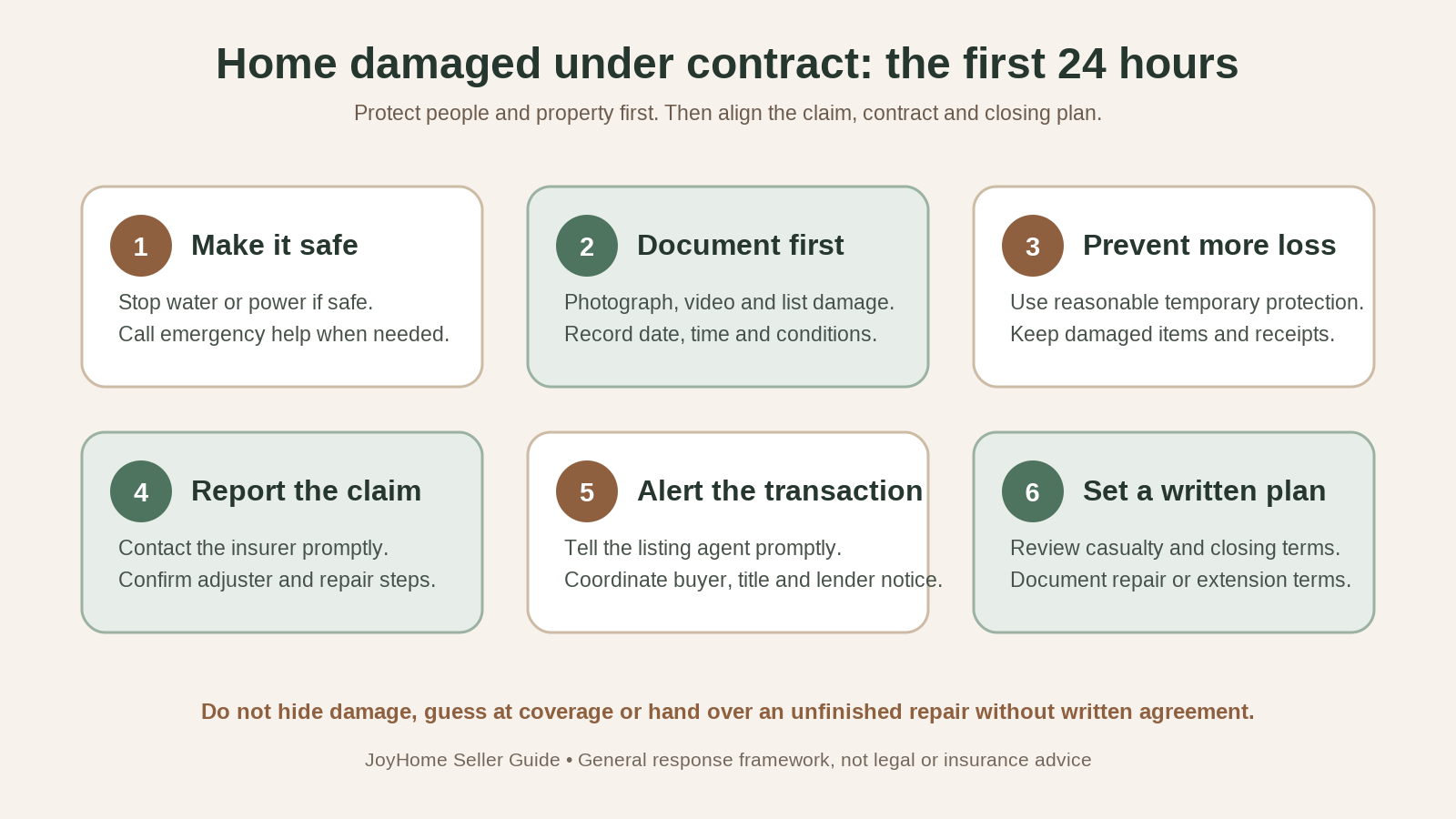
1. Address safety and active risk
Leave unsafe areas and call emergency services for fire, gas, electrical or structural danger. When safe, shut off the affected water or power and move items out of active water. Do not climb onto a wet or unstable roof.
2. Document before cleanup
Take wide and close photographs and video. Record when the damage was found, weather conditions, leak locations, standing water and affected materials. Preserve camera footage, initial vendor observations and earlier listing photos that show the prior condition.
3. Make reasonable temporary protection
Board a broken opening, tarp a roof, remove standing water or arrange emergency drying to stop additional loss. Preserve damaged materials and every receipt. Do not rush into permanent demolition or concealed repairs before the insurer confirms the inspection process.
4. Contact the insurer or insurance agent promptly
Texas Department of Insurance storm-claim guidance advises documenting damage, preventing further loss, retaining receipts and not discarding damaged items until the insurer gives direction. Coverage, deductibles, depreciation and payment handling depend on the seller’s policy.
5. Tell the listing agent promptly
Provide the event time, known scope, claim number, adjuster schedule and expected repair timing. The listing agent can coordinate notice to the buyer’s agent, title company, lender and appraisal participants instead of letting the buyer discover the issue at the final walkthrough.
6. Review the insurance and contract plans separately
What insurance agrees to pay is not automatically the full extent of the seller’s contract duty. What the contract requires does not guarantee insurance coverage. Track repair scope, contractor, invoices, deductible, closing date and buyer rights in one working plan.
What does the current Texas resale contract say about casualty loss?
As of this article’s review date, the TREC contracts page lists the One to Four Family Residential Contract (Resale) 20-19 as effective July 1, 2026. Its casualty-loss provision generally requires the seller to restore property damaged by fire or other casualty after the effective date to its previous condition as soon as reasonably possible and by the closing date.
If restoration cannot be completed because of factors beyond the seller’s control, the form lists possible buyer choices: terminate and receive the earnest money back; extend performance for up to 15 days with a corresponding closing extension; or accept the damaged property with an assignment of insurance proceeds if the carrier permits, plus a seller credit for the insurance deductible.
Two limits matter. Not every condition automatically follows the same path, and an assignment of insurance proceeds depends on the insurer’s permission. A seller should not reduce the provision to “I will give the buyer the insurance check and close.”
Can the seller repair first and tell the buyer later?
That is risky. The seller should prevent additional damage, but permanent work should follow documentation and insurer direction. The transaction also needs clarity on repair scope, licensed vendors, permits, invoices, reinspection and any written buyer agreement.
Repair does not erase knowledge of the loss. Whether the Seller’s Disclosure or listing information must be updated depends on the facts and documents. Read whether repaired problems still belong in a Texas seller disclosure and involve an attorney when the duty is uncertain.
Does an insurance claim automatically delay closing?
No. A contained loss may be inspected, repaired and documented in time. A larger scope, material shortage, lender re-review, updated appraisal or unresolved claim may make a written extension necessary.
A new closing date, repair obligation, credit, escrow holdback, insurance-proceeds treatment or possession plan should not rest on text messages. The lender and title company also must accept any proposed structure. Complex arrangements need attorney drafting or review.
If repairs cannot finish before closing, assemble these records
Date of loss and discovery, photographs, video and known cause
Claim number, adjuster contact, inspection and coverage decision
Temporary-protection invoices, receipts and site records
More than one written repair estimate, expected timeline and material availability
Permit, licensed-contractor and reinspection requirements when applicable
The contract, repair amendments, closing date and lender conditions
The deductible, mortgage-company involvement with claim checks and available seller funds
The file helps the parties evaluate timely restoration, an extension or another written structure the contract and transaction participants will accept. A single verbal estimate is rarely enough.
What will the final walkthrough focus on?
Whether the source stopped and moisture, odor, staining or structural concern remains
Whether work matches the written agreement instead of merely covering the surface
Invoices, permits, testing, warranties and photographs
Any new damage caused by repairs, utility interruption or move-out
Whether credits, extensions, insurance and unfinished work are documented
A new loss near closing should not be dismissed as the buyer creating a last-minute problem. Verify the facts and contract first. See what happens when a Texas final walkthrough finds a problem.
Eight common seller mistakes
Hiding the event because the seller fears losing the buyer
Discarding damaged materials before photographs and insurer direction
Completing permanent work without a confirmed claim and written transaction scope
Painting a stain without fixing the source, moisture and possible environmental concern
Trusting a contractor who offers to waive the deductible or demands full payment upfront
Treating an insurer estimate as the repair standard the buyer must accept
Agreeing verbally to an extension, credit or unfinished project without proper documents
Canceling insurance or utilities or stopping maintenance before closing
Frequently asked questions
Does the seller have to report a small leak?
Consider whether it changes condition, disclosure, repair promises, financing or the final walkthrough. A known new problem should not be intentionally concealed. The form and timing of an update depend on the facts and documents.
The insurer accepted the claim. Does that guarantee an on-time closing?
No. Repair completion, buyer and lender acceptance, title requirements and written contract terms still matter. Claim approval is one part of the closing plan.
If the buyer accepts the damaged home, is the seller finished?
Not automatically. Insurance rights, deductible credit, unfinished work and delivery condition must follow the contract and be accepted by the insurer and transaction parties. Attorney-prepared documents may be necessary.
Should negotiations use the insurance estimate or contractor bids?
Review both for different purposes. The insurer estimate reflects policy handling; contractor bids reflect proposed work and market cost; contract responsibility is a separate question. See how sellers should evaluate repair, price and credit requests.
Joyce's Featured Listings

AI-generated illustration: a Greater Houston housing scene, not a real or currently available listing.
After reviewing how pre-closing damage should be handled, browse Joyce's Featured Listings to see how current Greater Houston homes present condition and key property information.
View Joyce's Featured Listings →
Under contract and the property was suddenly damaged?
Send me the address, effective date, closing date, date of loss, photographs and claim status. I can help organize the immediate property steps, transaction notices and closing timeline, then direct coverage and legal questions to the appropriate professionals.
About Joyce Tang

Joyce Tang is a Greater Houston real estate agent and investor, co-founder of the North American Real Estate Association, founder of JoyHome and JoyNest, and co-leader of the Dr. Wang Real Estate Team.
She has helped more than 200 families buy or sell homes and has participated in more than 40 renovation projects. Her approach examines not only price, but also location, carrying cost, cash flow, risk and future exit options.
Disclaimer
This article is based on public TREC and Texas Department of Insurance materials reviewed through October 2026. It provides general seller-transaction and property-damage information, not legal, insurance, engineering, environmental, lending or title advice. It does not guarantee coverage, claim payment, repair outcome or an on-time closing. Duties, buyer rights, disclosure, extensions, assignment of proceeds and repairs depend on the signed contract, policy, lender and title requirements, and applicable law. Consult qualified legal, insurance and technical professionals for the property.