
When I compare two homes in the same Katy neighborhood, I ask where water can reach the house, where it collects in the yard and what happens on the road out. Even if the homes have the same FEMA zone designation, one might have a lower garage entrance or a pickup route that depends on a single low intersection.
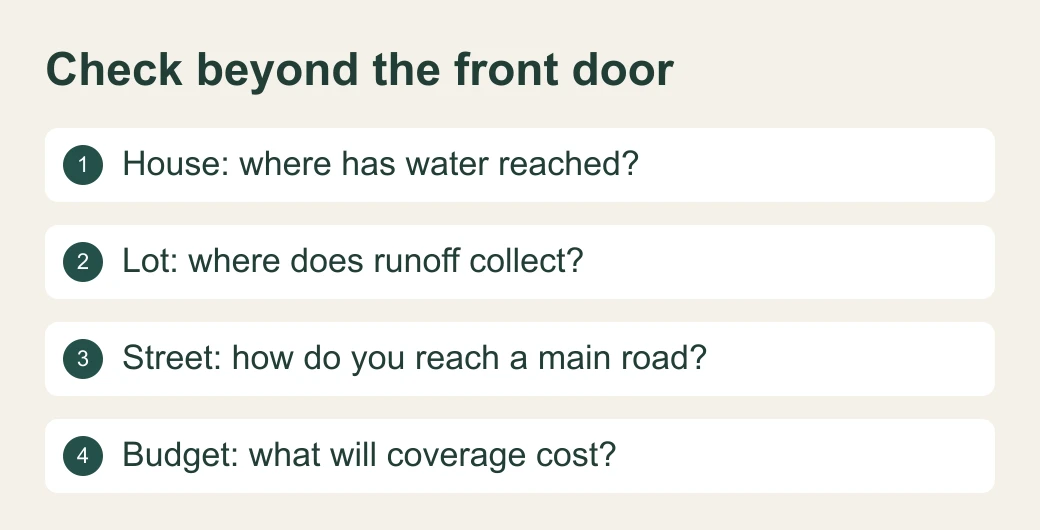
Start with the house and the exact parcel
Look up each address in the FEMA Map Service Center. Confirm that the pin matches the parcel and zoom in to see where the house sits on it. Save the effective map date and the zone. Depending on the county, you can cross-check with the Fort Bend County floodplain map or the Harris County flood mapping tool. When the line crosses the parcel or the building location is unclear, ask the local floodplain office or your lender how the structure should be evaluated.
Ask the seller which areas have taken on water, when it happened and how it entered. Write down street, yard, garage and living area separately. For any reported event, ask for available photos, repair invoices and permits. Record an unanswered question as unknown and ask your inspector to follow up.
At the showing, look at how water moves
Walk from the sidewalk to the garage and around the accessible sides of the house. Look for spots where the driveway slopes toward the garage, soil slopes toward the wall, or a downspout discharges at the foundation. A dry yard on showing day tells you what you saw that day. If you see staining, silt or a low threshold, ask the inspector to examine grading and drainage before pricing a repair.
Follow the roads you would actually use
Trace your route to your school, work or a major road. Mark low crossings and see whether two apparent exits use the same intersection. Ask neighbors or the relevant local agency about specific dates and locations. Houston TranStar’s roadway flood warning guide explains how its map flags roads that may flood during rain. It helps with current conditions. For past events, record what you can corroborate and keep the gaps visible. Never drive into floodwater to test a route.
Put both homes on the same page
Here’s a hypothetical comparison. Home A has a sloped driveway that feeds toward the garage and two exits that share a low intersection. Home B has standing-water marks in the side yard and a second route that bypasses that intersection. For A, I’d ask about garage water entry and the shared crossing. For B, I’d ask the inspector where side-yard water goes and check the alternate route independently. Those are different follow-up questions even if the map labels match.
Request address-specific flood quotes with the same coverage limits and deductible. Ask about building versus contents coverage, the effective date and your lender’s requirements. Most homeowners policies exclude flooding, so check the flood policy separately. Texas Department of Insurance flood guide. Official resources checked November 27, 2026.
Does Zone X make insurance unnecessary?
Flooding can occur outside high-risk zones. Get the address-specific quote and ask your lender what applies to your loan, then decide how much risk you can carry.
What if the seller says only the street flooded?
Ask which block or intersection, when it happened and how long access was affected. Keep that road history separate from the house’s water-entry history.
For the broader flood review, see our Houston flood-risk guide. If school pickup is one of your daily routes, see the Katy school run guide.
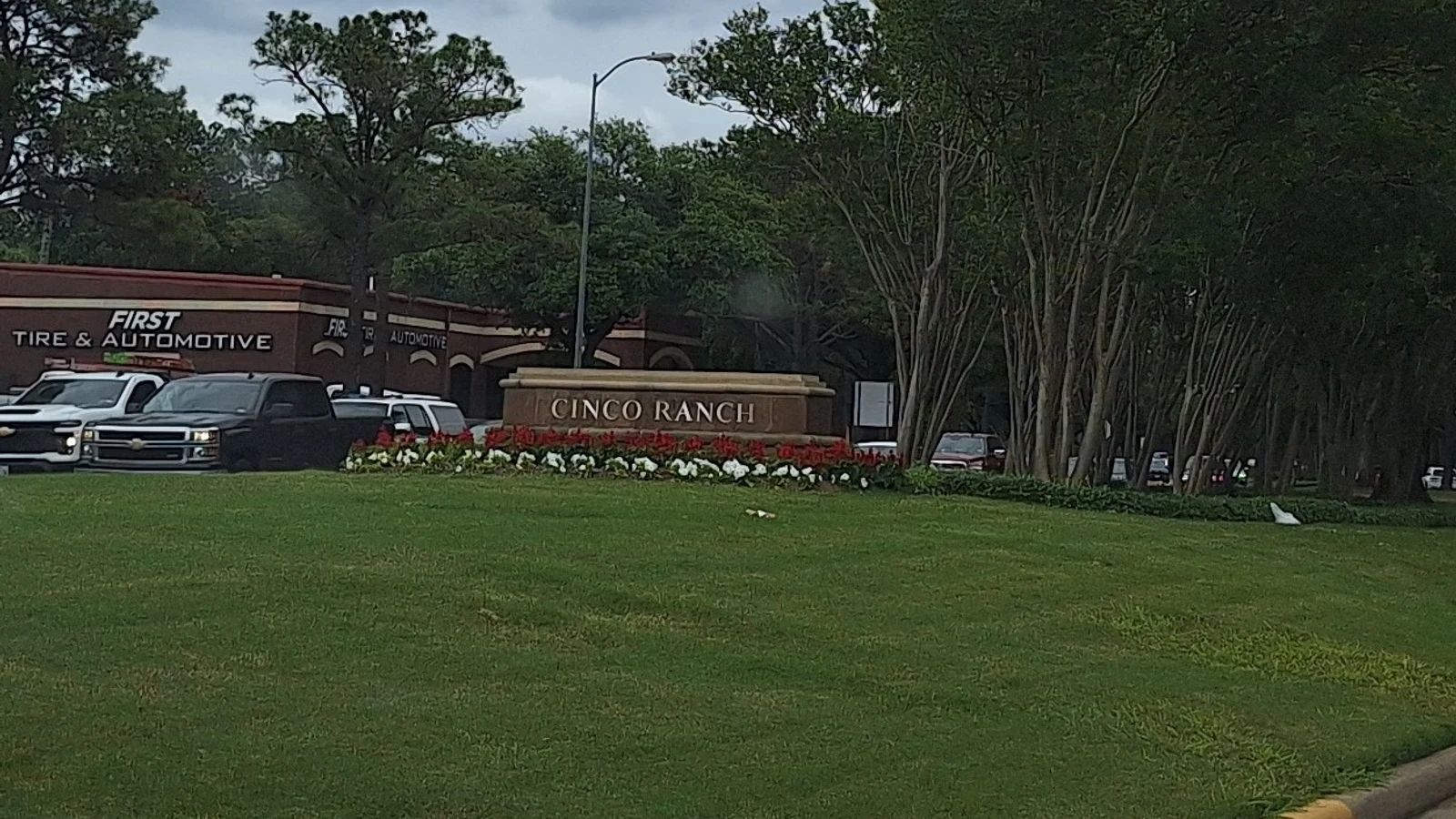
Cover: Cinco Ranch streetscape by WhisperToMe, CC0, cropped for the page. It shows the local setting.
Joyce's Featured Listings

Once you’ve made your address checklist, use it on the homes you shortlist. View Joyce's Featured Listings
Comparing two homes in Katy? Send me the addresses and your usual route out of the neighborhood. I can help organize the map results, seller questions and items to raise with your inspector and insurance agent.
About Joyce Tang

Joyce Tang is a Greater Houston real estate agent and investor, co-founder of the North American Real Estate Association, founder of JoyHome and JoyNest, and co-leader of the Dr. Wang Real Estate Team.
She has helped more than 200 families buy or sell homes and has participated in more than 40 renovation projects. Her approach examines not only price, but also location, carrying cost, cash flow, risk and future exit options.
Maps and quotes can change. Confirm the parcel and structure with the appropriate floodplain authority, drainage concerns with a qualified inspector or specialist, and coverage with your insurer and lender.