
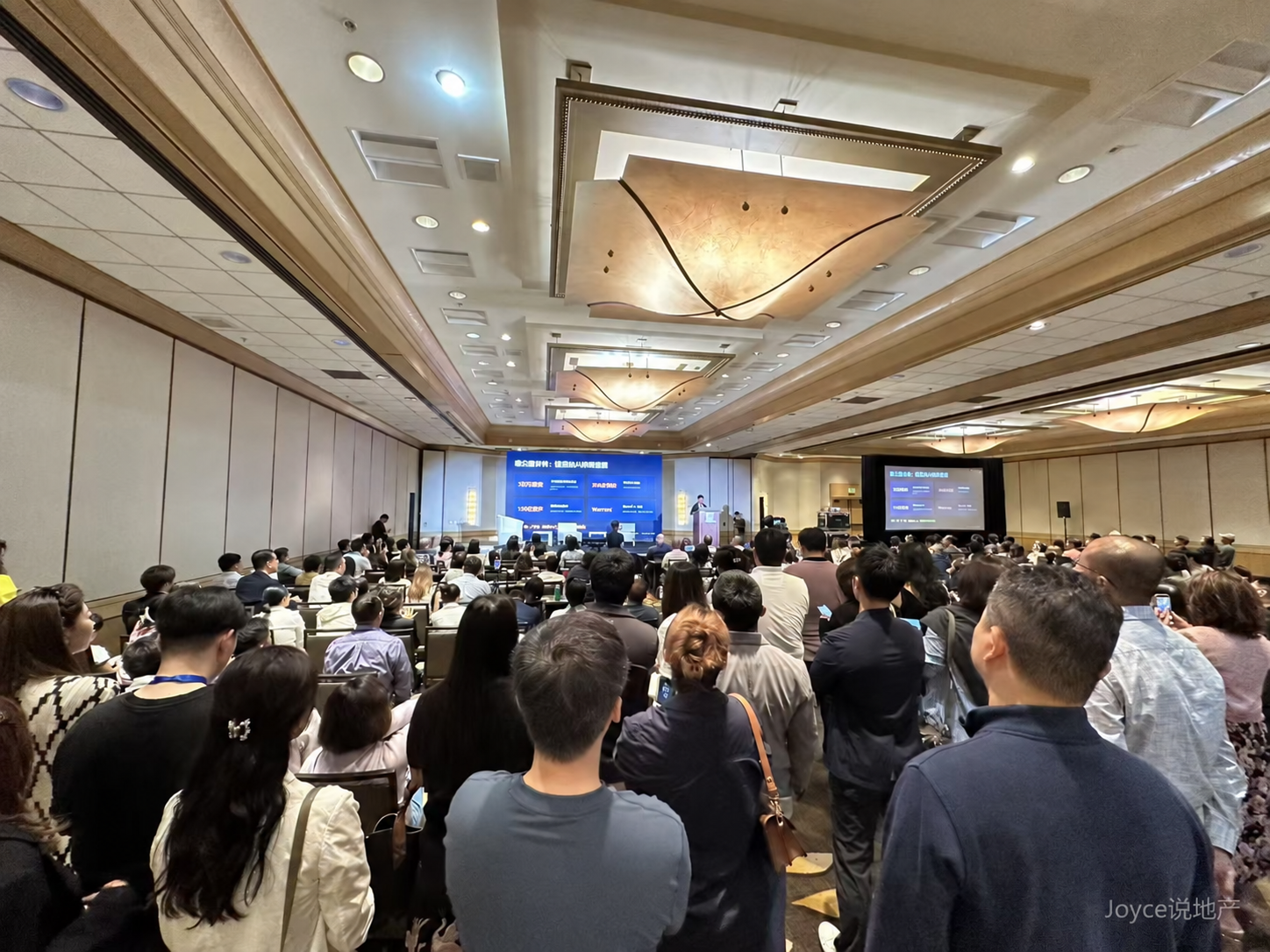
Money is moving rapidly toward AI, but that does not mean following the hottest trade is a sound plan. My main takeaway from the talk by Li Shanglong was to ask why capital is moving, whether profits can eventually justify the spending, and what happens if the thesis is wrong.
He described AI as a giant “capital vacuum.” The useful part of that metaphor is not the idea that AI will absorb every dollar. It is the pressure difference: a new destination can look unusually attractive partly because older destinations have become less comfortable.
AI did not suddenly become perfect; older capital reservoirs came under pressure
The talk considered housing, bonds and blue-chip stocks as familiar places where capital has historically waited. Higher rates changed real-estate carrying costs, bond pricing and corporate financing, while a small group of AI companies captured an outsized share of the market growth narrative.
That does not support a simple conclusion that property and bonds are obsolete and only AI matters. A household down payment, retirement assets, corporate capital spending and venture money have different time horizons and constraints. Capital flow shows what markets currently reward; it does not prove that the current entry price is sensible.
Being right about an industry is not the same as paying a safe price for it.
Capital is funding the physical layer of AI, not an abstract story
AI ultimately depends on chips, power, data centers, equipment, land and construction. The digital story has a very physical foundation. That helps explain the renewed “picks and shovels” idea: even when the eventual model winner is unclear, every serious competitor needs computing, electricity, storage and infrastructure.
Demand, however, is not the same as unlimited profit. Investors still have to ask whether capital spending can continue, whether price competition will compress returns, and whether energy, water, permitting or community constraints will raise costs. Money can arrive before durable earnings do.
The deeper lesson was not the gain; it was the willingness to reassess
The talk described taking a concentrated position and later reducing exposure. The point worth carrying forward is not a trade to copy. It is the harder question: after a thesis has made money, are we still willing to admit that the information has changed?
Discipline is not only the courage to buy. It can also mean refusing to chase, cutting position size, preserving cash or leaving when the original assumptions no longer hold. A company can operate in a transformative industry and still be a poor investment at the wrong price.
Two cautions: capital does not travel on a one-way pipe
A dollar leaving one asset class does not automatically become a dollar invested in AI. Different pools of capital serve different needs and follow different rules.
Crowding shows that a consensus is forming, not that the consensus is correct. Markets can pull years of optimism into the current valuation.
For me, “follow the money” should not mean chase the chart. It means understand why money is moving, test whether that reason can last, and only then decide whether the opportunity fits personal goals, time horizon and ability to absorb loss.
AI for Science may matter more than simply working faster
The second half of the talk moved from language and code toward AI for Science: drug discovery, materials and laboratory work. If AI can shorten screening cycles or make experiments more efficient, its value may extend beyond labor savings and into problems that were previously too slow or expensive to tackle.
There is still a long path from an algorithmic prediction to a scientific result—validation, clinical trials, regulation, cost and time. That makes this a field worth watching, not an automatic investment answer. A compelling theme never replaces analysis of revenue, competitive advantage, valuation and cash flow.
As money moves, the market price of human skills changes too
The talk argued that asking good questions, exercising judgment and making decisions without a standard answer will become more valuable, while routine execution becomes easier to automate. I agree with the direction, with one important correction: AI does make mistakes, and sometimes presents them very convincingly.
AI can organize a long report or generate ten options, but it cannot bear the consequence of the choice. It can list neighborhood prices, taxes and commute times, yet it does not know what a family is least willing to sacrifice. It can calculate projected returns, but it cannot choose how much uncertainty an investor should accept.
Human value is therefore not just knowing an answer. It is identifying the question that changes the decision, separating facts from emotion, acting within clear limits when information is incomplete, and adjusting when the evidence changes.
What stayed with me was not the trend, but the landing
The closing idea was that the vacuum pulls away money while people remain on the ground. Trends and market attention will change. Our job is not to chase every movement, but to build a framework that can see risk during excitement and long-term value during pessimism.
I left without a “what to buy next” answer. That was useful. AI can generate more answers, but questions, choices, discipline and responsibility still belong to people.
What does this have to do with a real-estate decision?
A home is both an asset and a living arrangement. Macro trends can show the direction of the wind, but they cannot decide whether a particular family should buy. In a high-rate environment, the practical work is to evaluate total carrying cost, intended holding period, cash reserves and exit options—not to assume that acting sooner guarantees a better rate.
For the relationship between Federal Reserve policy and mortgage rates, read Why Would the Fed Discuss Rate Hikes When Mortgage Rates Are Already High?.
If you are already evaluating a home, use this guide to review Houston homebuying costs beyond the mortgage payment.
Frequently asked questions
Is this article recommending AI stocks?
No. It is a framework for understanding capital movement and risk, not a recommendation for any security, fund or trade.
Does capital moving toward AI mean real estate is no longer worth holding?
No. A home, an investment property and a technology stock serve different purposes and carry different risks. Real estate still has to be judged by the specific address, total cost, intended use and exit plan.
Can the figures in a conference talk be used directly for an investment decision?
No. Transactions, market figures and forecasts are time-sensitive. Verify material claims through current company filings, regulatory documents and official data before acting.
About Joyce Tang

Joyce Tang is a Greater Houston real estate agent and investor, co-founder of the North American Real Estate Association, founder of JoyHome and JoyNest, and co-leader of the Dr. Wang Real Estate Team.
She has helped more than 200 families buy or sell homes and has participated in more than 40 renovation projects. Her approach examines not only price, but also location, carrying cost, cash flow, risk and future exit options.
If you are considering a major allocation—especially a Greater Houston home or investment property—share your budget, expected holding period and the variable that concerns you most. We can break down cash flow, total carrying cost and exit choices before deciding whether the timing works.
Images, sources and disclaimer
Event photographs were provided by Joyce. The original scenes received only a subtle “Joyce说地产” ownership watermark; slide text is not used as the sole source of any material point. This article is a personal reflection on the talk and provides general market and real-estate information, not investment, securities, lending, tax or legal advice. Figures, transactions and forecasts discussed at the event were time-sensitive and should be checked against current official sources and the appropriate licensed professionals. At its published July 2026 meeting, the Federal Reserve held its federal funds target range steady; it did not raise rates.
By Joyce Tang|Serving Greater Houston, Texas.